


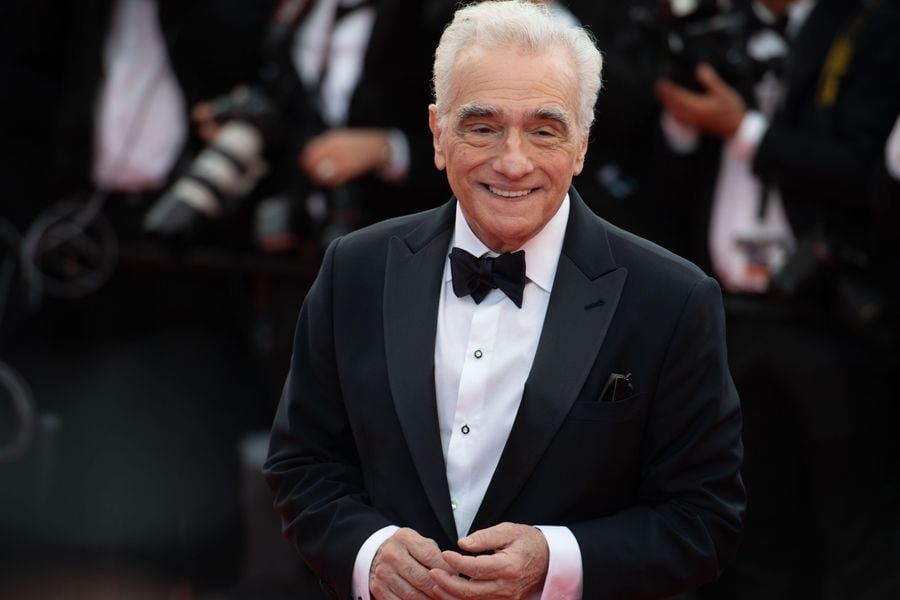
Delving into Martin Scorsese’s love of British cinema

Martin Scorsese emerged as a pioneering figure of the New Hollywood movement, a period in American cinema that began in the mid-1960s and welcomed a new generation of young filmmakers. Inspired by foreign cinema, these new filmmakers were in greater control of their movies in comparison to the producer-driven model of Hollywood that previously dominated.
Desiring to change the popular mode of Hollywood filmmaking, these directors experimented with narrative form, forced the audience to become more active viewers, and often explored bleak themes with irresolute endings.
Alongside the likes of Peter Bogdanovich, Francis Ford Coppola, and Arthur Penn, Scorsese rose to prominence in this period, with his breakthrough provided by his 1973 film Mean Streets. When citing his biggest inspirations, Scorsese has tended to favour international directors, such as Francois Truffaut, Akira Kurosawa, Ingmar Bergman, and Satyajit Ray.
However, Scorsese has also cited a particular penchant for British cinema that has come to influence his filmmaking style. British director Edgar Wright once asked Scorsese, one of his movie heroes, what his favourite British films were. The American filmmaker replied with a list of 50 films that spanned decades of landmark British cinema.
This list includes Dr. Jekyll and Sister Hyde, The Pumpkin Eater, The Seventh Veil, and The Nanny, amongst many others. He states in the full email, which Wright shared with the director’s permission, that films such as Shooting Stars inspired him with its “truly remarkable use of editing”. Scorsese also cites Guns at Batasi as “interesting” due to its “composition in wide screen and black and white and sound editing and performances.”
Scorsese has also been a frequent champion of Michael Powell and Emeric Pressburger’s films. The pair directed the likes of Black Narcissus and The Red Shoes, the latter described by Scorsese as “cinema as music”.
From a young age, Scorsese was enthralled by the duo’s films, referring to the works they made in the 1930s and 1940s as “the longest period of subversive film-making in a major studio, ever.” Scorsese first met his hero Powell in 1975, and soon a friendship formed between the two. Scorsese even introduced Powell to his future wife, Thelma Schoonmaker, who has been a long-time collaborator with the American director as his go-to editor.
Scorsese’s love for British cinema runs so deep that he will even be narrating an upcoming documentary on his love for Powell and Pressburger, directed by David Hinton. Rare archival material and Scorsese’s discussion of the duo’s cinematic impact will form the untitled documentary’s basis.
Scorsese once detailed just how influential Powell was to him by saying: “I still find it extraordinary that I knew Michael Powell personally for 16 years — and, throughout that time, he was not only a support, but a guide, pushing me along, giving me confidence, keeping me bold in my own work.”
