


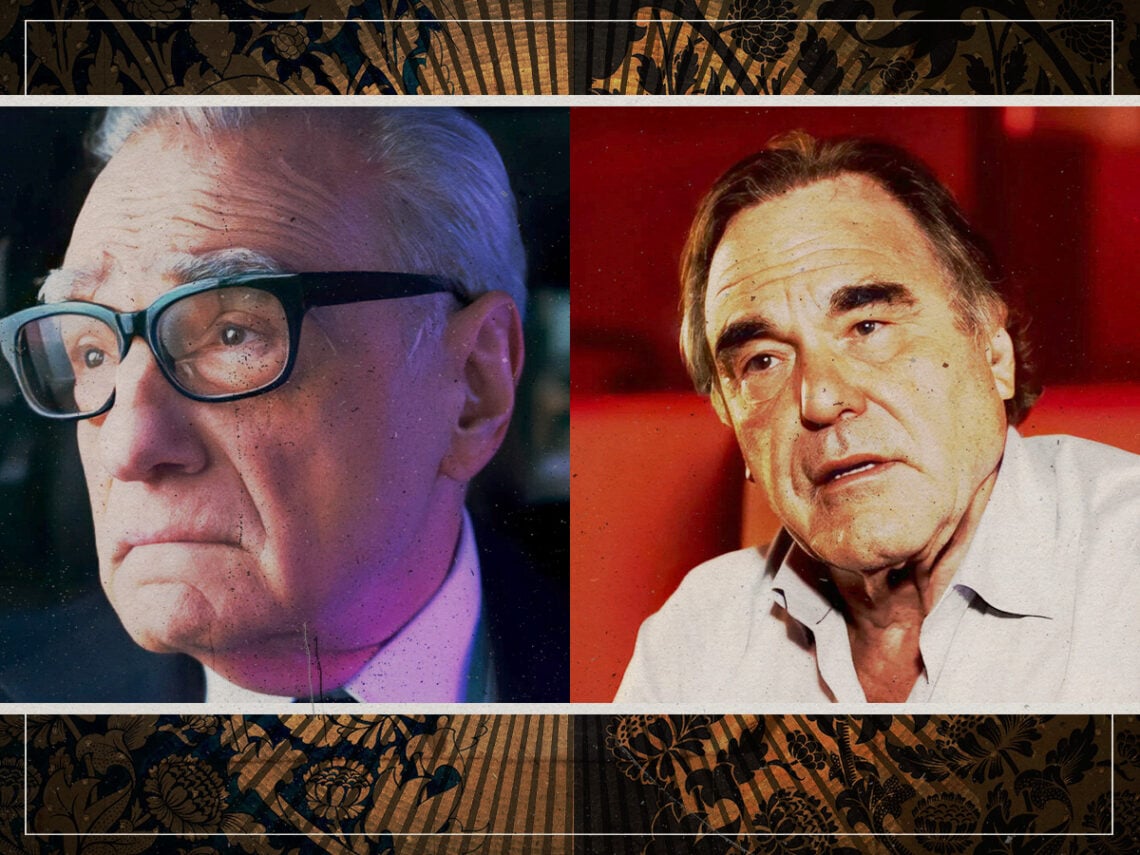
“A great burst of hope”: Martin Scorsese’s massive influence on Oliver Stone

The influence Martin Scorsese has exerted over movie-making is insurmountable. In addition to contributing some of the greatest films of all time to the cinematic canon, from Taxi Driver to Goodfellas, he has established an entire foundation for film preservation, inspired countless other filmmakers with his slick style, and even taught budding directors first-hand at New York University’s esteemed Tisch.
One of those lucky students was a hopeful filmmaker named Oliver Stone. He had returned to the Big Apple after spending the late 1960s in the US Army and enrolled in a film course at NYU. He would soon join Scorsese as one of the most well-known filmmakers of the era, penning classics like Scarface and directing a documentary about The Doors, but not before the director-turned-tutor gave him some invaluable advice.
Reflecting on his years learning from Scorsese at NYU during a conversation with Games Radar, Stone described the director as a “wonderful teacher”. However, his teaching methods seemed a little out of the ordinary. According to Stone, Scorsese would arrive late and proceed to chat about the films he’d stayed up watching the night prior. It certainly wasn’t your conventional lecture, but a young Stone was struck by his enthusiasm for the medium.
He was also particularly struck by one piece of advice that Scorsese gave him when he was struggling to find his cinematic groove. “I remember we were making short films and they were pretty bad,” he remembered, “He told me, ‘You’re doing all this Godard abstract stuff, you’re trying to be French New Wave. Do something personal.’ And that was the key.”
Stone took his advice and ran with it, finding that it immediately improved his work. He created a short film about his experiences in Vietnam, and although it didn’t go down well with his classmates, Scorsese was much more impressed. “He said, ‘That’s a filmmaker,’” Stone recalled, “He gave me a great burst of hope.”
Stone didn’t just take this advice into his college assignments. He allowed it to drive his entire career, creating full-length feature films about Vietnam, beginning with Platoon in 1986. He followed this with Born on the Fourth of July a couple of years later, and then with Heaven on Earth, delving further into the devastating effects of war with each new film.
Some were received better than others — Platoon, for example, became a staple in the war movie genre, while the final entry into the trilogy performed less spectacularly. Despite the mixed responses, it seemed that Stone had tapped into his experiences and, with each new project, looked to make something personal.
He also honed his interest in biographical stories, creating films about psych-rockers, The Doors and a myriad of presidents. Perhaps this stemmed from his own interest in American politics, picking topics that he was personally intrigued by. He had followed Scorsese’s direction and, rather than looking to recreate anything that had come before, found his niche.
Over half a century after Stone sat in a lecture theatre with Scorsese at the helm, he has amassed a reputation almost as huge as his teacher’s. By following the director’s advice and ensuring that his work is driven, first and foremost, by his own interests and experiences, he was able to carve out a place for himself in film history. Perhaps all budding filmmakers should heed Scorsese’s advice.
