


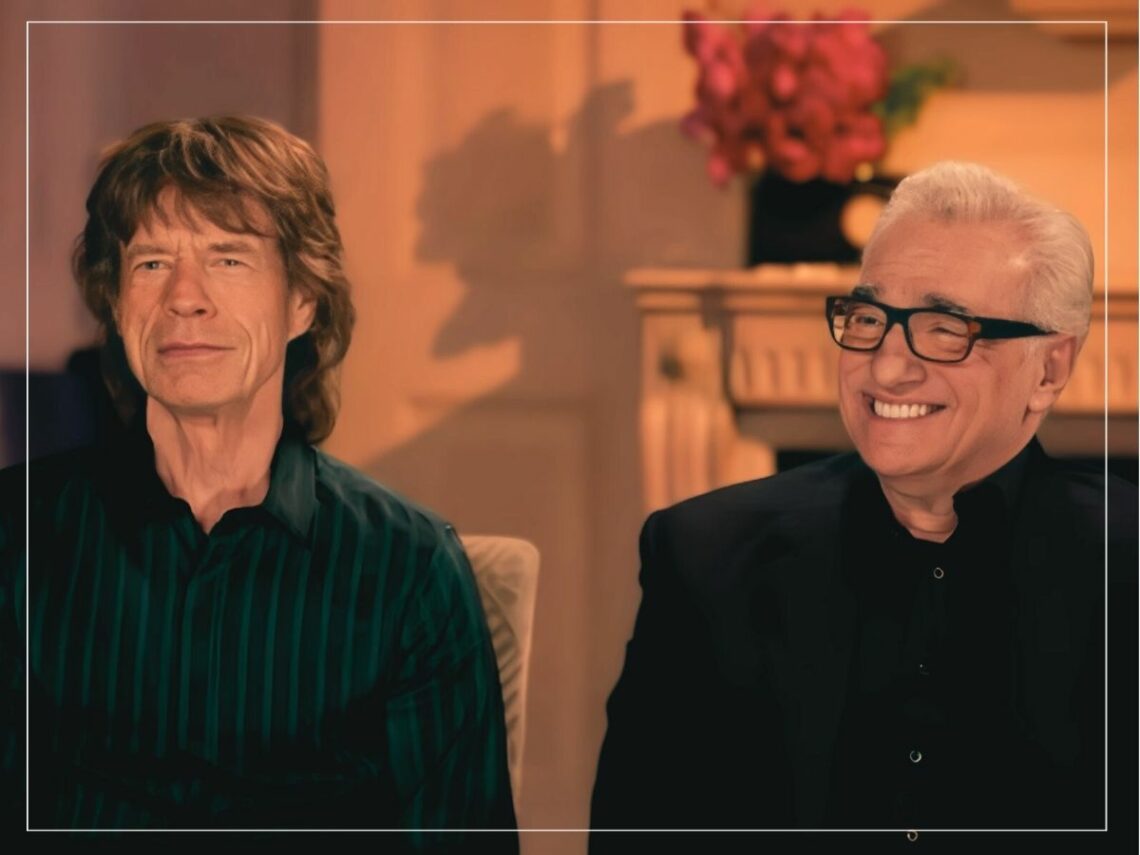
Martin Scorsese’s favourite album by The Rolling Stones: “My films would be unthinkable without them”

Martin Scorsese and The Rolling Stones share a visceral kinship that has led them to collaborate directly and indirectly on several golden occasions. In fact, Scorsese stretched it even further and praised them as a vital part of the tapestry of his work.
“My films,” Scorsese once said, “Would be unthinkable without them.”
It’s an argument that is difficult to battle against. Scorsese has always displayed a unique vision for his storytelling, often letting the brutal humanity or jovial side of darkness determine how the characters at play allow the narrative to unfold. However, he also heavily relied on the music made by Mick Jagger, Keith Richards, Bill Wyman, Charlie Watts, and a collection of other musicians.
The group have been nearly ever-present in his most beloved pictures. ‘Jumpin’ Jack Flash’ has a powerful moment in Mean Streets, deep cut ‘Let It Loose’ is played during a particularly violent scene in The Departed, the band also depicts Henry Hill’s paranoia in Goodfellas as Scorsese plays ‘Memo From Turner’ as Hill evades the cops. ‘Heart of Stone’, ‘Monkey Man’, ‘Sweet Virginia,’ and ‘Can’t You Hear Me Knockin’’ have all been included in Scorsese pictures. However, there is certainly one track which the director prefers.
The rousing Rolling Stones classic ‘Gimme Shelter’ shows up in Mean Streets, Goodfellas, Casino and The Departed, which hints at a strong love for the searing guitar work on the 1969 effort. Thus, rather predictably, it is the album Let It Bleed that houses ‘Gimme Shelter’ that resides as Scorsese’s favourite Stones record.
Speaking to Willie Geist regarding the HBO show Vinyl, which both Mick Jagger and Scorsese had a hand in, Geist remarked: “By the way, ‘Gimme Shelter’ is my favourite Stones song, too. Is Let It Bleed your favourite album, then?” To which Scorsese emphatically replied, as though the ripples of the records sonic highway suddenly invigorated the room: “Oh, yeah.”

The LP would go on to represent 1969 in its totality. It was a dastardly annum for the group, which saw not only the death of Brian Jones but also the altercation at the Altamont Free Festival, which saw an audience member murdered by the band’s biker gang security. Despite these setbacks, the record is brimming with energy, and while Let It Bleed isn’t always considered the greatest record in the band’s oeuvre, it certainly packed a punch with ‘Midnight Rambler’, ‘Love in Vain’ and ‘You Can’t Always Get What You Want’ added to the bolshy hit of ‘Gimme Shelter’.
When the question was thrown over to Jagger, he humorously deflected, stating: “I can’t even remember which songs are on which album. Seriously.” In fairness, having written almost 200 published works and the hefty toll of rock ‘n’ roll stardom, that might actually be closer to the truth than a mere deflection.
As far as Scorsese is concerned, however, Let It Bleed is the perfect cinematic piece of rock ‘n’ roll, with ‘Gimme Shelter’ proving a gem that he can’t keep his hands off. The song was a searing indictment of the world around the band. “Well, it’s a very rough, very violent era. The Vietnam War,” Mick Jagger said in an interview with Rolling Stone. “Violence on the screens, pillage and burning. And Vietnam was not war as we knew it in the conventional sense. The thing about Vietnam was that it wasn’t like World War II, and it wasn’t like Korea, and it wasn’t like the Gulf War.”
Adding: “It was a real nasty war, and people didn’t like it. People objected, and people didn’t want to fight it…That’s a kind of end-of-the-world song, really. It’s apocalypse; the whole record’s like that.”
The song, therefore, works perfectly as a landmark moment in some of Martin Scorsese’s greatest films. Featuring in four of those movies, ‘Gimme Shelter’ is utilised in his blistering Harvey Keitel film Mean Streets, in Goodfellas as the world around Henry Hill begins to crumble, in Casino, the song soundtracks the spilling of blood and, finally, in 2006, picture The Departed, the track acts as the perfect way to introduce the demented character of Frank Costello.
Although he did not grow up with rock ‘n’ roll, Scorsese recalls: “I listened to their music all the time”. He went to his first Stones concert in 1970 when he was 28, a period of time when the director was beginning to make his name in the New York cinema scene. He hadn’t been exposed to their music before that. “It was a working-class, conservative background in my family, so we listened to AM radio,” he explained. “But FM was just beginning, with rock’ n’ roll. So, then I heard The Rolling Stones and Bob Dylan.” And the rest, as for many, was history from then on.
