


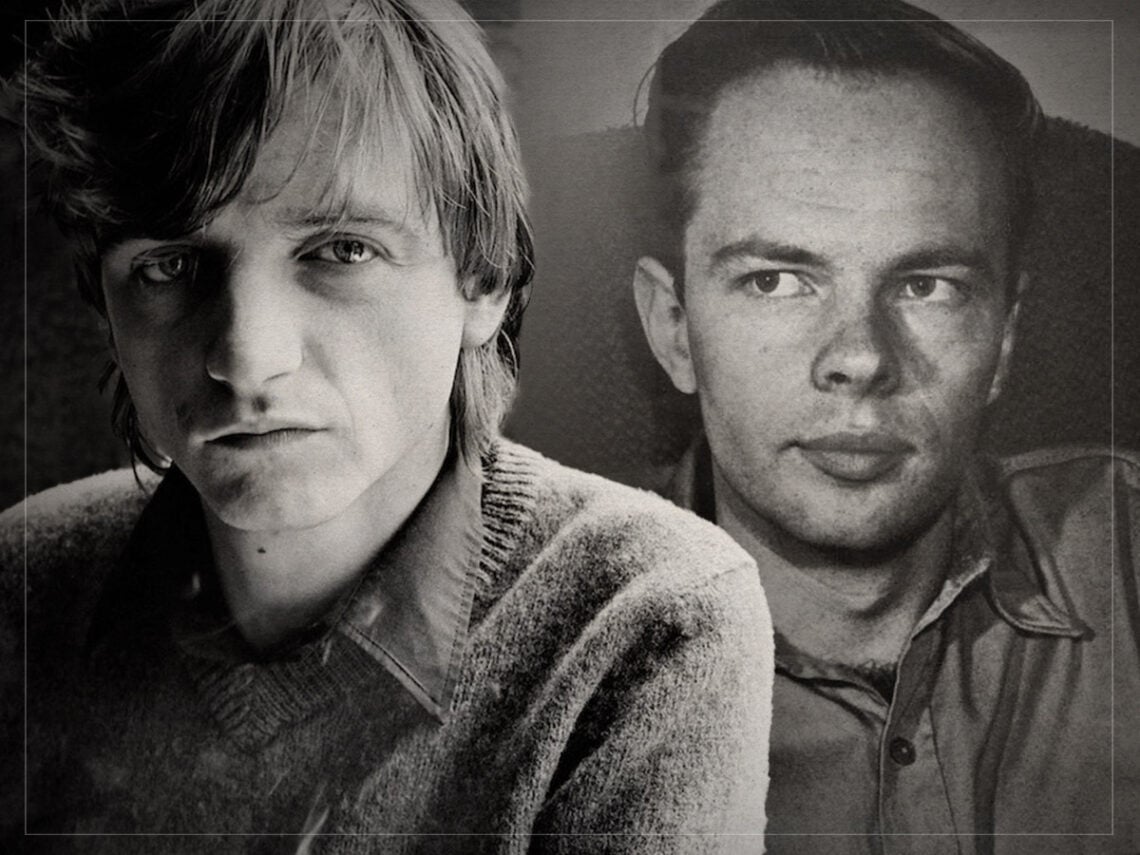
Mark E Smith ranks the movie adaptations of Philip K Dick’s books: “I fucking hated it”

Brazen bedeviler of Manchester, Mark E Smith was about as subtle as a policeman’s knock and just as unnerving.
Generally speaking, you could predict who he’d hate – Mumford and Sons: “Shut them c-nts up”, Ed Sheeran: “I think Sheeran and Corbyn are evil twins”, musicians in general: “I can’t stand them” – but the things that he loved, such as, the BBC football scores longlist announcement, trucking and A-roads, and the novels of Philip K Dick, were slightly less predictable.
The latter was not only a hobbyist interest, these treasured books also had a formative impact on his art. Alongside his love for HP Lovecraft, he poured plenty of Dick into his gobby work. Given that the late author operated in the sci-fi realm that adoration might seem somewhat surprising owing to how readily he snarled at the likes of Dr Who.
Moreover, you sense he might’ve had plenty to say about Dick’s mystic ways as a man. In 1974, two years before The Fall got going, Dick surmised that had had been visited by a strange beam of pink light that allowed him to time-travel and also, in a separate apparition, correctly diagnosed his son with an acute illness that doctors had been struggling with. It’s hard to say how Smith would’ve handled such a tale had he been confronted with it in a pub in Salford.
All the same, the writer remained a firm inspiration for the Fall frontman throughout his life. He ogled over his texts, separating them from flimsy modern sci-fi thanks to their deeply human existentialism. However, he thought that when they were transformed for the silver screen, this vital element was lost, and they became no more than merely well-lit Marvel-adjacents.

In true contrarian fashion, he perhaps placed the accepted finest adaptation at the foot of the pile. “I think the original Blade Runner is the most obscene film ever made, I fucking hated it,” he told the Guardian. While the Ridley Scott-directed picture might have won a plethora of awards, Smith wasn’t having it, and he wouldn’t be pushed to expand beyond dismissing it as obscene.
However, the source text was never one of his firm favourites, either. The two Dick books he admired the most were The Man in the High Castle and A Scanner Darkly, and he found both of those abhorrent, too. “The Man in the High Castle is one of my favourite books; how they fucked that TV show up I don’t know,” he said.
Adding, “I was physically sick watching A Scanner Darkly, it was like an episode of Cheers painted over except they all smoke dope and imagine women with no clothes on.”
It’s an interesting corroboration of the arty film, but perhaps what he was trying to convey was the sentiment that the film had been befouled by stoned, nerdy, masculine self-indulgence, though it seems harsh for Cheers to be dragged into things.
Thankfully, there is a saving grace in the cinematic world when it comes to Dick adaptations, as Smith rather more cheerily proclaimed, “The only good Philip K Dick film is Total Recall, it’s faithful to the book. Arnie gets it.” All it took was a bodybuilding Austrian and political Kennedy acolyte to get to grips with converting the inner depth of Dick’s disenfranchised horrors after all.
But aside from the inherent humour in his ranking of these works, they reveal a sense of Smith’s intellect. Although he might have equally scoffed at someone for falling foul of this habit on another day, he really did read sci-fi for the subtext, finding something of Salford’s industrial side in Blade Runner more so than the downtown Tokyo styling it was depicted with on screen.
Depth and original corroborations were always something he craved in art, as he jibed in the direction of Morrissey in the song ‘C.R.E.E.P.’: “He reads books; of the list book club / And after two months—his stance a familiar hunch / It’s that same slouch—you had the last time he came around / His oppression abounds, his type is doing the rounds / He is a scum-egg; a horrid trendy wretch.”
