


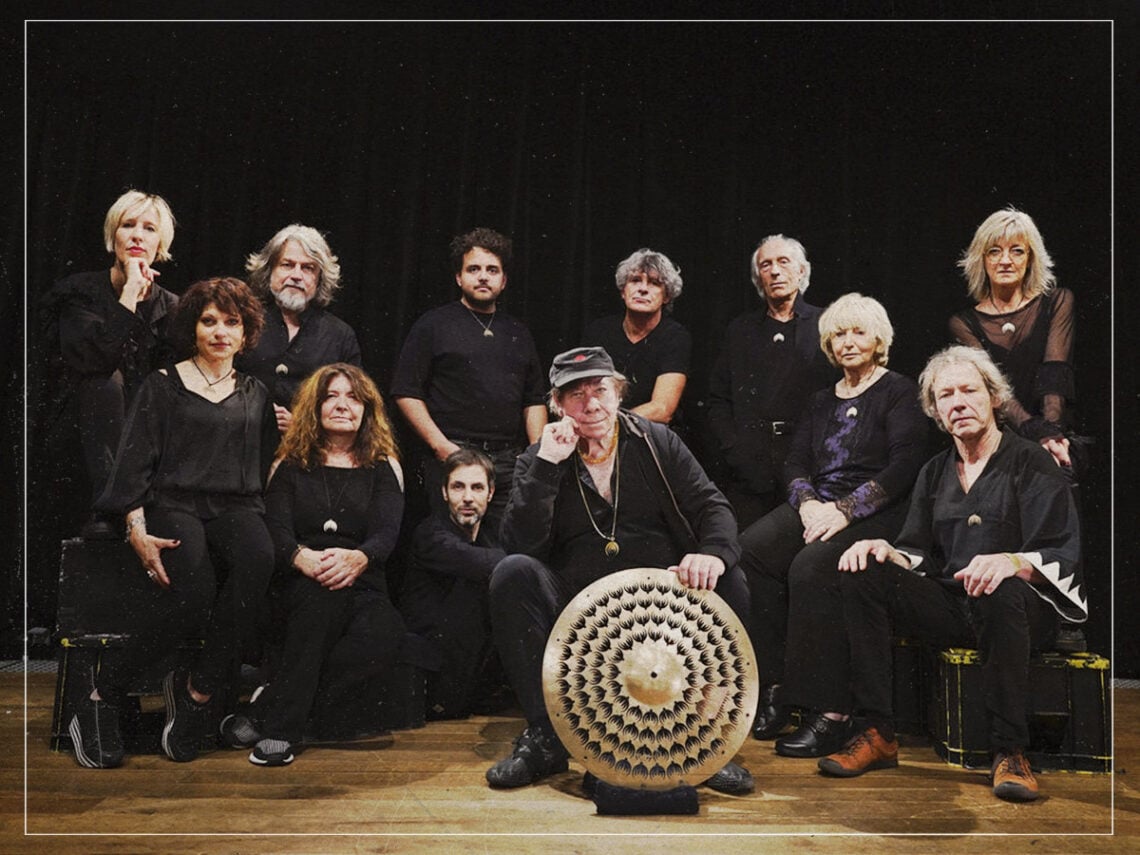
Magma: The band who invented their own language

Lyrics play a massive role in music. When you think of bands that have made a big impact on music as a whole, such as the Beatles, Led Zeppelin, Sex Pistols, Bob Dylan and Joni Mitchell, their lyrics play a huge part in establishing who they are as an artist and what they stand for as a person. However, music doesn’t start and stop at what the lyrics in a song are saying, as instrumentation alone has done a great deal for moving genres and styles forward.
Take protest music as an example. It’s one of the most dynamic forms of music out there, as people associate punk music with being a huge turning point for how artists express themselves. As Sex Pistols took to the scene and questioned the monarchy, the government and society in their lyrics, people were shocked. However, this isn’t the first type of protest music to exist.
Free Jazz was born as a means of protest music. While jazz originally was constructed of specific rhythms and tempos within critical, sweet-sounding music playing, Free Jazz came along to provide people with a new insight into a genre they knew. As free jazz musicians broke down tempo and key, they created a messy, inaccessible sound that was borderline impossible for anybody to listen to.
The same happened with noise music, particularly in Japan. Many artists, rather than making something that had melody as a fundamental part of the song, discarded that in favour of distortion and complete chaos. Again, this form of music was one that many people couldn’t get into and became completely unlistenable.
This wasn’t done for a laugh; instead, it was done as a means of protest. The way the music sounded was supposed to reflect the world around the artists. They were able to combine the chaotic way that they viewed politics and societal problems with instrumentation. They were effective at doing this without even uttering a word.
Take work by the likes of Joe Satriani, Steve Vai and Jeff Beck, too. All of these artists could convey different emotions in their music, which was always instrumental. Brian May once spoke about the Beck song ‘Where Were You’, which he claimed was one of the best examples of emotion in instrumental music out there. “If you wanna hear his depth of emotion, sound and phrasing, and the way he could touch your soul, listen to ‘Where Were You’ off the Guitar Shop album… sit down and listen to it for four minutes.”
There is one band who took distancing themselves from lyrics even further, though, and this is the musical outfit Magma. Magma are one of the most experimental bands that have ever taken to the stage. We’ve all heard of bands with range before, but that’s nothing compared to what Magma have. Their albums dabble with funk, some with prog rock, some with metal and others that are made purely of wind-based instruments. Over 80 people have been in the band in the past as they continue to bring in new people to explore different musical avenues.
One of their most ambitious musical endeavours comes from drummer Christian Vander. He was responsible for creating a language that the band would sing in, known as Kobaïan. He describes this as an alien language that the band uses throughout their songs and that has helped create a subgenre of music that they refer to as Zeuhl.
The word “Zeuhl” translates to celestial or “celestial music”. It’s interesting that the band refers to this as a subgenre as they continue to make links between themselves and other music that has come before them and also didn’t rely too much on lyrics. For instance, going back to Free Jazz, one of the genre’s pioneers was Sun Ra, who believed a lot of the music he made was a message from another planet.
“You got to be ready when you play with this band… when the harmonies move in a direction that they seemingly are not supposed to move in and still fit, you got another message from another realm from somebody else,” he once told his trumpeter, Ahmed Abdullah, “And Superior Beings would definitely speak in other harmonic ways because they’re talking to something different. You have to have chord against chord, melody against melody, and rhythm against rhythm.”
The idea of speaking outside of the boundaries of planet Earth is nothing new in music, but nobody has put it in such a definitive way as much as Magna when they made their own language. It might not be the most sophisticated, but there is certainly enough there for it to begin to form the foundation of communication.

Never Miss A Beat
The Far Out Led Zeppelin Newsletter
All the latest stories about Led Zeppelin from the independent voice of culture.
Straight to your inbox.