


“New meaning”: the magic music of Jeanne Lee

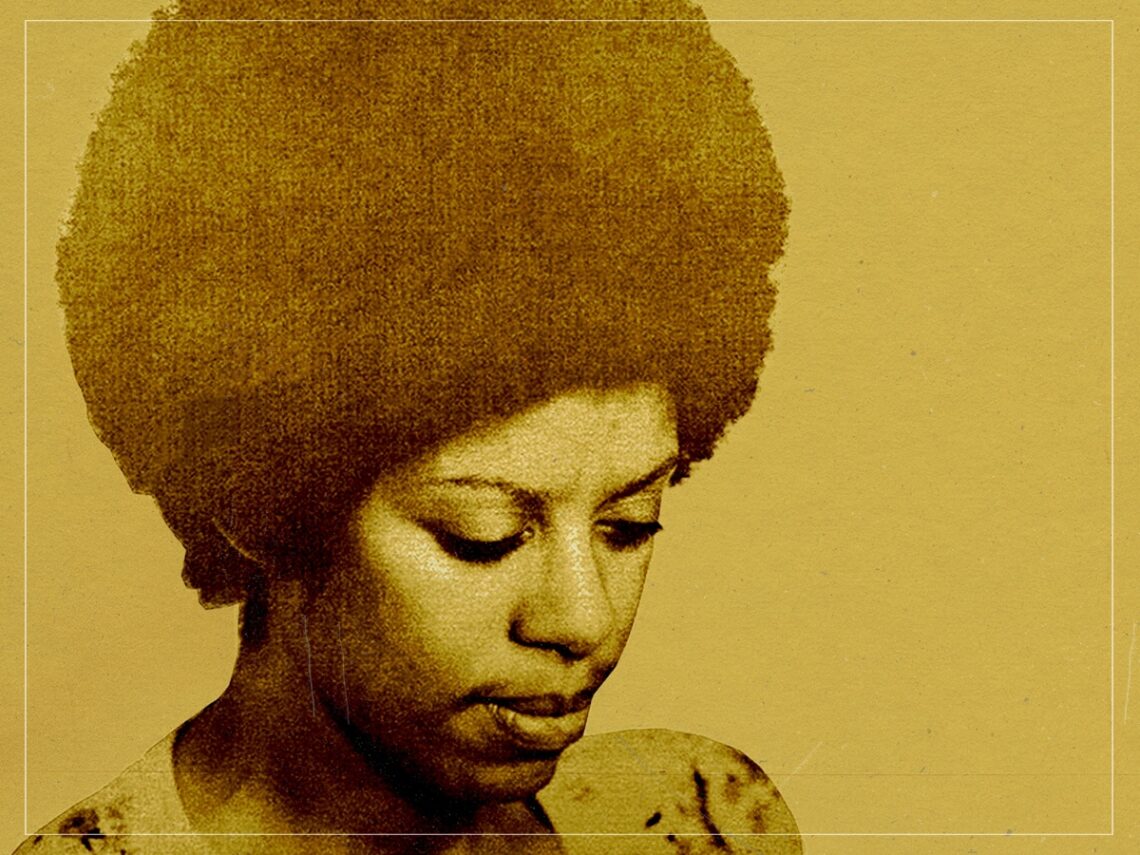
“No words, only a feeling,” Jeanne Lee poetically opens Conspiracy, her free-form opus that marked her first solo release. Arriving in 1975, this debut album has been somewhat of a lost gem but heralded some renewed recognition thanks to a 2021 reissue complete with a limited-edition poster designed by Shabaka Hutchings.
Lee was a New York-born jazz vocalist, poet, composer, improviser, activist and educator. In her 40-year career, she performed with the likes of Archie Shepp, Marion Brown, Gunter Hampel, Frank Lowe, William Parker, Billy Bang, Cecil Taylor, John Cage, Rashsaan Roland Kirk, Pauline Oliveros, Reggie Workman, and many, many others.
While a student at Bard College in Red Hook, NY, she met Ran Blake. They formed a duo, and she made her first recordings with him. Together, they toured Europe in 1963, after which Lee moved to California, where she worked with Ian Underwood and sound poet David Hazelton – whom she later married. Lee and Gunther Hampel established their musical relationship while she was in Europe in 1967, going on to record over 20 albums together.
During her time at Bard, Lee created choreography for pieces by various classical and jazz composers, ranging from Johann Sebastian Bach to Arnold Schoenberg. It’s unsurprising, then, that her approach to creating music transcended mere words and melody and instead blurred lines with movement, dance and feeling. Lee described, “I feel the music like a dance, I think it’s an important part of the music, it has to be felt like a dance.”
There’s a meditative quality to Conspiracy, as Lee moves through an odyssey of songs, improvisations, and some spoken passages, set to improvised sound created by a group of polymaths including Sam Rivers on soprano and tenor saxophone and flute, Gunter Hampel on piano, vibraphone, alto saxophone and flute, Jack Gregg on bass, and Steve McCall on drums – plus guest work from Mark Whitecage on alto saxophone, and both Perry Robinson and Allan Praskin on clarinet.
“Jazz is a music that combines so many opposites,” she said. “You have to find that balance, then you have a guideline between freedom and discipline, between rhythm and melody, between body and spirit, between mind and instinct.”
On ‘Angel Chile’, the penultimate track of the album, Lee takes the individual letters of her daughter’s name, Naima, and explores the palette of sound that can be painted with each. She feels the word – she goes beyond its emotional attachment and explores its movement, its interplay with her vocal timbre, and its shape as it leaves her lips.
Singer-songwriter Julia Holter discovered Lee when she was working on a class, ‘Words and Non-Words in Music’, and exploring artists who played with language. “There’s something so bold about creating new meaning by freeing words from their literal meaning, just by playing with how each letter sounds,” she reflected in an interview with The Line of Best Fit.
Although some could see Lee’s approach here as minimalism, for others, it’s quite the opposite – she’s “transforming [words] in such a way that we no longer think of them in terms of their literal meaning”.
