


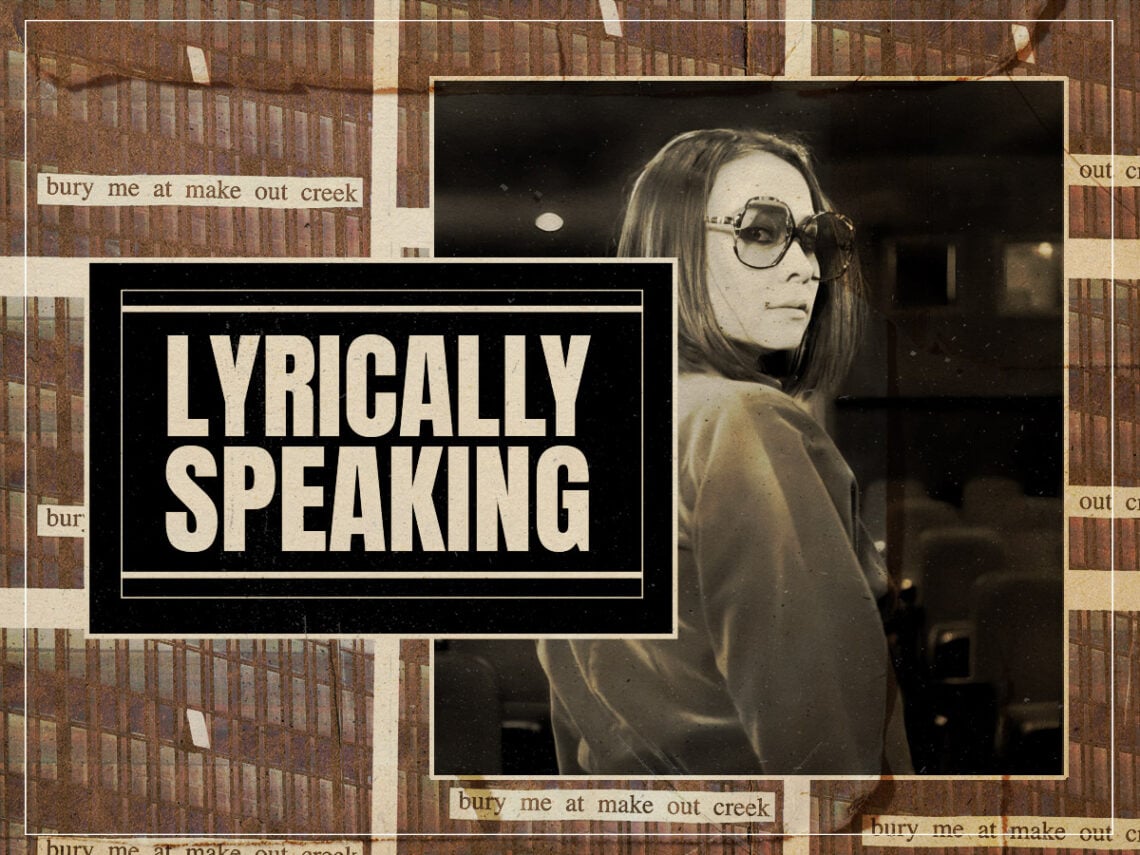
Lyrically Speaking: Depictions of dependency in ‘Me and My Husband’ by Mitski

First impressions are important, even when it comes to songwriting. How an artist chooses to begin a track can immediately inform you of its meaning or feeling, setting the tone for the three minutes or so of music that will follow. A riff that might one day become iconic, a sampled voice note that provides a behind-the-scenes look at the artist’s process, and a lyrical statement of intent are all artistic choices in themselves. On ‘Me and My Husband’, Mitski begins with a sigh.
Somehow, she contains the entire song’s emotion into this one exasperated exhale. It sums up the loneliness of her protagonist despite the love she holds onto, it captures how tired she is with the life she has chosen for herself, with how her identity and self-confidence rests entirely on the shoulders of the title husband. Every lyric Mitski pens following that initial sigh only serves to enhance that initial feeling.
Mitski is no stranger to a love song. She achieved Tiktok fame earlier this year with the gorgeous ‘My Love Mine All Mine’, but not all of her sonic ventures into romance and passion are quite so hopeful. More often than not, she contends with the uglier sides of love, with ownership and dependency, with insecurity and identity. ‘Me and My Husband’ is one of the finest examples of this tendency.
Rather than expelling her own experiences of love through song, as she so often has in the past, Mitski takes on a new character in ‘Me and My Husband’. She becomes a housewife, clamouring for her own space, her own life, her own identity, but struggling to separate herself from her husband. Though the story may seem removed from Mitski’s real-life experience, she utilises this character as a veil for her own feelings.
“Right,” she once explained during a conversation with GQ, “If you’re a suburban mom surrounded by family with a nice life, you still feel alone. On tour, I’m surrounded by people all the time, but it’s lonely.” The song portrays this loneliness through a dependent relationship, through a picture-perfect life that isn’t so picture-perfect behind the scenes.

The devastation begins with the opening line. “I steal a few breaths from the world for a minute,” Mitski begins, “And then I’ll be nothing forever.” It’s a beautiful image but also a heartbreaking one. Her protagonist desperately longs for moments of her own, for an identity beyond this love she has created, but she immediately falls back into self-doubt, declaring herself “nothing forever” without it.
“And all of my memories, and all of the things I have seen,” she adds, “Will be gone with my eyes, with my body, with me.” This tragic first verse sets up the insecurity felt by Mitski’s protagonist, the lack of confidence she has within herself. It’s only when she’s reminded of her husband or when he reenters the room that she finds self-worth.
“But me and my husband, we’re doing better,” she sings in the chorus, “It’s always been just him and me together.” Though Mitski suggests that the song is about being surrounded by people and love yet still feeling lonely, the absolutes in the track seem to shut out any form of love that doesn’t stem from her husband. It has always been just him and her, always “doing better” than she would alone.
As a result of her beliefs, Mitski’s protagonist opts to throw everything into this relationship rather than seeking self-worth outside of it. “I bet all I have on that furrowed brow,” she sings, “And at least in this lifetime, we’re sticking together.” The imagery of this wife betting everything to her name on a “furrowed brow” illustrates the flaws in her relationship, indicating that perhaps he isn’t quite so dependent.
Mitski delves further into the role of the housewife in her second verse, declaring herself the “idiot with the painted face in the corner taking up space”. She utilises words and phrases often used against women and turns them on herself, nitpicking insecurities in her makeup and even her very presence in the room. Rather than asserting herself alongside her husband, taking up the space she deserves alongside him, she cowers when he’s not present.
Only when he enters does she feel worthy. “But when he walks in, I am loved, I am loved,” she sings. But it’s a lonely kind of love that she feels at that moment. It’s not mutual admiration and care; it’s dependency and insecurity. Mitski returns to the chorus, declaring herself “better” when she’s with her husband, betting everything on him while the sigh lingers in the background.
The song clocks in at just two minutes and 17 seconds but, somehow, it contains within it more emotion than most artists create in entire albums. From the image of Mitski’s character with a painted face, believing herself to be taking up space that she shouldn’t, to the lack of self-worth she feels when her husband isn’t by her side, the song is one of the most aching yet pointed investigations of dependent relationships in modern music.
It may be about the loneliness of touring to Mitski, but it’s a story that extends far beyond that experience. It’s about the insecurities that can bubble beneath even the most secure relationships, the ways women are taught to shrink and hate themselves, and the dependency that can be harboured in the name of love. In a catalogue full of songs about love, this is one of Mitski’s finest.
