


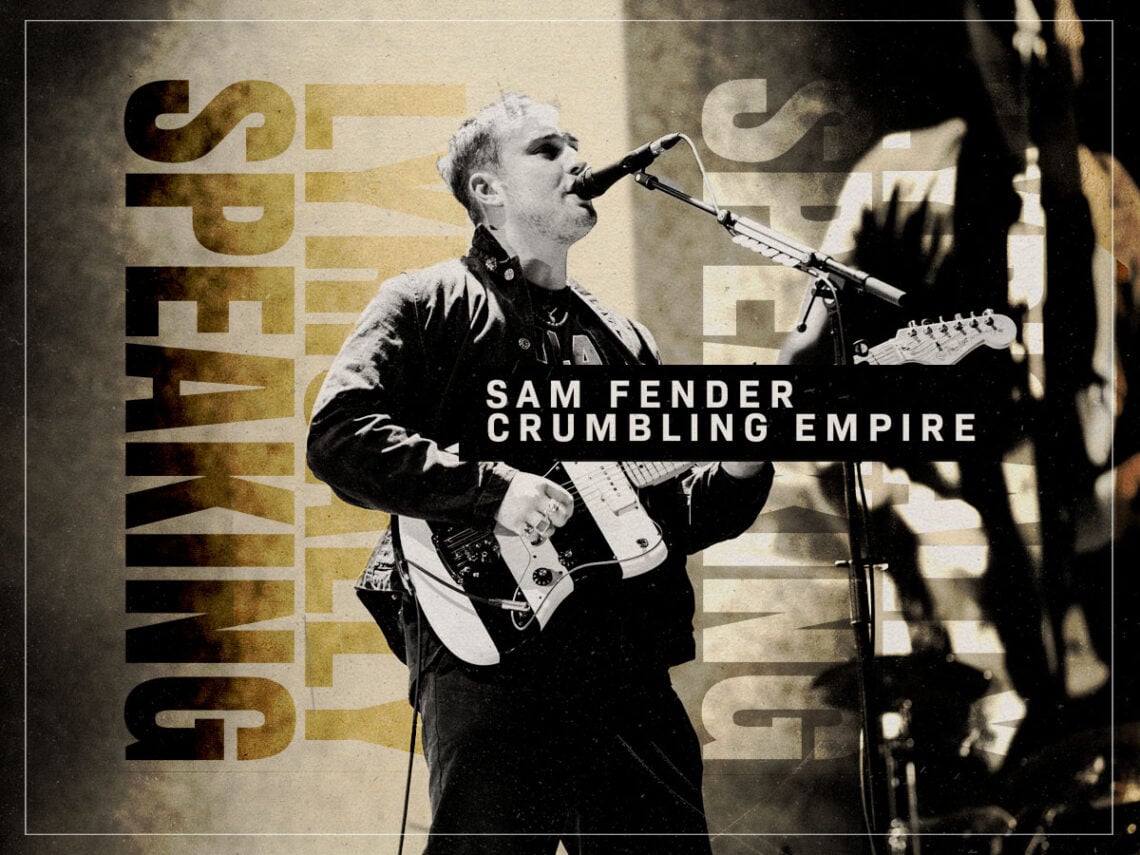
Lyrically Speaking: The decline of working-class community in ‘Crumbling Empire’ by Sam Fender

For his latest record, People Watching, Sam Fender spotlights his northeast background against the backdrop of the things that have torn it all down. Throughout, he traces the fabrics of laborious hardship and industry decline in the aftermath of the political rule. At the crux of this sentiment is ‘Crumbling Empire’, a fervent anthem detailing the diminishing of small, working-class towns.
Fender has always centralised the nuances of his own background in his art, from the self-critical lamentation of songs like ‘White Privilege’ on the first record to the more autobiographical ‘The Borders’. On Seventeen Going Under, he even addressed his own limitations growing up and his inability to support his mother when she needed it the most.
With People Watching, the South Shields rocker delivered more of the same with an inexplicably calculated charm, bringing his previous observations into the spotlight of his own judgemental eye, chronicling the beauty of those making it in a place that’s destined to pull them down. All of these stories have their own gorgeous delicacies, highlighting the tragedy and bittersweet edge of coming from a place that many fail even to understand.
‘Crumbling Empire’ isn’t just a standout because of its themes. It’s undeniably the album highlight, with arrangements that immediately pull you in before Fender’s signature emotion-fuelled grit hooks you for the long haul. However, its message becomes its anchor, with Fender addressing the cracks that the working-class community feel, within which people can work hard and tick all the boxes they’re supposed to but still get left behind by the system.
From the beginning, he poetically navigates all the things those from worn-out towns likely don’t notice anymore, like tired old roads filled with potholes (“Road like the surface of the moon”) with comparisons to American cities and the sweep of oppression. It’s not long before he brings it home, singing about the “shiver” of the homeless under Newcastle’s Byker Bridge, honouring all those who have lived and died under the harsh hand of the government: “It’s one for me, and one for the dead, and one for my crumbling empire.”
These economic hardships become enhanced when he begins reflecting on his own family, and how his father “worked on the rail yard” before it “got privatised, the work degraded”. His mother experienced similar setbacks, delivering “most the kids in this town” while his step-dad drove “in a tank for the crown” before it “left them homeless, down and out”.
Even with “synthetic hope”, all of these communities and the people that make them have been left behind, leading to ghosts of towns that once bustled with the livelihood of promise and fulfilment. Things haven’t always been smooth sailing, but over the decades, generations have been failed by the powers that be, leading to even more issues, like the stigmatisation of those who emerged from those communities and made a name for themselves.
“Just another kid failed by these blokes”, Fender sings, addressing the vicious cycle of exploitation with no ending in sight. The crumbling empires are the hearts and souls of those left behind and those trapped in a system that offers little escape. While this hint of broader disillusionment stretches through all corners of People Watching, Fender’s take draws light to the issue with personal storytelling, the anthemic quality itself showcasing a type of unity that can only be found among those who have very little left.
