


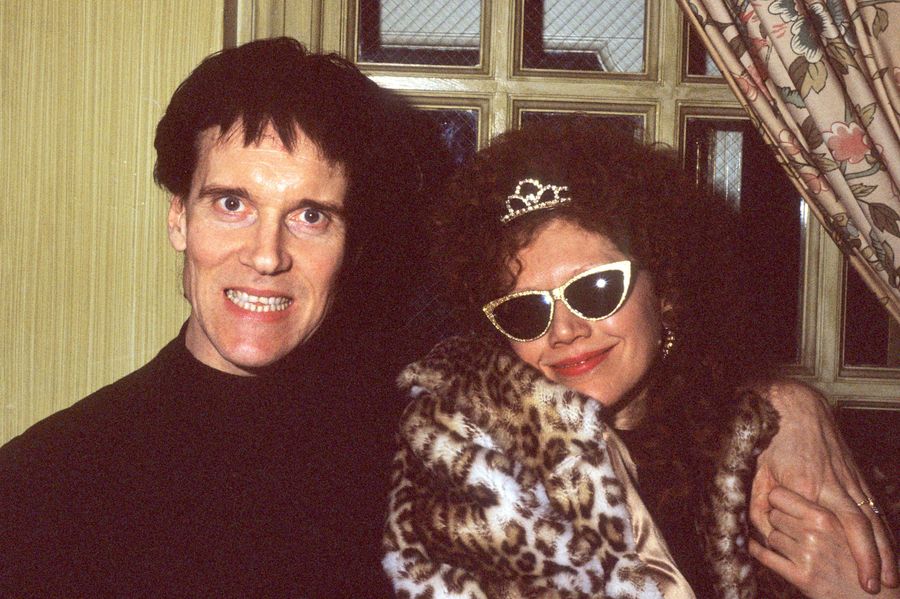
The undeniable influence of The Cramps founder Lux Interior

The Cramps were an American punk rock band formed in April 1976, active until the death of frontman Lux Interior in 2009. Typically, for a band that had such live longevity, their line-up changed frequently. However, the band always remained the project of the core duo Interior and lead guitarist Poison Ivy Rorschach. It would not be outrageous to say that The Cramp’s longevity stemmed from the strength of this iconic husband and wife partnership. The band’s founding line-up also included the late guitarist Bryan Gregory and drummer Miriam Linna. The original drummer would soon be replaced by Gregory’s sister, Pam Balam.
Interior and Ivy had met in 1972 in Sacramento, California, when Interior and a friend had picked up Ivy hitchhiking. After this fateful meeting, and realising that they shared many artistic interests, they decided to form The Cramps later that year. Interior had initially flirted with the monikers Vip Vop and Raven Beauty. However, he soon settled on ‘Lux Interior’. The unhinged frontman took the nom de scène from an automobile advert. The original term ‘luxe interior’ is used to describe plush tuck-and-roll upholstery. On the other hand, Ivy took her name from a dream in which she claimed to have received it.
In 1973, the couple moved to Akron, Ohio, Interior’s hometown. Subsequently, they moved further east to New York in 1975 and it was here that they would make their name. The following year, soon after completing the four-piece line-up, The Cramps entered into the zeitgeist-shifting CBGB punk scene. They emerged alongside the likes of Suicide, the Ramones, Patti Smith, Television, Blondie and Talking Heads.
The CBGB movement contained countless sonic pioneers that would change the shape of music forever. The Cramps also had their own part to play. Not only were they one of the first punk bands in this wave, but they are also widely regarded as the principal innovators of psychobilly. The band coined the term ‘psychobilly‘ and, since The Cramps first burst onto the scene, the psychobilly subgenre developed as a mesh of rockabilly and punk. It found particular prominence in the ’80s with UK groups such as The Meteors. Ivy and Interior claimed to have taken inspiration for the term from the Wayne Kemp and Johnny Cash song ‘One Piece at a Time’.
In a 2001 book, We Got the Neutron Bomb: The Untold Story of L.A. Punk; Ivy is quoted as saying: “The Cramps weren’t thinking of this weird subgenre when we coined the term ‘psychobilly’ in 1976 to describe what we were doing. To us all the ’50s rockabillies were psycho to begin with; it just came with the turf as a given, like a crazed, sped-up hillbilly boogie version of country. We hadn’t meant playing everything super loud at superheavy hardcore punk tempos with a whole style and look, which is what ‘psychobilly’ came to mean later in the ’80s. We also used the term “‘rockabilly voodoo’ on our early flyers.”
Their psychobilly music was played at varying tempos and featured that iconic minimal drumkit. Inherent to The Cramps’ early sound was the dual guitars, with the absence of a bassist. Interior’s genius lyrics packaged this raw, highly-charged music. His narrative’s focused on campy humour, sexual references and retro horror and sci-fi B-movie iconography.
This psychotic appropriation of rockabilly and punk was heavily influenced by Link Wray, Hasil Adkins, Screamin’ Jay Hawkins and the ’60s surf scene including the Ventures and Dick Dale. Evidently, garage rock had a massive influence on the Bad Music for Bad People band. Influential groups such as the Standells, the Trashmen, the Green Fuz and the Sonics made their mark on groups raw sound.
Despite influencing the nascent rockabilly scene, The Cramps made an indelible impact on numerous garage, punk and rockabilly revival artists. This is mainly attributed to the core husband-wife duo, and rightly so. However, a lot of their infamy stemmed from Interior’s frenetic, on-stage act.

Interior’s frenetic and sexual provocative live-act was a direct successor to Iggy Pop‘s early stage show. It is fair to say the Akron native took Pop’s shtick to the next level. While Pop may have been psychotic in his rolling around in the broken glass, Interior’s trick was much more suggestive. Well, not suggestive, just explicit. The microphone blow-job was this gaunt, horror-comic character’s showpiece. Interior would swallow the entire head of an SM-58 microphone.
The Cramps would play their last show in November 2006. Until the band’s indefinite hiatus, Interior would carry on his eccentric stage show. The band would often be asked why they continued to play into middle age. Showing his uncompromising essence, he once told the L.A. Times: “It’s a little bit like asking a junkie how he’s been able to keep on dope all these years–it’s just so much fun. You pull into one town and people scream, ‘I love you, I love you, I love you.’ And you go to a bar and have a great rock ‘n’ roll show and go to the next town and people scream, ‘I love you, I love you, I love you, I love you.’ It’s hard to walk away from all that.”
Interior’s influence has been everlasting throughout his life and after. Lauded art band’s take many of their cues from him, including the Black Lips, The White Stripes, Primal Scream and the early era of the Horrors. The late Alex Chilton and the Jon Spencer Blues Explosion have also hailed Interior and the group as huge influences.
It is a testament to Interior and the band’s legacy that Bobby Gillespie, former minimalist drummer of The Jesus and Mary Chain, and frontman of Primal Scream, allegedly named his son Lux in tribute.
The Cramps frontman once said: “If we hadn’t been in The Cramps, I can’t imagine the trouble we’d be in. We often find ourselves wondering about the difference between what we do and being locked up. It’s a pretty thin line. Rock ‘n’ roll is the greatest way for weirdos like us to find a purpose in life. In that sense, our goal has never really changed. We just want to carry on getting away with it. Not getting caught – that’s our only ambition.”
In this statement, Interior really captures his legacy and influence. He confirmed that rock and roll was a place for freaks and weirdos, and to not have to ascribe to the daily grind of the 9-5. He was a man of contradictions, hard to pin down, and this ephemera is key to him and the band’s pervasive influence. He was as goth as he was rockabilly, and was as a straight man he pushed the aesthetic boundaries with his choice of clothing and captivating stage presence. These elements would become key to alternative subcultures as time moved on, showing him to be as ahead of the curve as any of his contemporaries.
Most importantly of all, he personally influenced one teenager who would also go on to have a significant influence on music and culture. Ian MacKaye, owner of Dischord Records, and frontman of the iconic Minor Threat and Fugazi often names a late ’70s Cramps show at a DC college as a sort of epiphany. MacKaye claims that this Cramps show was a formative influence on what would become the DC hardcore scene. Without this scene, music today would not be the same, and we would have had no Black Flag, Sonic Youth or Nirvana. So thank you, Lux Interior.
