


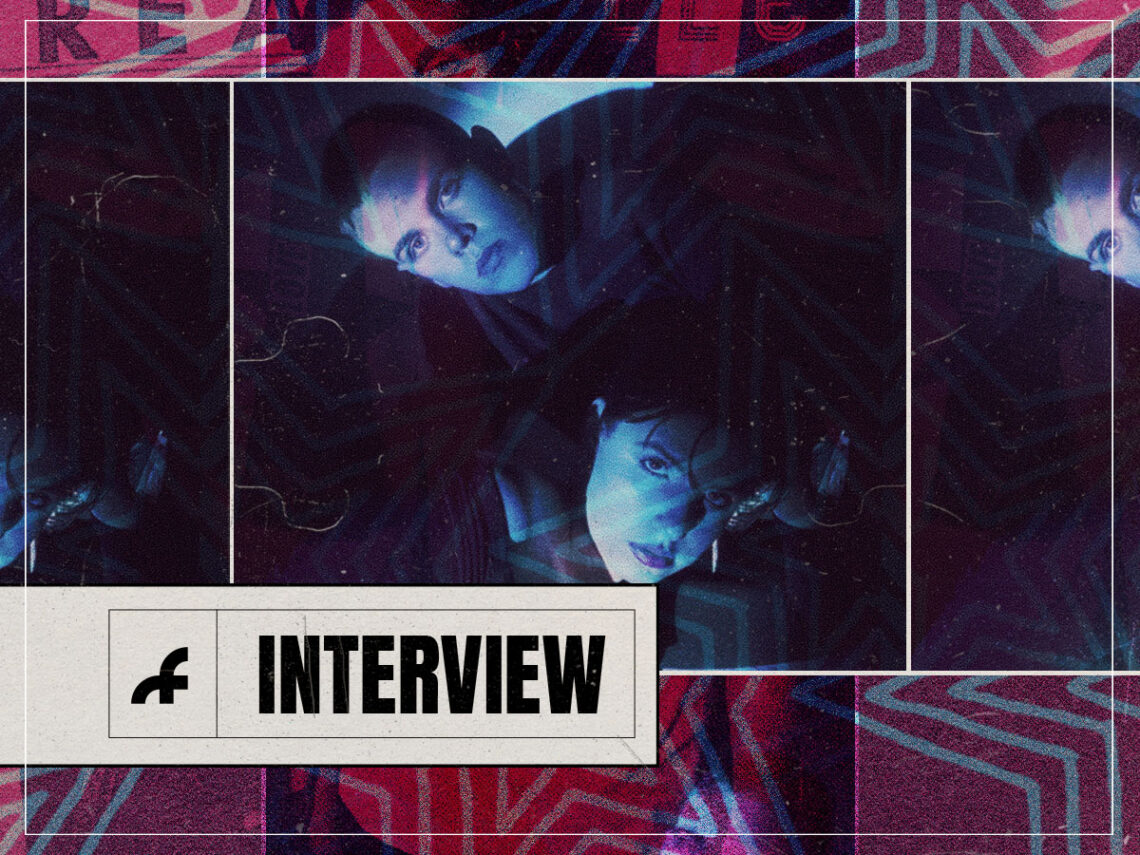
“People can’t really place us”: Lucky Iris discuss crunchy pop and PC Music

Leeds is a breeding ground for subculture. The city spawned the goth scene in the 1980s, provides a home to hardcore, and spits out jazz outfits and post-punk bands in abundance. Underground venues and basement practice rooms have birthed countless alternative collectives and communities, but one genre Leeds has rarely taken an interest in is pop.
Perhaps this is because it isn’t considered quite as cool as its counterparts. Or maybe it’s the call and promise of the capital that beckons pop acts away from the north. Whatever the reason, it hasn’t stopped Leeds-based duo Lucky Iris from completely committing to their self-described form of crunchy pop.
“I can’t get away from the fact that I adore pop music,” singer Maeve Florsheim admits as we sit by the window in Leeds’ beloved Belgrave Music Hall, “Even if we tried to do anything else, what comes out is pop. And we love that.”
Despite her undying love for the genre and Lucky Iris’ newfound commitment to it, our chat precedes the first outright pop gig the duo have ever played. They’re gearing up to support hyperpop princess Hannah Diamond for International Women’s Day, an artist who had a particularly formative impact on their own sound.
Like most 20-somethings, the pair grew up on indie, but it didn’t quite satiate them in their own music-making. Their creative direction started to form when they discovered more experimental forms of pop, such as the PC Music scene. Though it’s a sphere defined by artificiality and excess, heavily produced and even more heavily aestheticised, Maeve finally saw her own interests reflected in it.
“It’s difficult to create art,” she comments, “It’s a lot harder to create art when you don’t see anyone like you. It’s a lot harder to be yourself when you don’t see anything like that mirrored in the culture that’s happening. I think that Hannah is a big part of making women in music feel like they can celebrate all the things that surround being a woman in music. Hannah creates this world that is just very, unashamedly herself.”
Between her sugary sound and polished pink visuals, Diamond has honed a pop persona for budding artists like Lucky Iris to aspire to. While their alternative peers find inspiration in the scenes that surround them, Maeve and Jasper can’t help but set their horizons further afar. “We’re trying to look at the ideal,” Maeve explains, “if we could create anything, what would we create? So we do listen to the people at the top.”
There’s a strange dichotomy in their existence, one that Maeve is entirely aware of. The genre they exist within prioritises polish and high-level production, world-building and wonder, but Lucky Iris are operating on a DIY level. She admits that it’s almost counterintuitive to be an independent pop band when the two phrases seem to contradict one another.

“People can’t really place us,” she acknowledges, “and pop music doesn’t come to Leeds often. The spaces we’re usually in aren’t necessarily conducive to us being the most authentic version of ourselves. There’s a limit to everyone’s level when they’re not provided a space to perform.”
This rare support slot with Diamond seems to have provided them with that space for the first time, presenting them with an audience more willing to give into their silliness and synths. It’s also one of few times the band have played on a lineup mostly made up of women, an occurrence that’s far rarer than it should be in the modern music industry.
International Women’s Day provides an opportunity for promoters to pull together and showcase the talents of women, but Maeve is keen for this initiative to be taken all year round. She’s taking joy in this night of celebration, but she also implores the industry to hire, book, and pay women all year round, not just on March 8th. “If we don’t put women in all the positions, then we won’t see any growth,” she concludes, “Things will just stagnate.”
She’s just as opinionated on the matter when she takes to the stage, opening one song with the words, “If your feminism doesn’t include all women, it’s not feminism.” As she dances around the stage to Jasper’s glittering electronica, she makes quips about believing in football and her friends rather than God. It’s already evident that she’s well on the way to making her audiences feel the same way Diamond makes her feel.
Despite the pop artificiality of their music, Maeve’s authenticity shines through in her performance and it’s clear that she hopes to create that same inclusive and freeing culture. “Some artists are just able to create such a beautiful culture around their gigs,” she notes while we’re chatting, “even within it, where people will come and know that they’re coming to a safe space and they’re coming to a place where they can be themselves.”
Though the duo are still honing their live show, creating that safe space and culture is clearly already a priority of theirs. “I think that’s such a special thing to have in music,” she tells me, “to be able to really go into yourself in the best way. To create this little world around you when you’re listening to your favourite artists.”
Combining authenticity with artificiality is becoming an essential part of their recorded music too. Last year, the duo put out their debut EP, maybe i’m too much. It’s a glittering self-produced collection of electronic flourishes and controlled vocals, cute and catchy on first listen, but steeped in real emotion if you delve in. This is something Maeve hopes can become their signature, their “passive-aggressive crunchy pop”.
Their new music promises more of the same, though Maeve hopes they can one-up themselves with Confidence Man influences and more sugary soundscapes. If the glimpses of material in their live set are anything to go by, she’s sure to achieve that goal.
