


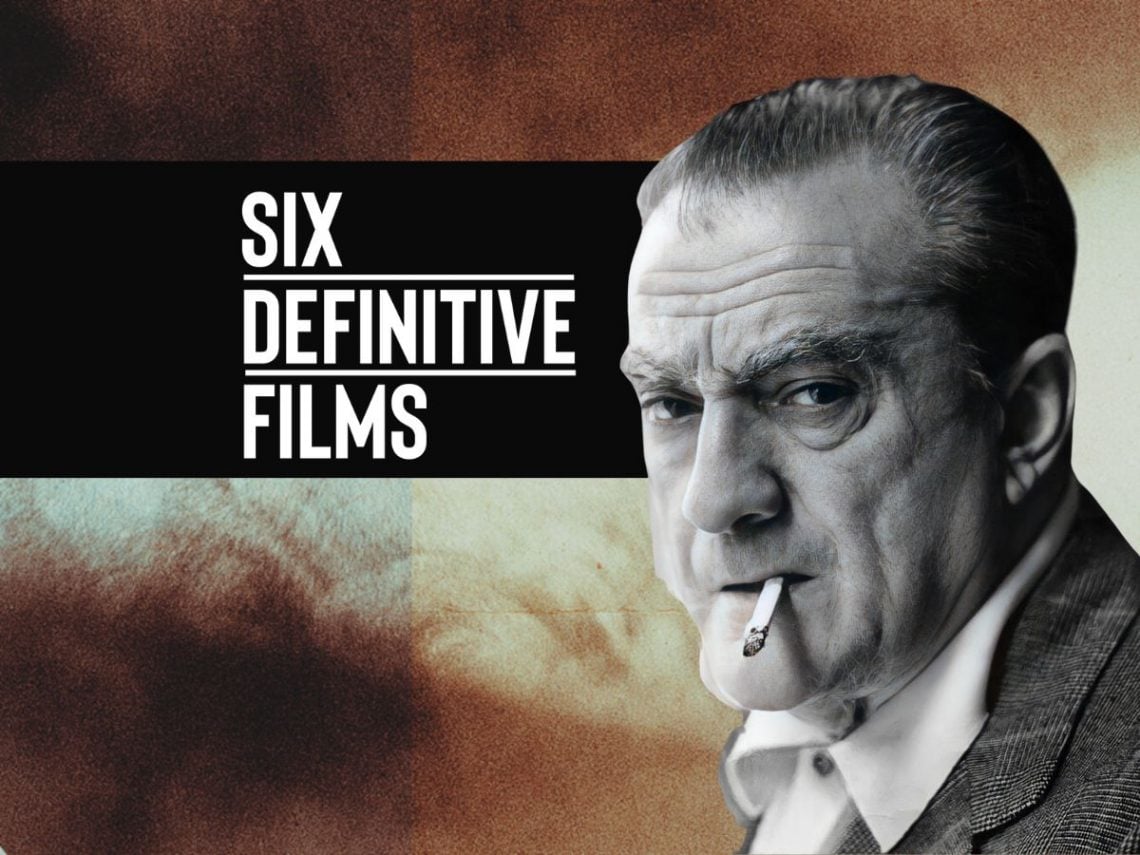
Six Definitive Films: The ultimate beginner’s guide to Luchino Visconti

Luchino Visconti is among the greatest pioneers of 20th-century cinema, especially because of his unforgettable contributions to the rich legacy of Italian art and culture. Throughout his career, Visconti stayed true to his vision of cinema and produced wonderful pieces of film art which move audiences to this day.
Born in Milan to a noble family, Visconti was introduced to art and culture from an early age. He started his film career by working as a set dresser for Jean Renoir, eventually gravitating toward his own directorial projects, which brought him global acclaim.
Often cited as a chief figure in the Italian neorealism movement, Visconti’s earlier works might be associated with some of the movement’s aesthetic principles, but the filmmaker consciously moved away from that. In later years, Visconti’s cinema became luxuriously stylised while he tried to probe philosophical subjects such as human mortality.
Although his later style has been described as “decadent” by some critics, Visconti’s vision has inspired countless filmmakers, such as Martin Scorsese. If you’re unfamiliar with Visconti’s body of work, we have got you covered. Dive into our definitive guide to Luchino Visconti’s enigmatic cinema to discover the beauty of the maestro’s fascinating artistic sensibilities.
Check out the full list below.
Luchino Visconti’s six definitive films:
La Terra Trema (1948)
An interesting docufiction by Visconti, La Terra Trema is a partial adaptation of Giovanni Verga’s eponymous novel. Featuring a cast of non-professional actors, the film explores the harrowing conditions created by poverty in a tiny fishing village.
This is the Visconti film that is regularly mentioned as one of the starting points of the neorealist movement in Italian cinema. However, with La Terra Trema, Visconti proved that he was capable of breaking free from the conventions of neorealism.
Le notti bianche (1957)
Based on the famous short story by Fyodor Dostoevsky, Le notti bianche is probably among the greatest Dostoevsky adaptations ever made. It stars Marcello Mastroianni as Mario, a lonely young man who meets a troubled woman (Maria Schell) at night.
A brilliant examination of modernity and social alienation, Le notti bianche remains one of the most exquisite cinematic achievements of the 1950s. It also brought Visconti critical success in the form of a Silver Lion at the Venice Film Festival.
Rocco and His Brothers (1960)
Among the more popular films from Visconti’s oeuvre, Rocco and His Brothers is definitely among the best films to emerge from the neorealist period. Presented through a compelling visual framework, Visconti explores the clash of cultures in Italy.
It follows the migration of a family from southern Italy who are subjected to all kinds of cultural shocks in the industrial modernity of the north. At the time of its release, the film failed to resonate with critics, but it is now recognised as one of Visconti’s best.
The Leopard (1963)
A true Visconti epic in every sense of the word, The Leopard is set during the volatile sociopolitical period of the 1860s when the social order was threatened by other forces.
During a conversation with Criterion, Martin Scorsese cited it as one of his favourites: “Another masterpiece about Sicily, another meditation on eternity, and an endlessly rich historical tapestry, meticulously composed in colour and on 70 mm.”
Death in Venice (1971)
When Visconti was accused of decadence, he pointed towards the work of novelist Thomas Mann in defence of his own creative process. That’s exactly why Death in Venice is an important part of Visconti’s later thesis on images and film art.
Based on a novella by Mann, the film follows a composer who decides to seek peace in a seaside resort. However, his search for respite is thwarted when he falls for an adolescent boy whose beauty becomes the object of all his desires.
Ludwig (1973)
A lengthy biographical epic about King Ludwig II (often called the “Mad King”), Ludwig is another interesting addition to Visconti’s impeccable body of work. In many ways, Visconti was the perfect filmmaker to tackle the life of such a complex historical figure.
The film examines the aristocrat’s peculiar life, filled with loneliness and unrequited love for his cousin. Although the film was initially cut, Visconti’s four-hour version of Ludwig is definitely the more majestic of the two.
