


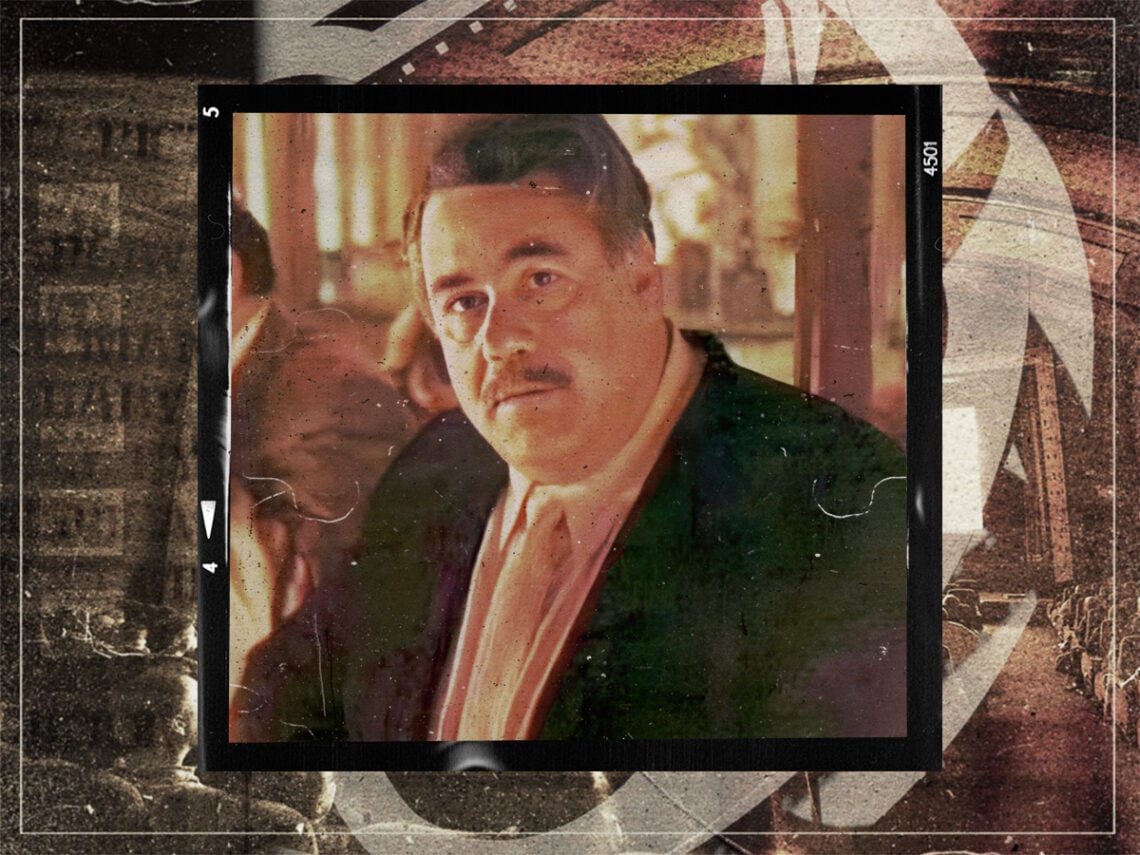
Louis Eppolito: The ‘Mafia Cop’ who became a movie star

Tales of dapper gangsters, concealed Tommy guns, and fog-filled bars festered with cigar smoke are often reserved for childhood fantasies – and for good reason, such filmmakers as Francis Ford Coppola and Martin Scorsese have fictionalised them to the point of stylish fantasy. It is difficult to comprehend the reality of such mafia crime lords, yet in the 1990s, these two worlds collided when Louis Eppolito strutted into the Hollywood limelight.
Happening to grow up in Brooklyn, New York, the very place that birthed such crime flicks as Goodfellas and The French Connection, Eppolito was the son of Ralph ‘Fat the Gangster’ Eppolito, an enforcer of the Gambino crime family, with his uncle and cousin also tied into the criminal group. Inevitably, this led to Louis himself becoming entangled with the mobsters shortly before he applied to the New York Police Department (NYPD) in 1969 and falsely told them that he had no relatives affiliated with organised crime groups.
Despite being just 20 years old when he joined the police force, Eppolito quickly climbed the ranks, even being inducted into the prestigious Honour Society during his time before he was promoted to the rank of detective eight years later. Though his early career had run smoothly, once he was in a position of power, he began flagrantly abusing his post, being suspended without pay for half a year in 1984 when he was accused of passing confidential information to Rosario Gambino, a relative of the Gambino crime family.
Although he was clearly in the wrong, he chose to fight the case and surprisingly won the ruling in 1985, surely waltzing back into the office like Harvey Keitel’s ‘Bad Lieutenant’ after being immediately reinstated as a detective. Despite the victory and a hard-fought legal battle, he retired from his post five years later, leaving a fog of mistrust in his wake.
Clearly buoyed with hubris after winning his case against the NYPD, in 1992 Eppolito began to feel as though he couldn’t be touched by the authorities, even pursuing a career in Hollywood, accompanying a friend for the audition of an upcoming gangster flick named Goodfellas. Despite never going with the intention of being in the film himself, he was eventually encouraged by the casting director to audition and was remarkably cast in the movie as Fat Andy, appearing in the movie’s iconic scene in The Bamboo Lounge beside the likes of the eclectically named Freddy No-Nose, Pete the Killer and Jimmy Two-Time.
Getting a fix for the limelight, his efforts for fame didn’t stop here either, taking a bit-part in the 1990 action sequel Predator 2 before penning the book Mafia Cop: The Story of an Honest Cop Whose Family Was the Mob. In the novel, he swaggered about how he had lived his life on the edge, constantly avoiding being dragged into the mafia whilst defending his name in the police force after having been accused of working with criminal groups.
The book was a sure-fire hit, and, as any secret criminal looking to keep things on the down low would, he took it on tour. It was during this moment of extreme haughtiness that his long-set downfall would begin, appearing on Sally Jesse Raphael’s talk show where he was spotted by Betty Hydell, the mother of James Hydell, a Gambino crime family member who was tortured and murdered in 1986.
The day of his disappearance, the mother recalled a stocky, intimidating man coming to her door, only to identify him as Eppolito years later when he saw him promoting his book on TV. Terrified, she duly informed the authorities.
His life would change in 1994, not because he starred in David Lynch’s nightmarish drama Lost Highway, but because he would move to Las Vegas amid indictments against several crime families. In the midst of this, Anthony Casso, a mob boss-turned-informant, told police he’d paid Eppolito $4,000 every month for several years in exchange for confidential information and went further, revealing that he had been involved in several robberies and murders.
This sparked a ten-year investigation into Eppolito, which eventually resulted in his arrest in March 2005, charged with eight counts of murder, including racketeering and extortion.
Ever the performer, at his sentencing, Eppolito couldn’t resist a little monologue, telling the court: “The federal government can take my life. I’m a man. They can’t take my soul. They can’t take my pride. They can’t take my dignity… I was a hard-working cop. I never hurt anybody. I never kidnapped anybody… I never did any of this”. Sadly for Eppolito, his performance was far from Oscar-worthy, and in 2009, he was sentenced to life imprisonment plus 100 years.
Indeed, despite starring in Scorsese’s magnum opus, Goodfellas, Eppolito was far from a good fella, ending up more of a usual suspect in one of the many gangs of New York.
