


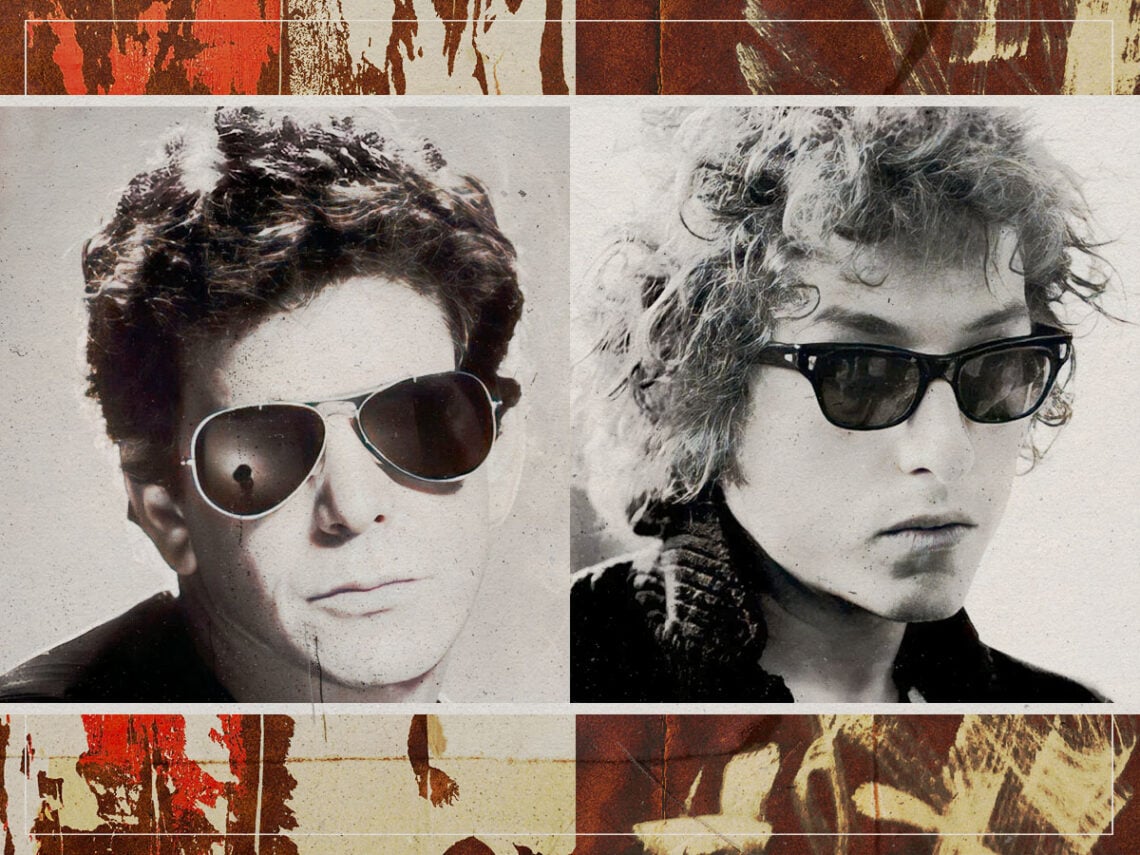
Lou Reed’s all-time favourite Bob Dylan songs: “I’d been listening to it almost every day”

Lou Reed’s legacy sees him solidified as one of the most influential singers, songwriters, and musicians of the latter half of the 20th century. As a key member of The Velvet Underground, he helped produce timeless tracks like ‘Pale Blue Eyes’, ‘Sweet Jane’, and ‘After Hours’, and his solo work further cemented his brilliance. Reed’s impact on music is profound, making him one of the most prolific and universally revered artists of all time.
Even if you’re not deeply familiar with Reed’s work, you’ll likely recognise his material when you hear it. His songs have been featured in numerous films, covered countless times, and have permeated the cultural consciousness. The same thing, of course, can be said of another artist who happens to be among Lou Reed’s favourites: Bob Dylan. Much like Reed, Dylan boasts an iconic discography that spans decades. With songs like ‘Like a Rolling Stone’ and ‘End of the Line’, his music is instantly recognisable across generations.
With both musicians experiencing plenty of career wins throughout the 1960s and ’70s, there was quite a crossover period. Reed was a huge fan of Dylan, mentioning his appreciation for his music many times. “I always go out and get the latest Dylan album,” Reed once said of Dylan. “Bob Dylan can turn a phrase, man. Like his last album [Down in the Groove], his choice of songs. ‘Going 90 miles an hour down a dead-end street’ — I’d give anything if I could have written that. Or that other one, ‘Rank Strangers to Me.’ The key word there is rank.”
Reed also said of Bob Dylan: “Dylan continuously knocks me out… the kind of phrasing that knocks me out is Dylan’s. For language, Dylan kills me to this day.”
Lou Reed’s favourite Bob Dylan songs:
‘Subterranean Homesick Blues’
This song comes in with that signature twang, piled into a full band piece with its swinging pace and quick run time. It’s no surprise that Lou Reed found himself drawn to this one, as you can absolutely hear the influence with some of his Velvet Underground and solo work.
From the opening lines, ‘Subterranean Homesick Blues’ makes its intentions clear: it’s a whirlwind tour through the underbelly of American society, delivered with a frenetic energy that mirrors the social upheaval of the time. The song kicks off with a barrage of rapid-fire lyrics that flow with a stream-of-consciousness intensity, setting the stage for what would become known as the first “rock lyric”.
Famously, though, it is the song’s iconic music video—or rather, the “lyric video”—that is more commonly remembered. A young Dylan is featured flipping through cue cards with the song’s lyrics scrawled on them, capturing the rebellious spirit of the song and reinforcing its impact on both music and media.
‘It’s Alright Ma’
With more stripped-down western guitar and clearer vocals, this minor-toned track veers in a slightly different direction than Reed’s first favourite. And with hard-hitting lyrics like, “From the fool’s gold mouthpiece the hollow horn/ Plays wasted words, proves to warn/ That he not busy being born is busy dying,” it’s easy to understand why Lou Reed loved this one.
The song’s instrumentation is as intense as its lyrics. The propulsive, driving rhythm underscores Dylan’s urgent vocal delivery, creating a sense of frenetic energy that mirrors the song’s lyrical barrage. Unlike the folk simplicity of Dylan’s earlier work, this track embraces a more electric, rock-oriented sound, reflecting the broader shift in Dylan’s artistic direction during this period.
‘Foot of Pride’
‘Foot of Pride’ is a Bob Dylan song with a touch of Lou Reed flair, if there ever was such a thing. With its rock-driven instrumentation and a slight edge in Dylan’s voice, it’s no surprise that Reed was drawn to it.
In fact, Lou Reed loved this song so much that he covered it, playing it live at many of his shows, including at New York City’s Madison Square Garden in 1992. Reed said of the song and performance: “That’s the song I picked to do at Bobfest (in New York in 1992). I’d been listening to it almost every day for two months.”
Reed continues to think about the song, adding: “It’s so fucking funny: ‘Did he make it to the top? Well, he probably did and dropped.’ There are so many verses, it was impossible to learn. G.E. Smith [ who was part of the band that night], who was playing with me, turned the pages. There is a lot of anger here. It’s not the Three Stooges.”

Never Miss A Tale
The Far Out Bob Dylan Newsletter
All the latest stories about Bob Dylan from the independent voice of culture.
Straight to your inbox.