


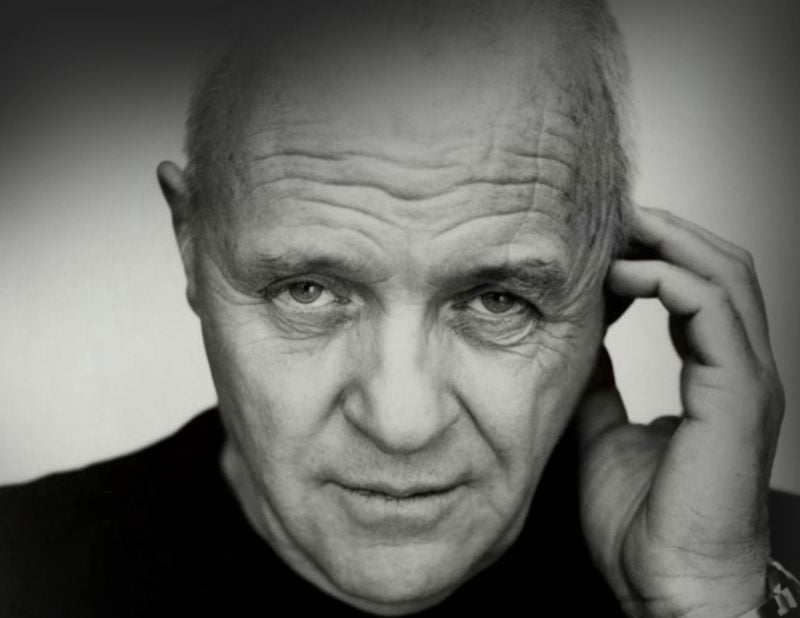
Did being a “loner” help Anthony Hopkins land one of his classic roles?

When casting their creative vision for a feature film, directors always look for a specific type of actor for their roles. Although actors like Gary Oldman and Joaquin Phoenix have made careers out of playing one outlandish character after another, there are just as many actors who find their strengths and stick with them most of the time. When Oliver Stone pitched the idea for Nixon, he turned to Anthony Hopkins for the reason of loneliness.
Unlike most Hollywood actors, Hopkins preferred to keep to himself most of the time, telling The Daily Beast: “My wife says, ‘Why don’t you have any friends?’ I don’t know, I’ve got enough going on in my life without hanging out with actors all the time. I love working, and I’m not lonely, I’m not a recluse, but I am very much my own person”.
While a loner actor might not fare well in terms of business, Hopkins mentioned that was exactly what Stone was looking for in his 1995 film. In conversation with Brad Pitt, Hopkins mentioned his conversation with Stone about why they cast him, saying: “Oliver Stone gave me the part of Nixon, and I remember thinking, ‘Why would he give me that part?’. And he said, ‘Because I’ve read interviews about you being a loner. That was Nixon.’”
When peeling back the layers of the former president, Hopkins began to find different avenues he could take the character. As opposed to having a political agenda, Stone’s idea was to take the audience through Nixon’s life in office and what it meant for him to resign in disgrace after the Watergate scandal.
As Hopkins explains: “Oliver just tried to portray the man as he was—neither good nor bad, but a man who makes mistakes, as we all do. I found it very emotional to play him because I could feel what it must have been like, the disgrace of having to resign”.
While Nixon had a nasty reputation in American politics, Hopkins chose to see the human side of him underneath his reputation. Despite having previously lost another election to John F. Kennedy years before, Hopkins tapped into the idea of Nixon’s public image, going on to say, “You can see the pain in him, and you think, ‘Well, am I better than him? No. I’m not better than him. I’ve got my own immoral quirks’”.
Although Hopkins showed up for work every morning to play a character, he walked away from the project with a greater understanding of one’s flaws. Whereas a man in Nixon’s position may have felt defined by his guilt over scandals, Hopkins talked about learning to accept his mistakes and try to become a better person for them.
While Hopkins admitted to having a drink every now and again, working on the film gave him a greater understanding of forgiveness, remarking, “I caused a bit of damage then, but I’ve made my apologies to people for doing what I did. It’s all part of being alive. And whatever power there is in us, it’s forgiving. It’s over. Forget it. Just move on”.
It may have taken a strong ethic to portray someone as controversial as Richard Nixon, but learning more about him helped Hopkins understand the human condition better. The public can quickly bring someone to task for their wrongdoing, but it takes an even stronger will to forgive someone for those wrongs.
