


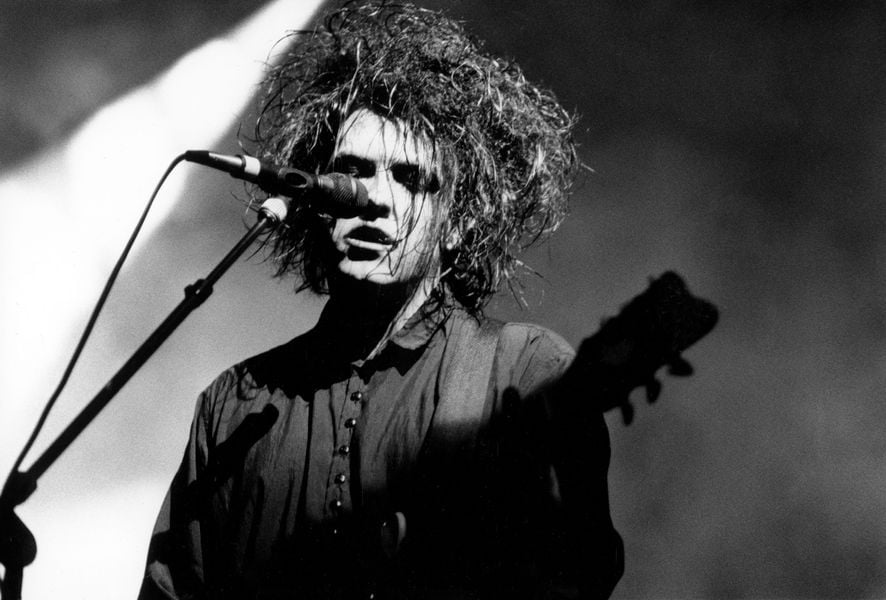
Lol Tolhurst picks his favourite album and concert with The Cure

After a series of early lineup shuffles and name changes, the Crawley-based band eventually known as The Cure began recording as a trio consisting of frontman Robert Smith, drummer Lol Tolhurst and bassist Michael Dempsey. Following their debut album, Dempsey was replaced by Simon Gallup; this configuration was responsible for the band’s so-called ‘Dark Trilogy’ of albums, consisting of Seventeen Seconds, Faith, and Pornography.
Following the release of Pornography in 1982, the band overcame tension between Smith and Gallup which developed on tour. Years later, while the band were working on Disintegration, the album that would boost them to global stadium tour success, Tolhurst became erratic and unreliable due to a spiralling relationship with drugs and alcohol. As a result, he was dismissed from the band. Although he has never welcomed back long-term, he and Smith have reconciled over the years, and they even reunited for a run of gigs in 2011.
“We had a long chat about all sorts of things,” Tolhurst told The Guardian of his and Smith’s reconciliation in 2003. “I think we both have the idea that there’s lots of things that we can still do [together] … and I’m sure that it will happen. It’s not a question of ‘if’, it’s more a question of ‘when’.”
In a recent guest appearance on David Earl and Joe Wilkinson’s popular podcast Chatabix, Tolhurst discussed his time with The Cure, remembering some of his fondest moments.
“The best tour we ever did – the best stage thing – for me was for Kiss Me [Kiss Me, Kiss Me in 1987] because we had this kabuki curtain in front of the stage,” he recalled. “So when people walked in, they just saw a curtain, they didn’t see the stage, and they couldn’t see any of the instruments, they couldn’t see anybody. And I knew after the first show, every night we walk on, and we stand behind the curtain, and we start playing the first song. The second Robert went up to the mic and started to sing, the curtain dropped. The place would go nuts – completely insane.”
“That was the best thing we ever did,” he added.
“Favourite Cure song, favourite Cure album and favourite gig you ever played?” Earl asked later in the episode.
“Favourite song,” Tolhurstst repeated. “I don’t really have one because they all have different meanings. But I do have a favourite album; Pornography is my favourite album because, for me, it’s the most realised… like, coming from the three of us. And I like Faith as well, but, you know, there’s other reasons for that, which is explained in my new book [Gothic: A History], actually.”
“I loved playing, we played this thing one year, urhh… 1985, with Culture Club, Depeche Mode and the last concert The Clash ever played, in Athens in the old Olympic Stadium.,” Tolhurst added, picking out his favourite gig with The Cure. “And that was insanity. We had to escape in a truck because they had a riot happen halfway through. That was good, I liked those, and I liked some of the South American gigs we did as well for the same reason. [We] don’t want anybody to get hurt, but it’s great when there’s 100,000 people going nuts, you know?”
The Cure have a considerable following in South America, and, as Tolhurst remembered in the podcast, some of the gigs would work their way into quite the frenzy. While the band was on tour in Argentina’s capital, Buenos Aires, in 1987, a riot broke out after stacks of counterfeit tickets were sold across the city.
On the evening of the show, the stadium, which had a capacity of 60,000, was descended upon by 110,000 ticketholders. Denied entry, a mass of over 50,000 fans swarmed outside the stadium; it wasn’t long before a full-scale riot broke out. After the dust had settled, dozens had been injured, a hot-dog salesman had died of a heart attack, and three police dogs had been killed.
“That was ugly,” Smith recalled of the evening in a feature with NME. “It was the one time I’ve been really frightened with The Cure because we were locked in this basement room, and we could smell burning, sirens were going off, and I thought, ‘We’re not going to get out of this’.”
