


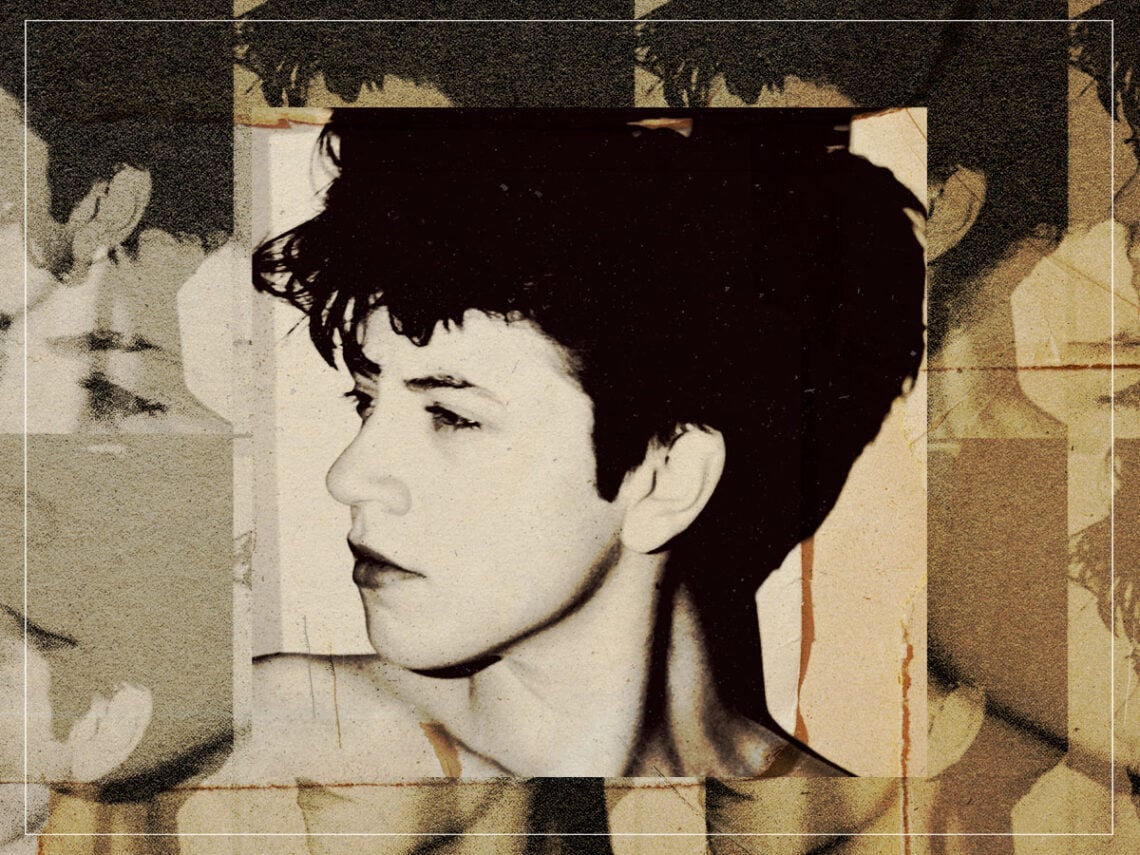
Lizzy Mercier Descloux – ‘Press Color’

Over the years, music has become increasingly driven by profit, meaning artists are often pushed into a sound which is guaranteed to sell well. Particularly within modern music scenes, artists always seem to look back upon the popular sounds of the past, stifling any kind of musical advancement. Every now and then, though, an artist comes around who changes everything, works entirely by their own rules, and pioneers a unique new sound. No wave icon Lizzy Mercier Descloux was one of those people, and Press Color is a perfect introduction to her work.
The issue with musical innovation is that it rarely sells well, which is perhaps why Descloux’s 1979 debut failed to make much of an impact within the charts of the US, UK, or even her native France. Listening to the record, though, it is clear that Press Color was never destined for the charts. It is far too interesting for that. From the opening bars of the first track, ‘Fire’, Descloux quickly establishes her unique musical manifesto of defiance, innovation and a total rejection of musical norms.
At first glance, ‘Fire’ might appear to be a simple cover of Arthur Brown’s 1968 classic, but the track represents so much more than that. Descloux juxtaposes the old-school rock of the 1960s with the new underground no wave scene that she was a huge part of after relocating to New York in the late 1970s. ‘Fire’, as its name implies, burns down the musical establishment, stands amid the ashes and declares ‘this is the future’. Do not let the disco rhythms and danceability distract you from its utterly revolutionary qualities.
There are heavy influences of disco and mutant disco throughout Press Color, predicting Descloux’s later dedication to the world of funk and Afrobeat. However, the Parisian musician was not afraid to reaffirm her punk roots either. Tracks like ‘Torso Corso’ hark back to her earlier period in France, particularly the punk experimentalism of records like Rosa Yemen. The vast mix of styles within the record provides for a suitably uncomfortable ride, which fits the uneasy atmosphere of Descloux’s music perfectly.
On songs like ‘No Golden Throat’ and ‘Jim On The Move’, Descloux strips back the decadent disco influence of ‘Fire’, presenting the bare bones of her sound and creating something that is simultaneously captivating and discordant. Of course, the compelling beauty of her voice never wavers across the tracklisting – aside from the largely instrumental track ‘Wawa’, but it is interesting to note just how well she can adapt her voice to many different moods and musical styles.
Towards the end of the record, Descloux once again showcases her endearing sense of humour, creating a pastiche of Peggy Lee’s ‘Fever’, which switches out the word ‘Fever’ for ‘Tumour’. This dark sense of humour was common throughout the no wave movement, but nobody used it as such an effective weapon as Descloux. Rejecting the romanticism of the classic song, the singer sets herself apart from the pithy love pieces of the mainstream while also sending a message to the male-dominated post-punk scene of New York at the time.
Perhaps the album is best known for tracks like ‘Fire’ and ‘Wawa’, but those two tracks hardly scratch the surface of Descloux’s genius. Press Color tells the story of an artist as comfortable with avant-garde experimentation as funky and danceable disco-inspired anthems, always using her music to battle the complacency and banality of the musical mainstream. The album can surely go down as one of the greatest no wave and post-punk records of the 1970s. Its downtempo synth-led sounds still sound as original and captivating today as they were 45 years ago.
