


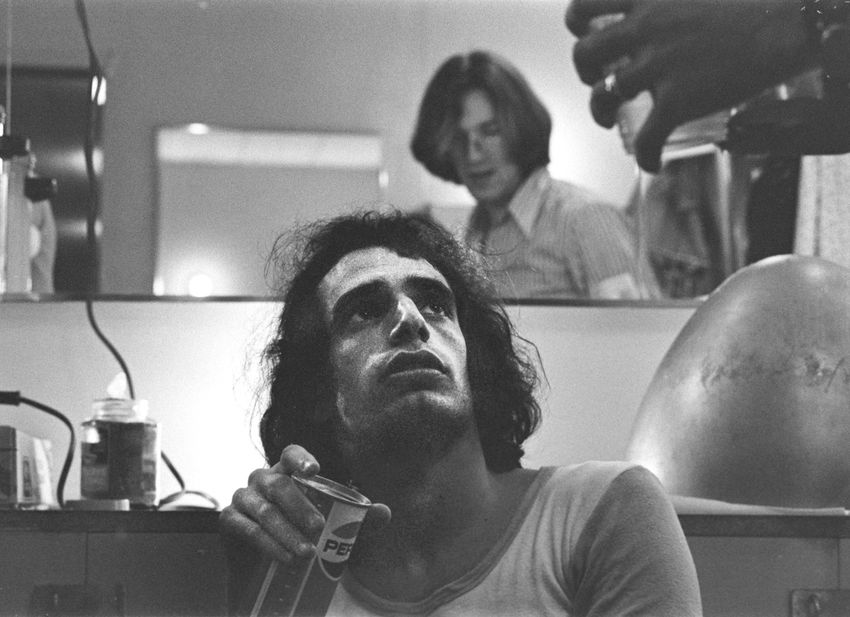
The literature that inspired Donald Fagen and Steely Dan

Anyone who knows their rock and roll history knows where the name Steely Dan came from. The iconic jazz-rock outfit headed by Donald Fagen and Walter Becker took inspiration from William S. Burroughs’ surrealist 1959 novel Naked Lunch in naming their band. Still, it wasn’t the last time Fagen turned to literature in his writing.
“Well, I loved C. M. Kornbluth, I loved A. E. van Vogt. I liked the guys who were really social satirists,” Fagan told The New Yorker in 2006 when listing some of the inspirations behind his 2006 solo album Morph the Cat. “A lot of these guys came out of the socialist movement of the thirties, and they had a very funny way of criticising society. I really learned a lot from them.”
When asked for some other writers who inspired the new LP, Fagen was happy to keep things in the sci-fi realm. “Certainly Alfred Bester. He was a New Yorker. His first novel, The Demolished Man, got the rapid flow of life in the city, which I think is still present,” Fagen explained. “There’s something about the flow of Alfred Bester’s prose that I think affected the way Walter Becker [the other half of Steely Dan] and I write lyrics.”
“When Walter and I met, we had a constellation of enthusiasms, really—science fiction, jazz, black humour, novels by Thomas Berger, Terry Southern, Philip Roth, Vladimir Nabokov, Kurt Vonnegut especially. That certainly influenced the lyric writing,” Fagen added. “We also liked comic songwriting, like Tom Lehrer. He was a piano player and songwriter who wrote these grim, funny songs. And then we were both fans of Frank Zappa and the Fugs.”
In fact, Zappa was the main source of Becker and Fagen’s desire to work humour into their lyrics. “The only comic rock and roll I remember was Frank Zappa, really,” Fagen said. “The Fugs were comic also, but their music was so primitive. I remember the Fugs used to play free in Tompkins Square Park in the sixties, and at one point, they were really the kings of the Lower East Side.”
See if you can find the literary influences in ‘Doctor Wu’ below.
