


Exploring the literary references in The Beatles ‘I Am The Walrus’

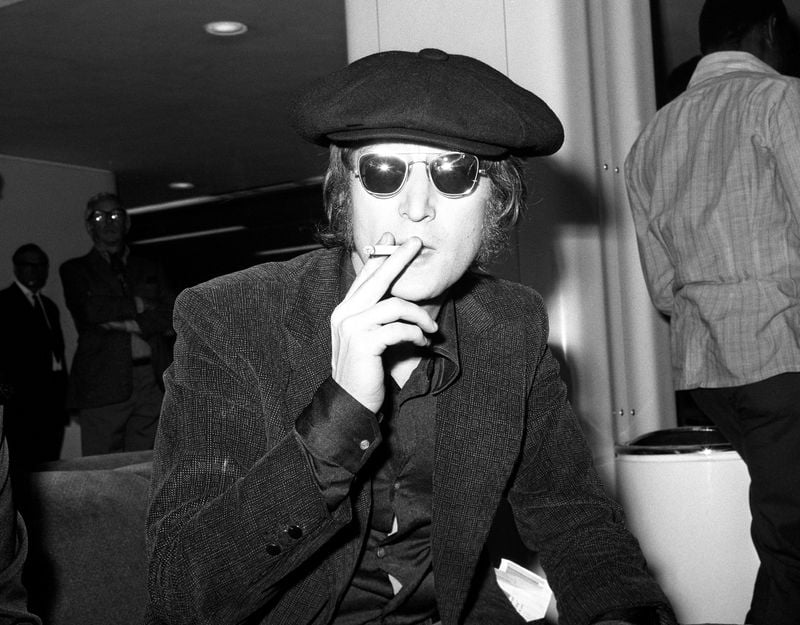
Featured on The Beatles’ 1967 psychedelic free-for-all Magical Mystery Tour, ‘I Am The Walrus’ is one of the Fab Four’s most bizzare and unruly songs. Written by John Lennon in an attempt to confound scholarly fans, it is an attack on sense, logic and order. In the world of the Walrus, as in the world of ‘Strawberry Fields’, “nothing is real”.
It would be wrong, however, to assume it is a world of Lennon’s devising, for ‘I Am The Walrus’ occupies a realm originally created by none other than Lewis Carroll, mathematician, amateur photographer and author of Alice’s Adventures in Wonderland.
It’s telling that Carroll originally wanted to call his 1865 novel Alice’s Adventures Underground. As a work of fiction, it is incredibly counter-cultural and keenly subversive. Inspired by a tale Carroll invented for the three daughters of the scholar Henry Liddell, it tells the story of a girl called Alice, who, after chasing a white rabbit down a hole, finds herself in a world where the philosophical, biological and logical principles of the earthly realm do not exist. Wonderland is not an illogical world but a world where “sense” means something different. In Wonderland, hierarchies are absurd, bodies morph unexpectedly, and the self is as fluid as a plume of hookah smoke.
Unlike most works of Victorian children’s literature, Alice’s Adventures in Wonderland and Alice Through The Looking Glass are fervently anti-didactic. In fact, they’re anti-all sorts of things: anti-establishment, anti-authority, anti-capitalist. This all greatly influenced John Lennon, who was inspired by Carroll’s poem The Walrus and The Carpenter – which appears in Through The Looking Glass – while writing ‘I Am The Walrus’: “It never dawned on me that Lewis Carroll was commenting on the capitalist and social system,” Lennon told Playboy in 1980.
“I never went into that bit about what he really meant,” he continued, “like people are doing with the Beatles’ work. Later, I went back and looked at it and realized that the walrus was the bad guy in the story and the carpenter was the good guy. I thought, Oh, s–t, I picked the wrong guy. I should have said, ‘I am the carpenter.’ But that wouldn’t have been the same, would it?”
Lewis Carroll isn’t the only celebrated writer to receive a nod in ‘I Am The Walrus’. Lennon apparently plucked the nonsense line “Goo Goo Ga Joob” from Finnegan’s Wake by James Joyce. Then, towards the end of the song, a number of voices can be heard weaving in and out of the choral chant. These were taken from a BBC Radio broadcast of William Shakespeare’s King Lear, which Lennon heard while listening to the radio at Abbey Road. He managed to convince George Martin to combine fragments of the broadcast with the studio mix, meaning that disjointed pieces of the play’s dialogue found their way into ‘I Am The Walrus’. Most of that dialogue is taken from Act Four, Scene 6, when Oswald, dying, delivers the line, “Slave, thou hast slain me. Villain, take my purse.” “I know thee well: a serviceable villain,” says Edgar, looking down at Oswald’s body. “As duteous to the vices of thy mistress As badness would desire.”
What transpires is one of The Beatles’ densest and most literary songs, as well as their strangest. It acts as the perfect composite of what made the Fab four one of the greats: intelligence, intrigue, experimentation and adventure.

Never Miss A Beat
The Far Out Beatles Newsletter
All the latest stories about The Beatles from the independent voice of culture.
Straight to your inbox.