


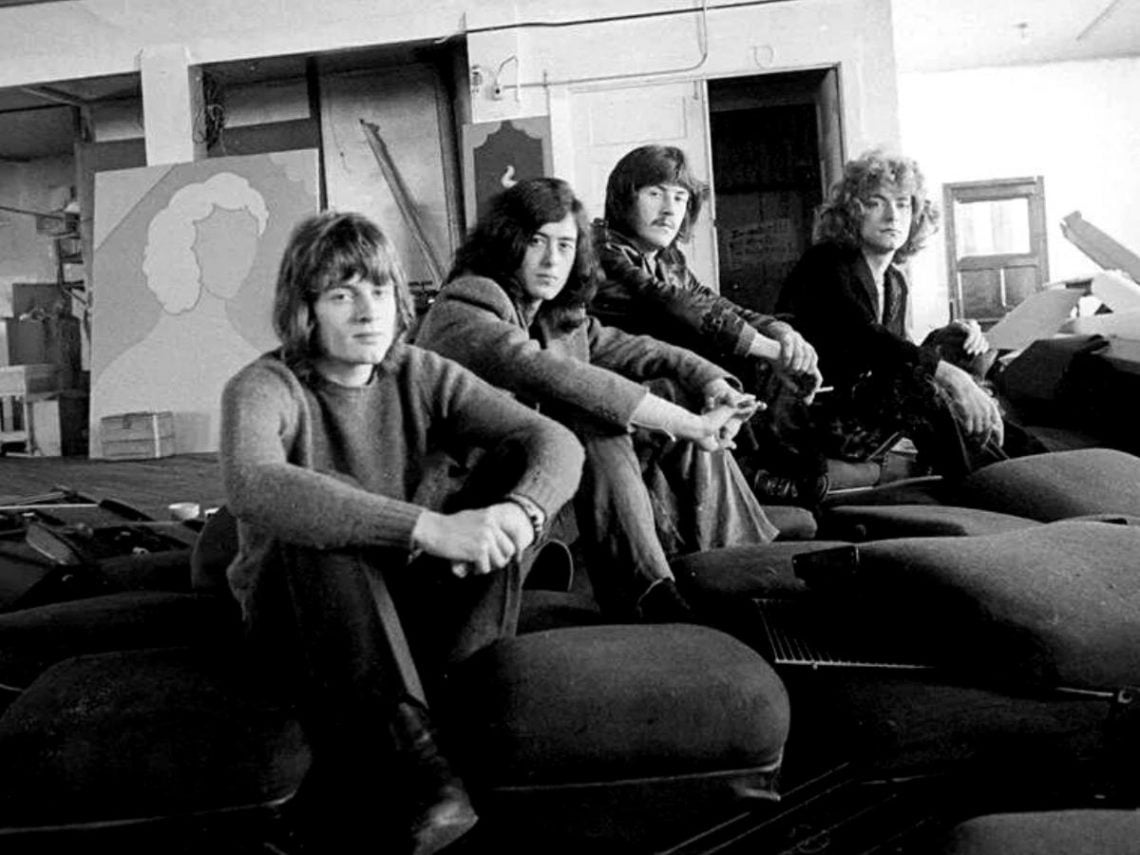
Listen to an early Led Zeppelin demo for ‘No Quarter’

The evolution that Led Zeppelin were experiencing during their earliest days was remarkable. Originally formed by Jimmy Page in response to a few lingering contractural obligations for The Yardbirds, Led Zeppelin quickly carved out their own identity separate from Page’s former band. Although they both shared blues roots and psychedelic flourishes, Zeppelin soon found that they could play a wide range of style and genres without breaking a sweat.
The bluesy tones of Led Zeppelin I also contained the proto-punk black of ‘Communication Breakdown’ and the stinging folk on ‘Your Time Is Gonna Come’, not to mention Page’s raga-esque ‘Black Mountain Side’. By Led Zeppelin II, the group found solace in tender ballads (‘Thank You’), boogie-woogie (‘Living Loving Maid’) and the whiplash dynamics of songs like ‘What Is and What Should Never Be’ and ‘Ramble On’.
Led Zeppelin III presented a greater influence from folk and acoustic music, while Led Zeppelin IV largely saw a return to hard-hitting hard rock. But Zeppelin saved their most eclectic styles for Houses of the Holy. There, reggae tunes like ‘D’Yer Mak’er’ rubbed up against funk workouts like ‘The Crunge’ and majestic overtures like ‘The Song Remains The Same’. The album’s penultimate track, ‘No Quarter’ was yet another leap into the unknown for Zeppelin, now overtaken by the atmospheric doom of pagan rituals, Viking raids, and Norse mythology.
‘No Quarter’ was composed by bassist John Paul Jones while he was beginning to implement keyboards more seriously into the band’s sound. Although Jones was a trained musician with a working knowledge of classic composition, there was little room for that kind of thing in a rock band. Still, Jones’ interests in music outside of the rock idiom pushed Zeppelin out of their bluesy comfort zone and into something far more unique.
The earliest version of ‘No Quarter’ was attempted during the sessions for Led Zeppelin IV. Jones had the basic structure of the song in place, but the original key was higher and featured a faster arrangement. The demo recording shows that Robert Plant hadn’t yet taken a crack at the song’s lyrics, but his melodies remained only slightly altered when the band finally got around to recording the track properly for Houses of the Holy.
The biggest change came after the backing track to ‘No Quarter’ had been finished. Jimmy Page felt that the track wasn’t quite foreboding enough, so he sought to slow down the tape. By utilising vari-speed tape manipulation, Page was able to turn ‘No Quarter’ into a more ominous and lumbering track without making the final cut sound sludgy or plodding. With a completed set of lyrics from Plant, ‘No Quarter’ was ready for the world.
Check out an early demo for ‘No Quarter’ down below.

Never Miss A Beat
The Far Out Led Zeppelin Newsletter
All the latest stories about Led Zeppelin from the independent voice of culture.
Straight to your inbox.