


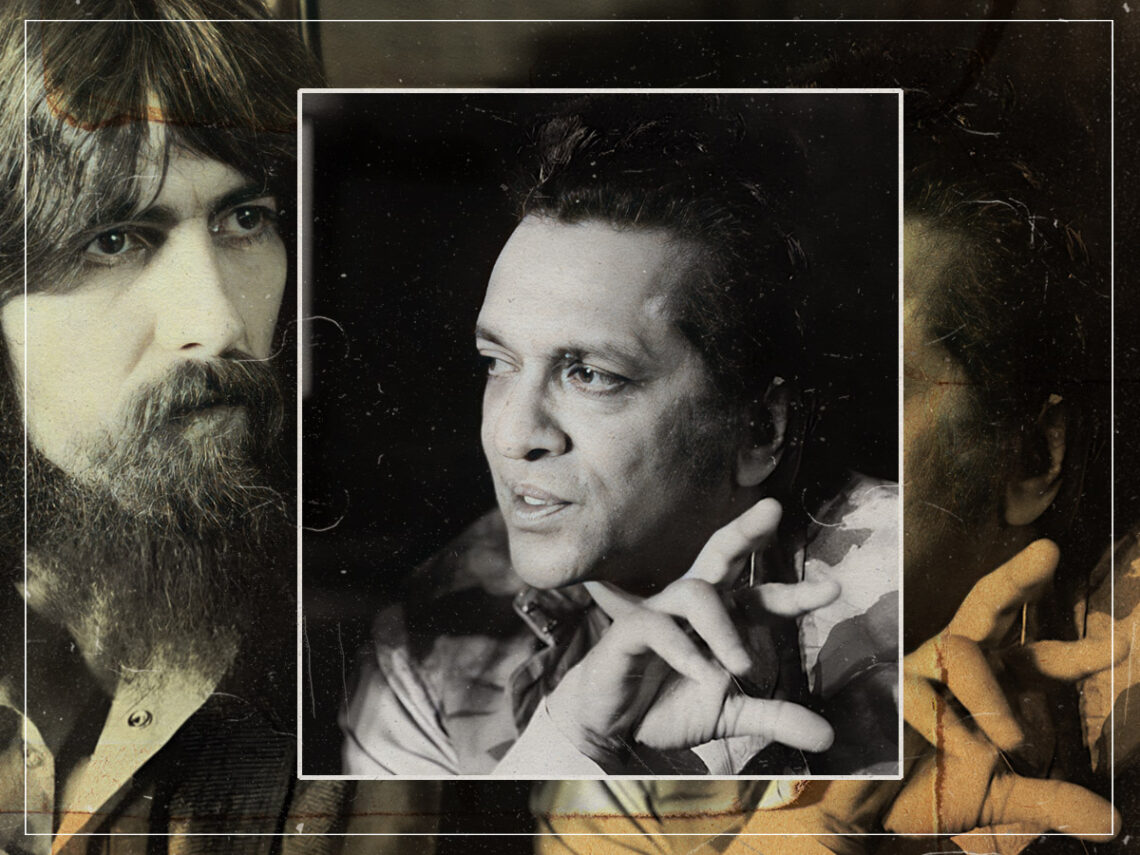
The life and times of Ravi Shankar

After years of exposure to mainstream Western audiences, it still feels like we are hardly scratching the surface of Eastern music. For as many resources available, the West’s relationship with the sounds of Indian music still tends to be relegated to the occasional sample of the music that plays in the background of certain movies. Whereas most of the odd metres and sounds of instruments like the tabla seem alien to many people, it all came naturally to Ravi Shankar.
First gravitating towards dancing and sharing Indian music with the West, Shankar had started working in music of all kinds from his religion, specialising in genres such as rudra veena and dhrupad when first picking up his instrument. While Shankar’s first Western students were always kept at a distance due to the tense relations left over from World War II, it was only a matter of time before the music began infiltrating the West.
After working with various musicians in his native India, Shankar was persuaded to venture outside of his national borders after hearing about the success of his teacher, Alluddin Khan. Moving further West, Shankar began taking his knowledge of instruments like the sitar into American and English households, holding entire Indian music sessions in Western recording studios.
While Shankar would first expose artists like The Byrds to what could be done with instruments like the sitar, the pivotal turn for British music occurred when George Harrison met him. First, being fascinated with the instruments when working on The Beatles’ film Help!, Harrison became a student of Shankar’s, working as hard as he could to master the art of Indian music.
Shankar was never going to be a wayward teacher. Outside of showing Harrison the mechanics of the sitar, it was all about internalising the different rhythms, making sure every student knew that Indian music was about something that was felt in the bones rather than in the mind. Harrison would even go on to call Shankar one of the only people who ever impressed him, eventually exposing the guitarist to Eastern philosophies as well.
As Shankar continued to innovate in his field, he was also one of the greatest virtuosos to ever pick up his instrument. Compared to the guitarists of the day tearing it up on the club circuit, Shankar may as well have been the Jimi Hendrix of his style of music, being so in tune with his instrument when he was playing that it practically felt like his playing was happening independently from his brain.
Shankar had never forgotten where he had come from, either, though, and he was able to use the help of many of his friends to provide relief to his home in Bangladesh. After falling into ruin due to warfare and disease, Shankar was one of the main performers in Harrison’s The Concert for Bangladesh, with all of the proceeds being paid to ensure the stability of the region.
From there, Shankar would continue to push the Eastern musical vocabulary into the Western mindset. Starting in 1970, he would become a teacher at the California Institute for the Arts, where he took his Eastern instruments into the world of classical music, blending the sounds of an orchestra and an Indian musical troupe together under one roof.
Outside of occasionally performing alongside Harrison throughout the 1970s, Shankar released new music as well as contributed to various areas of media, helping score the soundtrack to the 1980s depiction of Gandhi. Shankar always lived to perform for whoever would hear him, and one of his final performances came in 2011, shortly before his passing, working with the London Philharmonic Orchestra to conduct his first symphony.
Although Shankar would pass away in 2012, his way of incorporating Indian music into the Western zeitgeist cannot be overstated. Outside of the Eastern tinge that was present in a few 1960s tunes, Shankar’s way of seamlessly linking both Eastern and Western styles is proof that there are no true divisions between different regions of music. Everything comes from the same handful of notes, and as far as Shankar was concerned, it was about what moves someone in their heart rather than what style one caters to.
