


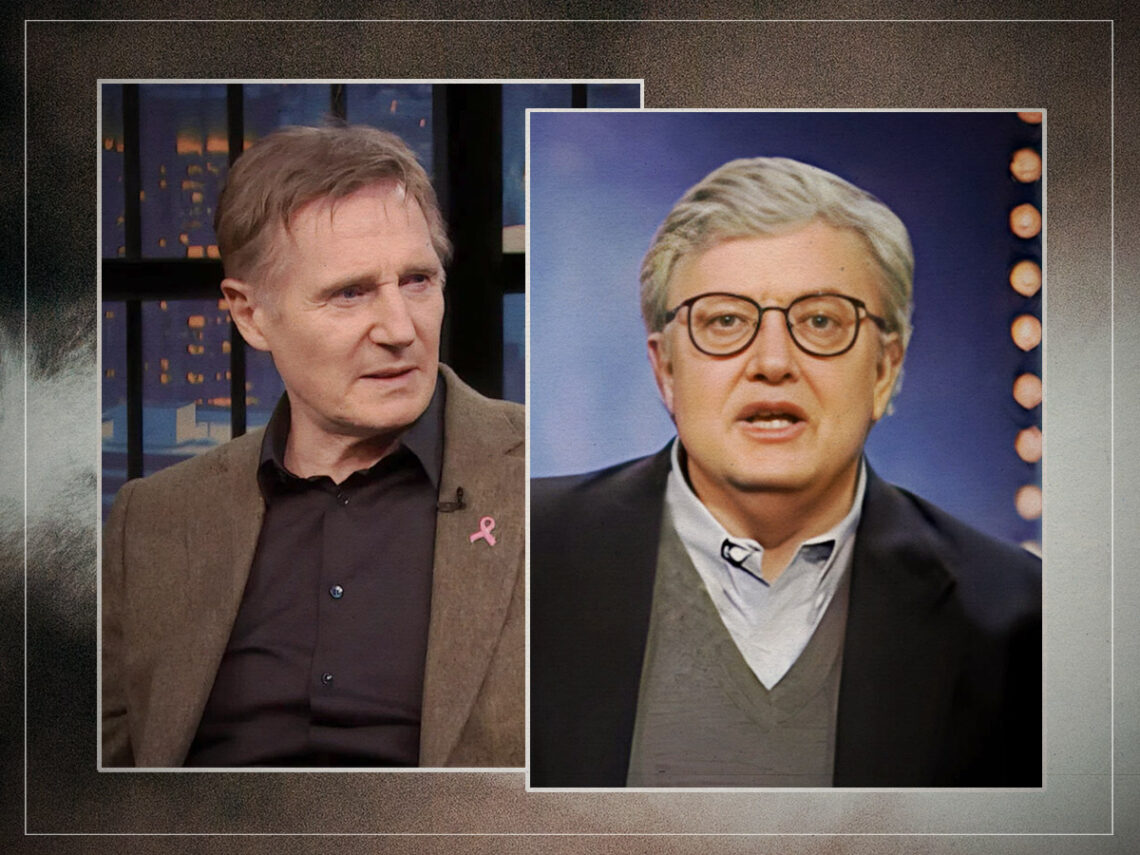
The Liam Neeson movie Roger Ebert hated with a passion: “An incomprehensible mess”

Since Taken reinvented Liam Neeson as cinema’s marquee middle-aged action hero, the actor’s star vehicles have followed a certain template, making it inevitable that the law of diminishing returns would eventually set in.
The Academy Award-nominated actor didn’t set out with the intention of putting his younger gun-toting cohorts to shame, but it’s not like he didn’t embrace it in the aftermath. For almost two decades, the Liam Neeson Action Thriller™ has become a staple of mid-budget cinema, for better or worse.
The grizzled Irishman will invariably be placed in a scenario where either his life or the lives of his nearest and dearest – and regularly both, to be honest – will be placed in immediate peril, which requires him to bludgeon his way through a small army of henchmen to save the day and leave the door open for sequels.
In fairness, the Neeson-led blockbuster that Roger Ebert hated was more of an ensemble piece, which did at least allow the blame to be spread out. Still, the critic wasn’t the only one left bored senseless by director Joe Carnahan’s attempt to update the classic TV series The A-Team for the modern age, with the film performing so poorly at the box office that the in-development sequel was consigned to the scrapheap.
There’s only one memorable scene in the entire film, and it also happens to be the stupidest. If anyone remembers anything about The A-Team, if they remember anything at all, then it’s the preposterous sequence where the titular crew uses a tank’s mounted gun to effectively fly a freefalling tank in mid-air.
Ebert appreciated that scene for what it was by calling it “very funny,” but it was everything else that let it down. “The A-Team is an incomprehensible mess with the 1980s TV show embedded inside,” he wrote in his review. “The characters have the same names, they play the same types, they have the same traits, and they’re easily as shallow. That was OK for a TV sitcom, which is what the show really was, but at over two hours of Queasy-Cam anarchy, it’s punishment.”
It was supposed to be a franchise-launching spectacle, but Ebert ended up feeling like almost everyone else who subjected themselves to The A-Team when he confessed he was “bored out of my mind during this spectacle.” Dumb fun can often be entertaining, but in this case, it was more a relentless slog of forced banter, implausible plot developments, and mundane set pieces.
Whereas Ebert had the platform to bash The A-Team for being a sorry excuse of a blockbuster, it was the average cinemagoer who had the real power. 20th Century Fox was clearly hoping for a sequel or two, only for the punters to vote with their wallets and turn the TV adaptation into a cast-iron flop, something Neeson wasn’t exactly used to in 2010 when he was still riding the post-Taken wave.
