


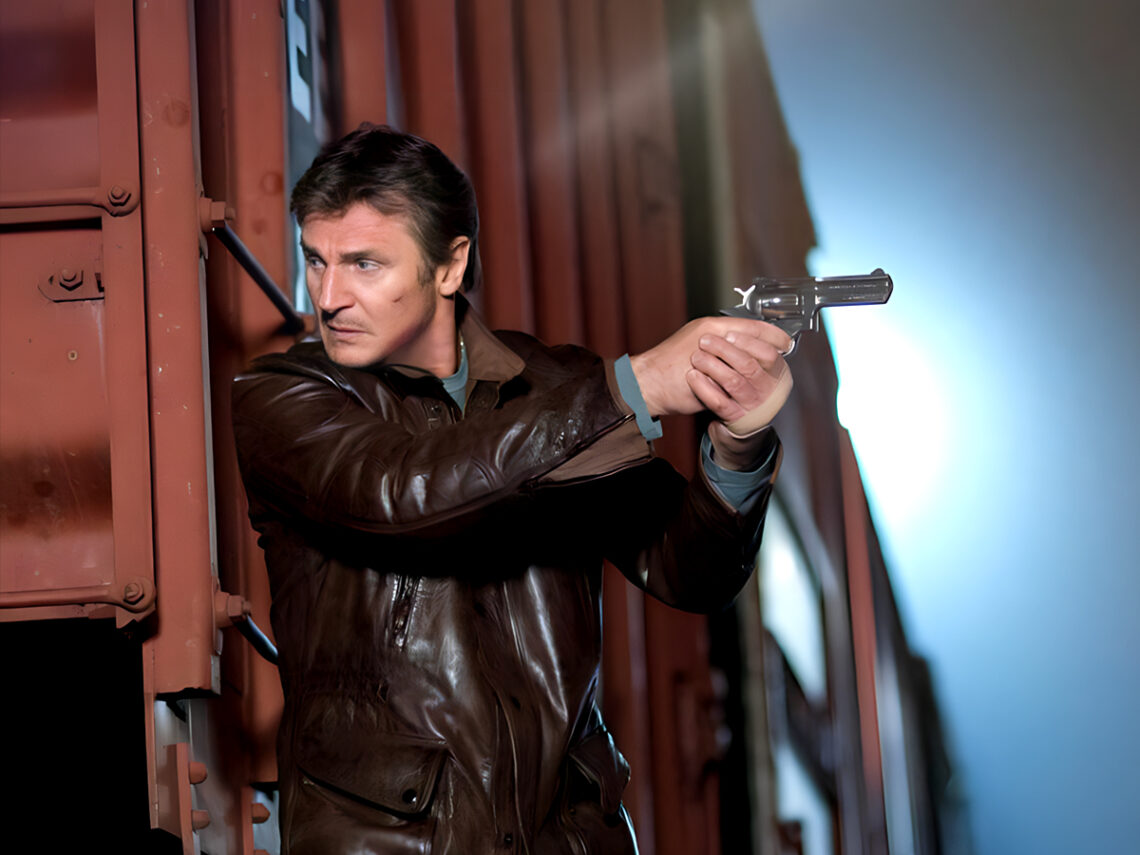
How Liam Neeson became cinema’s biggest action star, according to Liam Neeson: “I have a theory”

“I don’t have money, but what I do have are a very particular set of skills” is an indelible entry into our cultural lexicon. Whether you’ve seen 2008’s Taken or not, you’ve probably seen something referencing it. Another movie, a sitcom looking for an easy laugh by quoting the line. It was really that trailer; you know, the one with Liam Neeson’s rust-coated Irish accent (which he’s trying to mask but can’t) threatening men who have kidnapped his daughter, which made Neeson into an action star.
Since Taken, Neeson has had a strange career revival as an action hero. He wasn’t a stranger to action and adventure roles, having played the titular Rob Roy in the 1995 film which is not so much a film as just a sequence of sword fights, the Jedi master Qui-Gon Jinn in 1991’s Star Wars: Episode I–The Phantom Menace and Ra’s Al Ghul the ninja terrorist in 2005’s Batman Begins. He knew his way around good (and bad) action choreography.
But the man made his reputation doing more serious dramatic roles. Not that there’s anything wrong with paying your taxes by doing popcorn flicks, but the guy became a household name for his academy award winning role as the historical martyr Oskar Schindler in Stephen Spielberg’s Schindler’s List. Even before then, he was acclaimed as a genuine talent in 1984’s The Bounty, and he was praised by all for his intensity and charisma.
This is what he brings to his action roles, whether it’s the various Taken movies or his leading parts in 2014’s Non-Stop, 2023’s Land of Saints and Sinners or the upcoming remake of The Naked Gun. Although, that one’s supposed to be funny. The first one was, anyway.
Reflecting on how and why Taken took off the way it did, Neeson thinks it has to do with political anxiety, saying to Den of Geek “Yeah, yeah. I have a theory, too, certainly with the first Taken; when it came out in 2009, the world was turned upside down financially – we were in a crisis. Our elected leaders, the so-called pillars of society, the bankers and managers, were fucking shafting us. And everyone felt vulnerable and scared and nervous.” The movie in question is about a former special forces officer.
He goes on to ponder about the role that action movies play in our culture, saying, “And when you feel that, you seek entertainment, and I think when you see films like The Expendables – which didn’t come out then, but there was Taken and I’m sure a couple of others – it’s about someone who’s not going to call on a figure of authority when he’s in trouble. He’s going to do something about it himself. I think that gave people a real guilty pleasure. Saying, “Yes, I wish I could do that.”
Liam Neeson may be onto something. There are a lot of ways to track and organize the culture and politics of any given period, and the action movies we’re making is as good a way as any. They’re power fantasies, giving the audience an outlet for their insecurities. Everything that frightens you. The Taken movies (even though there’s more than one for some reason) do that as well as anything else.
