


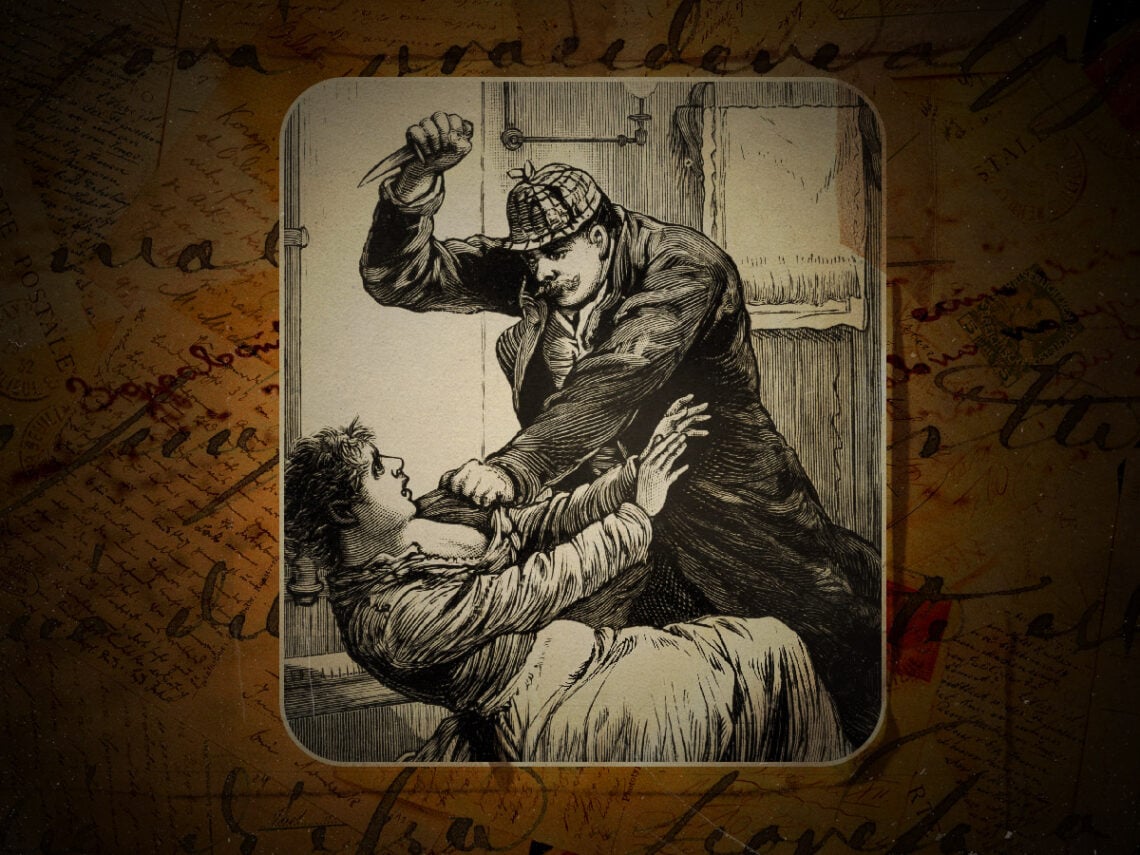
The letter that led to the Jack the Ripper case

Despite committing their crimes in the final years of the 19th century, Jack the Ripper’s murderous legacy still casts a dark shadow across UK culture.
Naturally, the popular imagination around the world was captured by the unidentified mystery that surrounds Jack the Ripper, prompting historical inquiry and sleuthing research worldwide to uncover the culprit to this day. On this blank canvas was poured all the Victorian social anxieties of the day, with Jack the Ripper adopting an almost phantasmic avatar of London’s East End poverty, blighting the national consciousness, as well as the urban tensions inflamed by the influx of Irish and Jewish immigrants, stoking xenophobic feelings among much of the working class.
Yet, there’s also a grubby and lurid Ripper industry that still capitalises on the vicious murder of at least five women in the Whitechapel area. Even well into the 21st century, you can spot enthusiastic Ripper tours and so-called ‘Ripperologists’ hosting true crime walks and cheerful commentary on the sights where vulnerable women were killed by a sadistic misogynist exploiting the rank class oppression of the day. All five ‘canonical victims’ murdered across August to November 1888 – Mary Ann Nichols, Annie Chapman, Elizabeth Stride, Catherine Eddowes and Mary Jane Kelly – were economically oppressed sex workers as much victims of shameful social neglect as they were the Ripper’s knife.
Such morbid fascination with Jack the Ripper was provided plenty of fuel by the emerging tabloid print industry. Exploding from the improved literacy rates among the working class and the proliferation of cheap, halfpenny publications in circulation created a new journalist subset more than happy to splash their papers with gruesome details on the bodies found, sensationalist illustrations of the killer at large, and a loose relationship with the facts to shift even more copies of news dregs like The Star, Illustrated Police News, or the litany of ‘Penny Dreadfuls’ salacious pulp.
So too came an influx of hoax letters eager to keep the Ripper interest alive. As many as 1,000 letters were sent to the press and the police, largely dismissed at the time as the grim work of tawdry editors wringing further capital from the Ripper case or simply the unsavoury jest from bored members of the public. Only three letters have ever been thought to have some authenticity those being the “Saucy Jacky” postcard, the “From Hell” letter packaged with half a human kidney, and the “Dear Boss” letter.
The first of the notable three letters, the “Dear Boss” message, was sent to London’s Central News Agency on September 25th, 1888, before being forwarded to Scotland Yard four days later. Written in red ink across two pages, replete with spelling and punctuation errors and gleefully mocking the Metropolitan Police’s inconclusive investigation, suspicions of forgery soon gave way when the letter’s eerie detailing of a recent murder matched with chilling accuracy the manner in which the fourth victim, Eddowes, was discovered in Mitre Square on September 30th.
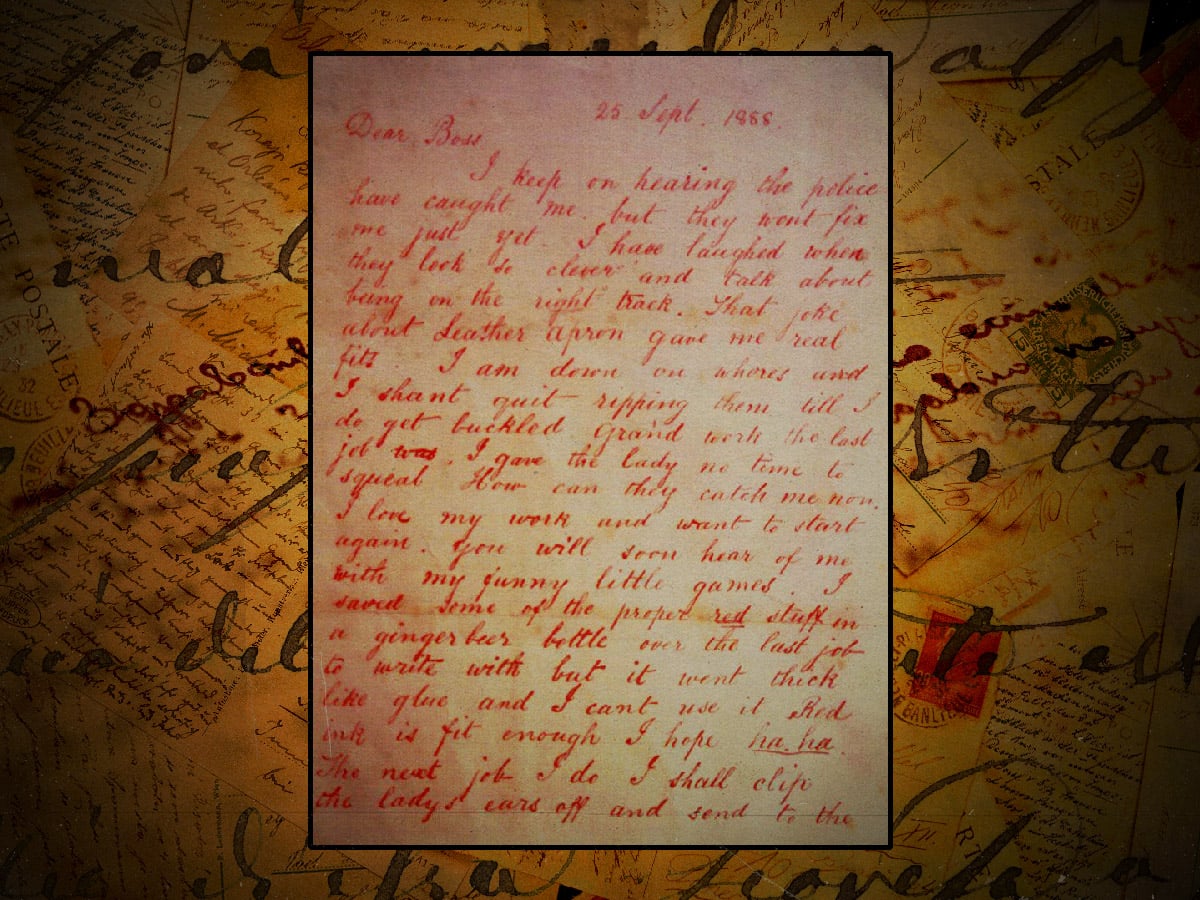
You can read a full transcript of the letter below.
“Dear Boss,
“I keep on hearing the police have caught me but they wont fix me just yet. I have laughed when they look so clever and talk about being on the right track. That joke about Leather Apron gave me real fits. I am down on whores and I shant quit ripping them till I do get buckled. Grand work the last job was.
“I gave the lady no time to squeal. How can they catch me now. I love my work and want to start again. You will soon hear of me with my funny little games. I saved some of the proper red stuff in a ginger beer bottle over the last job to write with but it went thick like glue and I cant use it. Red ink is fit enough I hope ha. ha. The next job I do I shall clip the ladys ears off and send to the police officers just for jolly wouldn’t you. Keep this letter back till I do a bit more work, then give it out straight. My knife’s so nice and sharp I want to get to work right away if I get a chance. Good Luck.
“Yours truly
“Jack the Ripper
“Dont mind me giving the trade name
“PS Wasnt good enough to post this before I got all the red ink off my hands curse it. No luck yet. They say I’m a doctor now. ha ha”
Along with the “Saucy Jacky” postcard, the alleged correspondence finally gifted the press a moniker to title the unknown Whitechapel murderer after the brief Leather Apron name. Debates around its authenticity continued decades after the case; theories on the similarity of the handwriting between the letter and postcard, plus informed knowledge of the nature of the killings, seemed to prove the “Dear Boss” letter’s credibility to future scholars and forensic linguists.
In 1931, however, a journalist named Fred Best was alleged to have been responsible for the letter along with his The Star colleague Tom Bullen, stating a wish to keep public interest alive for the publication’s sales.
Whatever the case, we’ll never know, the “Dear Boss” letter forming another element of Jack the Ripper’s disturbing reach across history and into our contemporary folklore. Curiously, the letter disappeared from the official police files not long after the investigation, only to be anonymously returned nearly a century after its absence and now kept securely in Kew’s The National Archives.
