


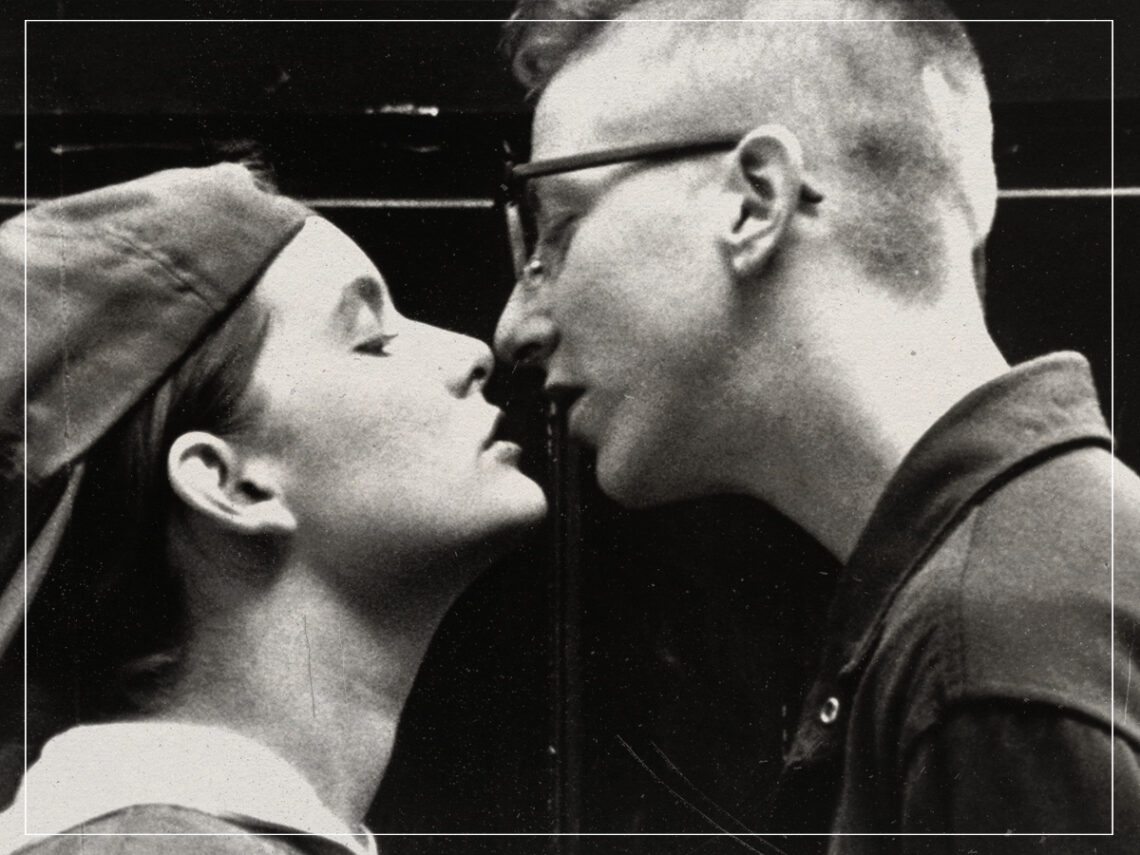
‘Go Fish’: the pioneering lesbian drama from the writer of ‘American Psycho’

The beauty of the creative arts is that there are no boundaries or restrictions on what projects any artist can lend their talents to, which is why the co-writer and lead actor of a pioneering lesbian dramedy would go on to help pen the screenplay for Christian Bale’s breakout turn as the sadistic sociopath Patrick Bateman in American Psycho.
Both director Rose Troche and star/scribe Guinevere Turner made their feature-length debuts on 1994’s Go Fish, which ended up becoming a touchstone for lesbian representation in American independent cinema. The pair had been inspired by the B. Ruby Rich article that coined the phrase New Queer Cinema in the first place, and they ended up becoming a huge part of its growth.
Turner’s Camille ‘Max’ West is a Chicagoan college student on a ten-month dry spell without sex before her initial disinterest in V.S. Brodie’s bohemian Ely blossoms into something else when they make a film together. However, Ely is already in a long-term and long-distance relationship with her unseen partner Kate, which threatens to end the passionate affair before it’s even started.
Meanwhile, Max’s roommate Kia (T. Wendy McMillan) is dealing with the relationship troubles of her own after her girlfriend Evy gets kicked out of her house after her parents are left incensed that she was spotted at a gay bar. A frank, honest, and intimate assessment of modern-day lesbian culture, Go Fish was praised for the way it shone a light on an aspect of society that rarely served as the backdrop to a feature film.
Premiering at 1994’s Sundance Film Festival, it became the first movie from that year’s crop of titles to be acquired by a distributor, with The Samuel Goldwyn Company shelling out $450,000 for the rights. That proved to be a shrewd investment in the long run when Go Fish earned $2.5million at the box office in the United States, in addition to breaking new ground for celebrating and representing lesbian culture on-screen.
That was far from the last time Turner was involved in a pivotal New Queer Cinema moment, either, with the performer lending support as Diana in 1996’s The Watermelon Woman. Written, directed, edited by, and starring Cheryl Dunye in the lead role, it was the first-ever full-length feature to be made by a Black lesbian, it kicked down even more doors for the burgeoning cinematic movement.
American Psycho may have been a drastic departure on paper, but as Turner shared with Movie Maker, part of what drew her to the project – other than Harron, who she’d later reunite with on The Notorious Bettie Page – was that “with the right spin it could be a really subversive, feminist movie”. That may not be obvious at first glance, but seeing as she co-wrote the thing, it’s impossible to argue with her assessment.
