


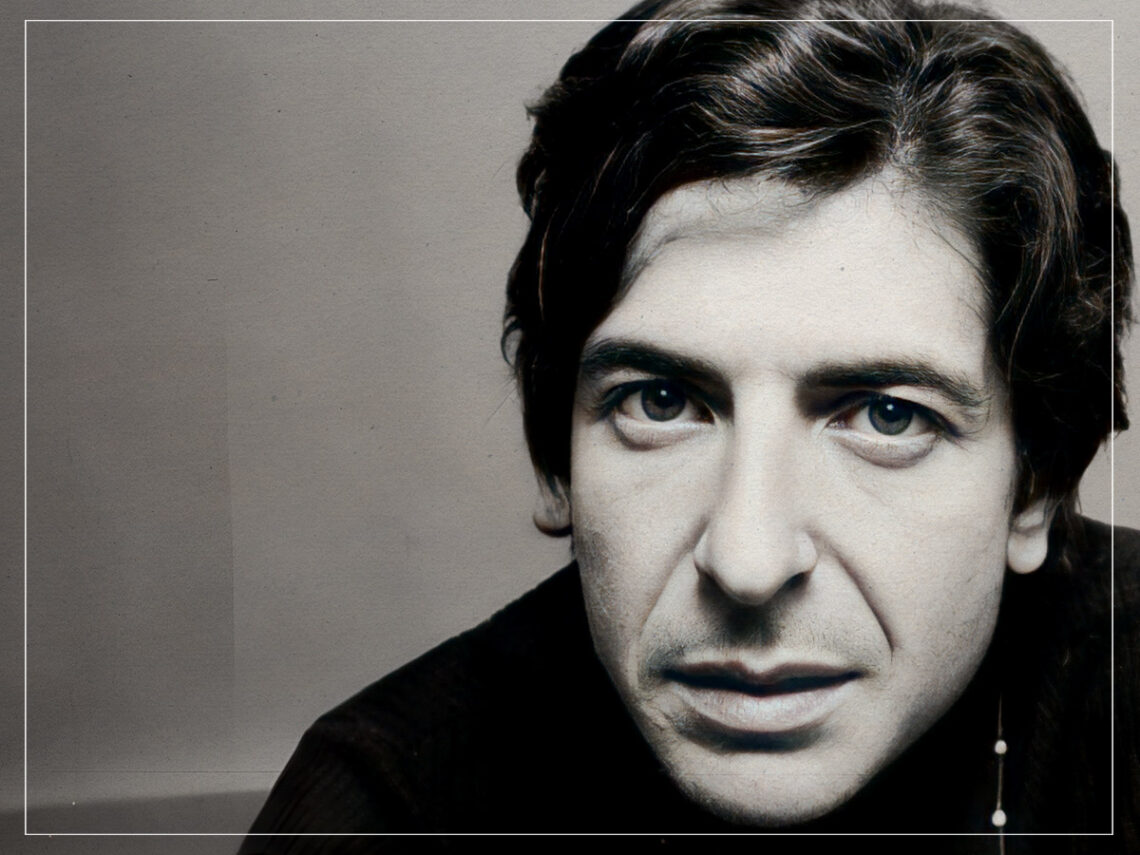
What was Leonard Cohen’s secret chord?

Leonard Cohen’s musical career followed an unusual trajectory. It began on a high note with his 1967 debut album, Songs of Leonard Cohen, which spent nearly 18 months in the UK album charts. However, the 1970s saw a dip in his popularity with releases like the Phil Spector-produced Death of a Ladies’ Man and Recent Songs. Yet, Cohen experienced an extraordinary resurgence in acclaim following the release of Various Positions in 1984, marking the beginning of a remarkable late-career renaissance.
‘Hallelujah’ would go on to appear as the opener of side two of that latter album, but initially, label executives at Columbia Records didn’t hear anything special in the song. They didn’t even want to release the album, though it eventually came out in Europe that same year and America the following.
It would take another four years before ‘Hallelujah’ would begin to receive its deserved recognition, with Bob Dylan being one of the first to cover the track at some of his shows in 1988. The Velvet Underground’s John Cale then recorded a reimagined take on piano for a 1991 Cohen tribute compilation.
It was Jeff Buckley’s version, which took inspiration from Cale’s rendition – recorded three years later in 1994 – which would prove monumental to the composition’s legacy. There was something in Buckley’s take – released as part of his 1994 album, Grace – that, not-so-secretly, struck a chord.
So, what is that secret chord Cohen first wrote about 40 years ago?
While its true meaning remains somewhat mysterious, most will agree on it being a biblical reference nodding to King David – who, although widely known for defeating Goliath, was a musician too: “And it came to pass, when the evil spirit from God was upon Saul, that David took a harp, and played with his hand: so Saul was refreshed and was well, and the evil spirit departed from him” – 1 Samuel 16:23.
In Cohen’s first verse, he sings: “Now I’ve heard there was a secret chord / That David played, and it pleased the Lord”.
The following line, “the fourth, the fifth / the minor fall, the major lift” quite literally describes the chord progression underpinning those words. With the fourth and fifth chord of the scale, respectively, being the first reference points mentioned, “the minor fall” points to the “fallen” third of the next chord, making it a minor – in this case, A minor. The “lift” refers to the chord sequence moving from a minor to a major, and in the process “lifting” the harmony.
Some consider the “secret chord”, in a more literal sense, to be Cohen’s hat-tip to the easter egg he’s left between the lyrics sung and the chord progression beneath – a subtle, if-you-know-you-know nod to musicians. Others, however, draw parallels between the title of the track and its very meaning, viewing it as a metaphor for divine inspiration or spiritual harmony, perhaps wanting to lead the listener back to certain Bible verses. It’ll always, as with much of music’s greatest creations, remain up to interpretation.
