


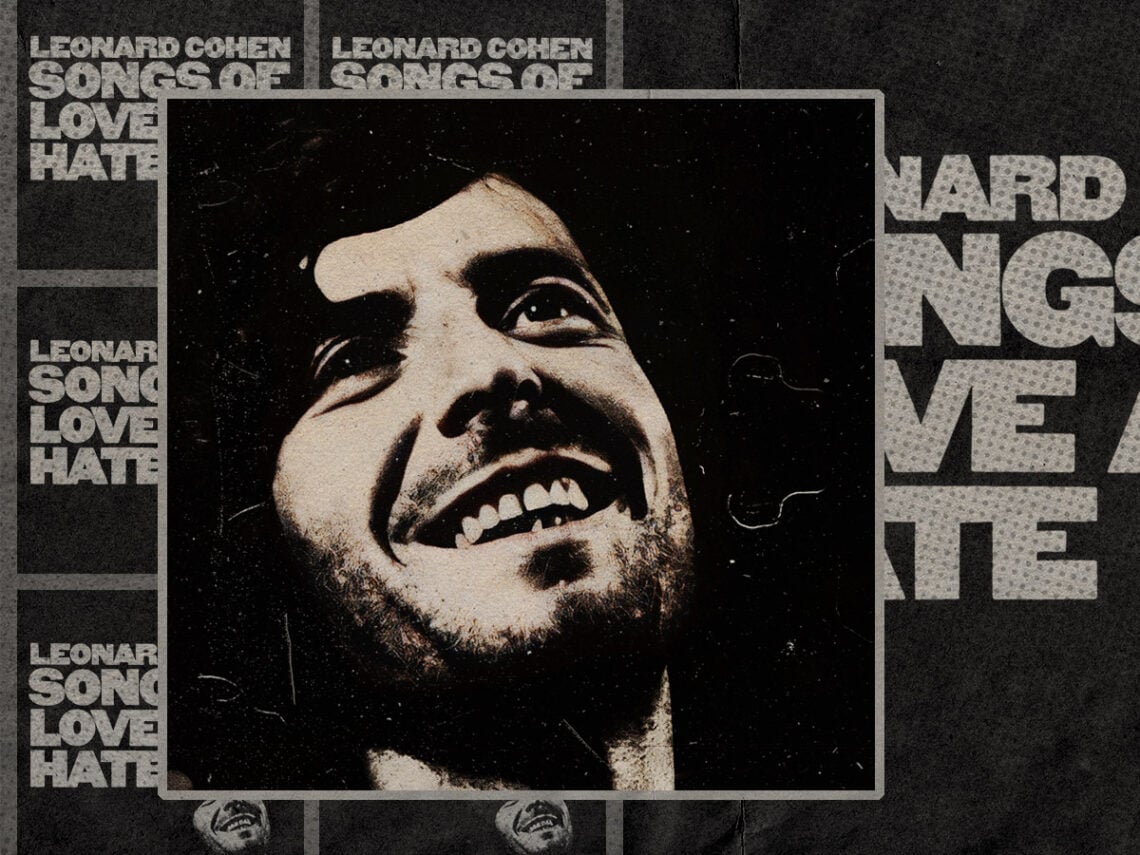
55 years ago, Leonard Cohen released his best album

To try to pin down the enigmatic figure of Leonard Cohen to just one definitive album is impossible.
Not least of all because some of his most arresting work was contributed on the page and without a single performance at hand. From novelist and poet to folk singing hero, Cohen’s journey to the top was the stuff of folkloric scrolls, detailing heroes of old and mythology that would make a minotaur blush. Finding his first rhythms of song when watching a couple have sex, Cohen soon ditched writing poetry for writing some of the most delicately balanced pieces of folk music ever heard.
Folk was a cherished part of the music industry and, for a lot of people, it continues to be considered holy ground. The kind of genre where only the most poignant points are allowed to be made. Folk is the genre that encourages free-thinking, but hopes that you’ll put it to good use by only really focusing on the socio-political issues of the day. Cohen tore up that rulebook as a starting point.
He saw the need to jump into folk music as a way of having his expressions seen and heard by as many people as possible. That expression wasn’t about how to improve the human race, but to exercise the very humanity within him. His songs were about sex, the smelly streets of the city and the passion of melancholy that hid around the corner from every joyful experience. Not driven by money or audience adulation, Cohen’s life revolved around whether or not his work could be truly valued on a personal level. Both in regards to his audience and the writer himself.
Was he happy to let a song be released, and was the audience happy to hear it? These were the only two notions that guided his process. One such album sees those two requirements be checked off without a moment’s notice, his 1971 classic Songs of Love and Hate, easily Cohen’s greatest album.
There can only be one, and we’re sure that almost every different Cohen fan will have a different version of their favourite, exactly the way it should be. But for me, a man still finding his feet in the world of Leonard Cohen, still learning and trying to gather up Cohen’s inherent intent through the power of auditory osmosis, this album, Cohen’s 1971 record Songs of Love and Hate, is the definition of the singer. And, by proxy, a reflection of many of us.
Not only is the album conceptually sound, mirroring the same duality that has plagued both Swedenborg and William Blake before him, but the songs, the very breath of oxygen we’re seeking, are as astounding as anything he had ever written or would write. No mean feat when you consider his vast and extensive back catalogue.
The album is split into songs about love and hate, as one might imagine, and the love songs are simply beautiful. They soften the soul in a way that few singers and songwriters can, like basting their listeners in the glossy glisten of browning butter. It focuses on loves lost and fractured, moments in time that will never be achieved again, and, of course, he finds time to talk about the burning passion of lust, a favoured subject of Cohen and just about every human on the planet. Tracks like ‘Let’s Sing Another Song, Boys’, ‘Joan of Arc’ and, of course, perhaps his finest song of all time, ‘Famous Blue Raincoat’.
Few artists can convey the fragility, vulnerability and heartening power of love. Something that can make one feel so bold yet so easily buried. But Cohen, likely thanks to his background in poetry and narrative writing, is not only able to convey these emotions, but he whispers them like lilting literary nourishment, delicately poised within a folk-pop song and expertly administered to soothe mind, body and soul.
Naturally, the ‘hate’ side of the album is equal parts powerful and pulsating to the more tender moments on the ‘love’ side of the LP. It sees the artist at his most forlorn and depressing, with tracks like ‘Avalanche’ and ‘Last Year’s Man’ ranking particularly highly in the sad stakes; this album really does have it all. Perhaps more importantly, this album shows that Leonard Cohen had it all, and then some.
Not many songwriters can speak of love as they do hate, but Cohen does both with the slinky balance of a trapeze artist. It is not only what made him an unusual fork in the road of the folk movement, but also makes him such a vital poet today as William Blake. The ability to understand the duality of humanity, that both sides of the coin add up to the coin itself is what has always entranced listeners to fall in love, and perhaps even hate on the odd occasion, the songsmith, Leonard Cohen.
While some records are full to the brim with potency and memorable moments, Songs of Love and Hate instead feels like ‘an experience’. It is an album to listen to in one sitting whenever possible, in order to feel the full brute force of the songs, of Cohen’s writing, of life itself.
