


Léon Spilliaert: how to paint insomnia

“I worked, shut up at home all day. When it grew dark, I went out regardless of the weather, taking long walks for hours along the sea or cross country.” This is how the young artist Léon Spilliaert described his life. He would lock himself up by day and prowl the empty, dark streets of Ostend, Belgium, at night.
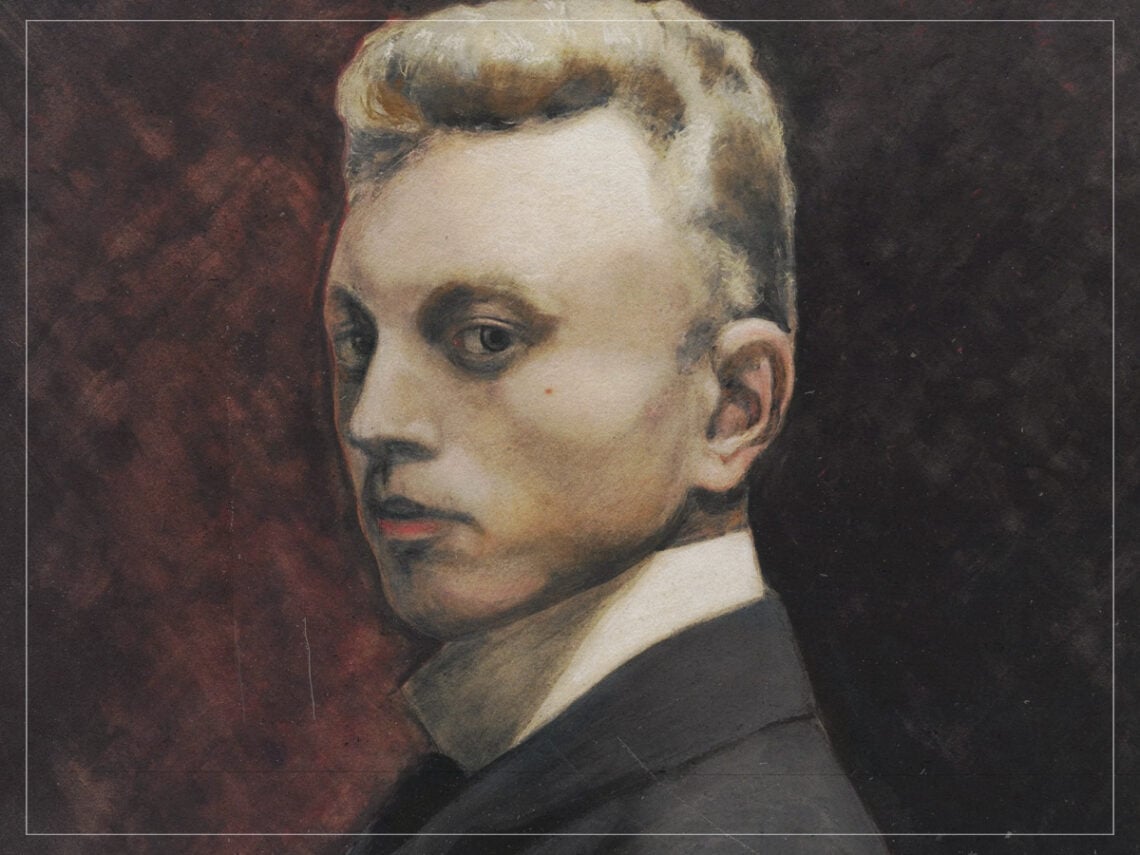
Spilliaert was a lesser-known Belgian artist whose career flourished at the turn of the 20th century. He was known for his harrowing, monochromatic self-portraits as reflections of his inner state of being. As a tortured soul, both physically and mentally, Spilliaert lived like a vampire. During the day, he isolated himself in his studio to paint, and as an insomniac, spent the nights roaming around the city in search of inspiration. His insomnia was born out of painful stomach ulcers that prevented him from being able to rest peacefully; this constant state of agony is mirrored in his paintings.
Today, cities feel alive no matter the time of day. However, back then, ‘night-walkers’ were social outcasts. Although it was a tradition that can be traced back to the Middle Ages, nighttime was known as the most dangerous part of the day, when the worst characters of society, those on the fringes, would unleash themselves in public. This is why, for many centuries, authorities would sanction mandatory curfews.
However, as the years passed, it became less rigid, especially with the rise of the ‘night-time economy’, which allowed space for prostitution, drinking, partying and gambling to flourish. When these kinds of morally corrupt activities became increasingly popular, a number of artists, from painters to poets, used this time to explore the city in search of subjects to write about against the backdrop of the hypocrisy of the wealthy, and thus, the morally superior, upper class. At the time, these artists were associated with mental illness, derangement and substance abuse, but, in many ways, they actively wanted to separate themselves from the upper classes that frowned upon their nighttime activities.
In these nighttime explorations, alongside Spilliaert, were the likes of Charles Baudelaire, James Whistler and Vincent van Gogh. In fact, one can identify a plethora of nocturnal scenes in their portfolios. Spilliaert’s nighttime paintings are a testament to his lonely and relentless night walks and perhaps a record of his experimentation with the hallucinatory effects that came with his physical exhaustion and isolation.
In his 1902 painting Beach Hut, his loneliness is exemplified. The title may elicit a colourful shack on a white beach under the sun in our heads, but instead, we are confronted with a lone white beach hut on a long grey shore, overlooking a dark ocean, lit up by the moon. There is little difference between the beach and the sky, as we are surrounded by an atmosphere of gloom.
Spilliaert’s paintings often feature the sea, almost as a visual evocation of his constant inner state of turmoil. Perhaps he felt safe around the sea as it reminded him of himself. Adrian Locke of The Royal Academy said, “There was something about that isolation and solitude that clearly he was attracted to. He seems to have revelled in the creativity it awoke in him.”
Known for using India ink, coloured pencil and paper for his work, which allowed him to create dimension and dynamism in his art, which would otherwise feel flat and inexpressive, given the array of dark colours used in his palette. Seascape Seen from Mariakerke perfectly shows this as, upon careful observation, the dark silhouette of the woman walking across the beach is a dreamy amalgamation of dark purple and grey hues that echo the undulation in the waves lapping on the beach.
On the other hand, a sense of listlessness and a confused soul is also evident in his self-portraits, like in his 1908 artwork, Self-Portrait before a Mirror. This is just one of many of Spilliaert’s portraits where he portrays himself as a ghost-like figure, thanks to the use of watercolour and charcoal that make him look more like Frankenstein’s monster than a real person. His face is gaunt, as if a skull, and his mouth and eyes are sunken holes mimicking a rotting face.
There seems to be no life left in him as he stares into space. Spilliaert was greatly inspired by gothic writers like Edgar Allan Poe, which he brings forth in this painting. Gothic literature was typically set in isolated and haunted settings like castles or secluded laboratories, where artists, scientists, or thinkers would slave away at their creations at night. This style of spooky nocturnal art-making is very much evident in Spilliaert’s artwork, being a night-artist himself.
Many have been able to relate to Spilliaert’s paintings as visual manifestations of his soul-searching, but one can’t help but feel the weight of his pain, which seeps out of their monochromatic bleakness.
