


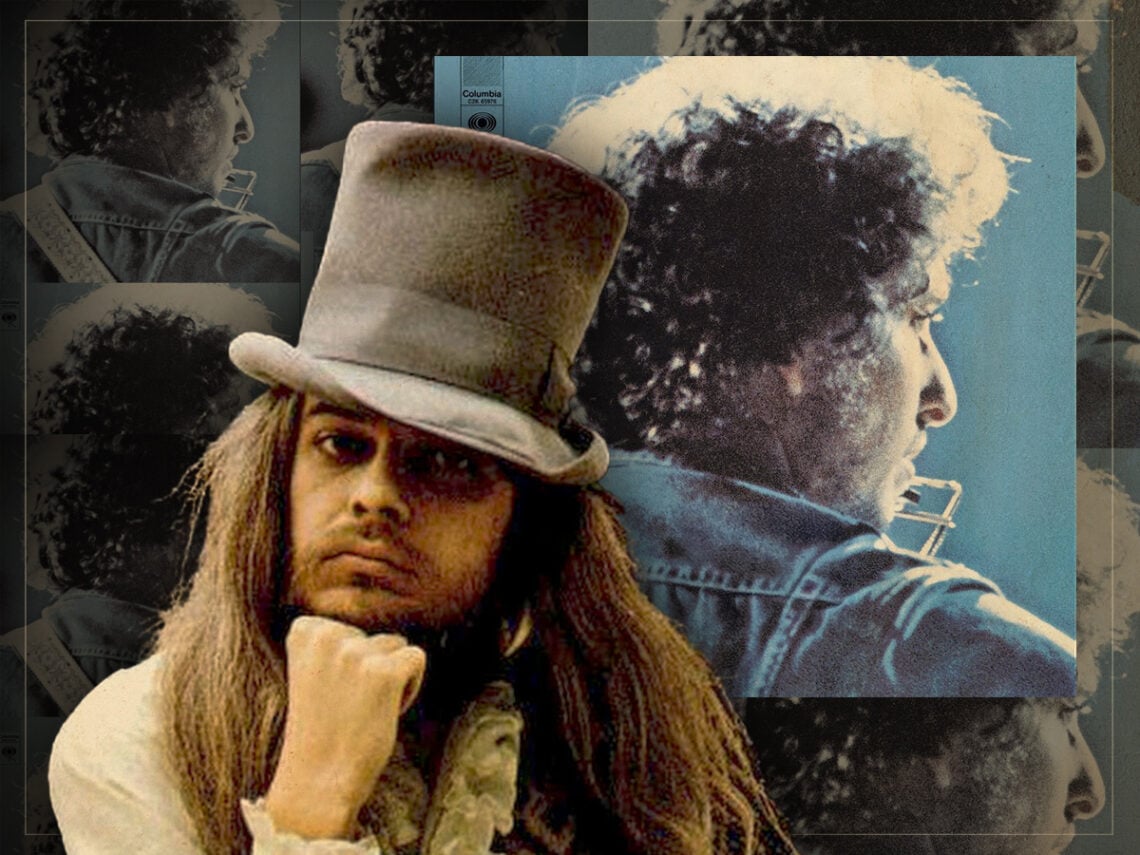
‘Watching the River Flow’: A window into the Leon Russell and Bob Dylan collaboration the world needed

When Bob Dylan took his wonderful Rough and Rowdy Ways World Wide Tour to Tulsa, Oklahoma earlier this year, his audience that night were rougher and rowdier than just about ever ever. Their interaction with his performance made the show feel more like a conversation with the audience and master, a call and ebullient response between a preacher and his long-ago converted choir.
One of the biggest many roars and cheers all night came when Dylan name-checked Oklahoma’s own Leon Russell during ‘My Own Version of You’, and it was probably not lost on anyone in the room that Russell himself had played piano on the studio counterpart of another song Dylan played that night, ‘Watching the River Flow’.
Released at a time when Dylan’s creative wellspring seemed to have run a little dry, the opening lyric on ‘Watching the River Flow’ is a less-than-subtle nod to his writer’s block at the time. “What’s the matter with me?” Dylan sings. “I don’t have much to say.”
By the time Dylan came to record ‘Watching the River Flow’ in 1971, it was being suggested in some quarters that he had lost his touch or a little, and lost his way. Though he had released three albums since 1969, Nashville Skyline, Self Portrait and New Morning, none of them were received as well as any of his mid-1960s masterpieces. To remind fans of just how good he had been in those years, Columbia Records were putting together a new instalment of Greatest Hits, with a few new bonus tracks as well as a brand new single from Dylan to help boost sales.
“I’m gonna make you play the piano like Leon Russell
Bob Dylan, My Own Version of You (2020)
Like Liberace, like St John the Apostle
I’ll play every number that I can play
I’ll see you, maybe, on Judgement Day”
Among them were re-records of some beautiful fucking Basement Tapes era tracks like ‘You Ain’t Goin’ Nowhere’, ‘I Shall Be Released’ and ‘Down in the Flood’, as well as new compositions ‘When I Paint My Masterpiece’ and, of course, ‘Watching the River Flow’. For years, Bob Dylan had been working in Nashville with the producer Bob Johnston, but for the ‘River Flow’ sessions in early 1971, he returned to New York and asked for help from Leon Russell, who not only played piano on Dylan’s new recording but also put the rest of the band together and produced the goddamn sessions as well.
Working as a side-man was no new task for Russell, who had previously played on releases by acts from The Byrds to Bobby Pickett; Herb Alpert to The Ronettes and Darlene Love. In fact, over the course of his career, he played with just about everyone, from Frank Sinatra to Elton John, Ray Charles and Willie Nelson, Dr John and The Rolling Stones.

During their first day in the studio together, Dylan and Russell, and the band that the Southern pianist had assembled of Jesse Ed Davis on guitar, Carl Radle on bass and Jim Keltner on drums, ran through a series of songs like ‘Spanish Harlem’, ‘That Lucky Old Sun’ (which Dylan would later return to and re-record in a stunning rendition for his monumental 2015 album Shadows in the Night), ‘I’m A Ladies Man’, ‘Blood Red River’ and ‘I’m Alabama Bound’ before getting Dylan’s new single recorded on the second day.
‘Watching the River Flow’, as well as being a commentary on writer’s block and sitting down to watch the world you used to control pass you by, is a funky, greasy, hard-grooving blues rocker. Jesse Ed Davis’ slide guitar plays off of Russell’s piano and bites and chops into all of Dylan’s lyrics, driving the song along and leading the way into its many tempo changes and stops and starts. Russell’s piano part ebbs and flows like the waves of the water Dylan sings about rolling onto the shore. At times when the band really starts to boil, it feels like those waves are going to burst the banks; like the levee is going to break and all hell might break loose, and so much of that is down to both the piano playing from Russell and the delightful dynamic between the band he had assembled.
The single did relatively well in the charts, reaching a peak of number 41 on the Billboard Hot 100 in America and climbing as high as number 24 in the UK, without setting the world on fire, which is not uncommon for Dylan’s single releases. Dylan obviously liked what he heard enough, anyway, as Russell was brought back in to produce, and once again play on, his next single, the protest song ‘George Jackson’, which was written and recorded in support of the leader of the Black Panthers, who had recently been shot and killed by guards at San Quentin Prison.
Through the 1970s, Leon Russell became a shining star in his own right and stepped out of the shadows of session musician roles to build up his solo career, bringing his unique blend of Southern roots, gospel, soul and rock and roll, and a futuristic space-cowboy feel on songs like ‘Stranger in a Strange Land’ and ‘Tight Rope’. Preceding his session work with Dylan, Russell included a cover of ‘Masters of War’ on his debut solo album, before going a little further the next time out, when he included two more on his second release (and recorded a further three at the sessions for the album).
Dylan and Russell would continue to cross paths again over the years, notably as the pair both played at George Harrison’s 1971 Concert for Bangladesh benefit show at Madison Square Garden. Russell later joined Dylan on-stage in St Louis during Dylan’s comeback to the stage, Tour ‘74, and, much later on, opened for Dylan at 20 of the summer dates in North America during that year’s run of Never Ending Tour shows.
Though Leon Russell, one year Dylan’s junior, left us in 2016, Dylan continues to keep his old friend alive each night when he plays ‘Watching the River Flow’ on stage, and, especially, when he sings that line that went down so well in Tulsa during ‘My Own Version of You’.

Never Miss A Tale
The Far Out Bob Dylan Newsletter
All the latest stories about Bob Dylan from the independent voice of culture.
Straight to your inbox.