


Seven legendary gigs that changed the course of history

Since its birth in the 1950s, contemporary music has had a tight stranglehold on popular culture and how we live our lives. However, all it takes for one specific event to derail the travel of music and make it swing in a different direction.
Almost every now-iconic artist has one show that embodies the spirit of their career and explains why they went entered folklore. These moments are legacy-defining; if they never happened, the ripple effect is almost unthinkable.
Although some of the events listed below occurred over half a century ago, the repercussions can still be felt all these years later. Fascinatingly, some of the inclusions weren’t seen as extraordinary moments at the time, and it’s also through the benefit of hindsight that we can see their true societal importance.
If these seven moments listed below never happened, the world we inhabit today and the music would likely be unrecognisable. The chain reaction caused by each of these events changed musical history, and each of them ushered in a new, exciting era.
Seven concerts that changed musical history:
Bob Dylan at Newport Folk Festival (1965)
On a blissful summer’s evening in 1965, the crowd at Newport Folk Festival were licking their lips at the chance to see their messiah, Bob Dylan, in person. However, Dylan had different plans for the evening. He decided to leave his acoustic roots behind, which fans viewed as the ultimate betrayal, but that was a response the singer craved.
It was audacious for Dylan to plug in his guitar and go electric at the unofficial home of folk music. He was frustrated by the ownership the folk community had over him, and it was the perfect place to stick two fingers up at them while unveiling his new persona. “What a crazy thing to say! Screw that. As far as I knew, I didn’t belong to anyone then or now,” he later reflected.
His decision to deliberately anger those who worshipped him could have backfired and been suicidal to his career. Yet, Dylan didn’t care about the potential repercussions of his actions, and he refused to be a slave to his fans’ demands, which set a precedent for decades to come.
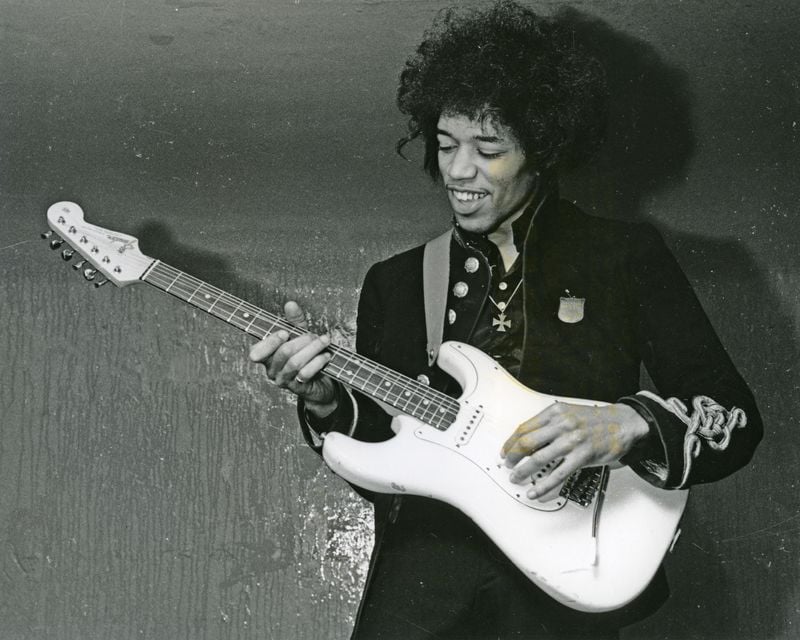
Jimi Hendrix announces himself to the UK (1966)
When Jimi Hendrix arrived in London, it didn’t take long for every other guitarist in the country to grow jealous of his capabilities. He picked the perfect night to make his presence known to the great and good of the London scene at The Scotch of St. James in 1966.
Singer Terry Reid was in attendance that evening. He recalled to Far Out: “All of a sudden, about halfway through the evening at about nine o’clock, all these people came in. Paul McCartney, Keith Richards, Brian Jones, you name it, they were there”.
He added: “So, Brian Jones comes over, and he said, Terry, ‘That fella is going to play, you know, that friend of yours? Jimi Hendrix’. The band playing there said, ‘We’re going to have a guy get up here and play a couple of songs. He’s new in town, and we just wanted to introduce him.'”
Hendrix only performed two songs that evening. He began with ‘Red House’ followed by a cover of ‘Wild Thing’ by The Troggs, but it was enough to send a warning out to everybody in London.
The Beatles at Candlestick Park in San Francisco (1966)
The Beatles’ performance at San Francisco’s Candlestick Park marked the end of an era as the Fab Four bowed out and played their final official show. Although they continued to record material after they retired from touring, it was a seismic moment in music history when The Beatles decided they wanted to focus on making albums.
Touring was no longer the fun activity it once was for the group. Before taking to the stage, they knew it would be their final show for some time, but unfortunately, their last hurrah was a damp squib. It wasn’t sold out, and around 7,000 tickets remained. Furthermore, similarly to their infamous Shea Stadium concert the previous year, the concert was marred with technical difficulties, and the 11-song-set couldn’t end quick enough for the band.
Elton John breaks America (1970)
In 1970, Elton John went from an unknown quantity to a global superstar. It’s the kind of fairytale rise that artists dream about, and it all can be traced back to the night he announced himself to the stars in Los Angeles during his residency at the Troubadour.
After being picked up by the American label, UNI, they decided to go big with their promotion of Elton and book him to perform eight shows over six nights at the theatre. They hired a double-decker red London bus to pick him up from the airport and gave him the full superstar treatment.
However, in reality, everything he’d released had flopped in the UK.
Remarkably, the illusion of treating Elton John like a superstar made the celebrity class in Los Angeles believe the hype and come out in their droves to watch him.
“The atmosphere during those nights at the Troubadour was electric. Something inside me just took over. I knew this was my big moment, and I really went for it,” Elton later recalled. “The energy I put into my performance, kicking out my piano stool and smashing my legs down on the piano, caught everyone off guard. It was pure rock’ n’ roll serendipity. Even before the reviews came in, we knew that something special had happened.”
David Bowie retires Ziggy Stardust (1973)
On July 3rd, 1974, David Bowie put Ziggy Stardust to the sword and killed off his greatest creation at the Hammersmith Odeon. Bowie knew he needed to end the character while it was still hot and not let it become stale. Additionally, the performer feared spending the entirety of his career in make-up as Ziggy, which was at odds with his need to evolve and change.
During the show, Bowie shocked the hometown crowd during the final night of his 190-night tour and informed them of his decision. “Everybody, this has been one of the greatest tours of our life,” he explained.
Bowie continued: “I’d like to thank the band, I’d like to thank our road crew, and I’d like to thank our lighting people. Of all the shows on this tour, this particular show will remain with us the longest because not only is it the last show of the tour, but it’s the last show that we’ll ever do. Thank you.”
Bob Marley brings reggae to the UK (1975)
Bob Marley’s set of performances at the Lyceum Theatre in London in 1975 provided a watershed moment in cultural history as the king of reggae brought a slice of Jamaica to Britain. His two shows were sold-out with over 2,000 fans attending each night, and recordings from the concerts were later made into a legendary live album by the Rolling Stones Mobile Studio.
As UDiscoverMusic notes: “The racial mix of the audience at the Lyceum was thus, unusually for a rock venue, split 50-50.” For an audience in the West End in 1975, this was utterly groundbreaking, and Marley’s tales from the streets of Kingston helped ease racial tensions thousands of miles away. Although he’d toured Britain to half-empty halls previously, these two shows marked the moment reggae finally became respected and viewed as equal to other genres.
Bruce Springsteen brings down the Berlin Wall (1988)
In July 1988, Bruce Springsteen played his part in the collapse of the Berlin Wall and took to the stage in front of 300,000 fans in East Berlin while millions more tuned into the performance on television. “I’m not here for any government,” he told the crowd in German. “I’ve come to play rock ‘n’ roll for you in the hope that one day all the barriers will be torn down.”
While it wasn’t the sole reason the wall was eventually toppled, it sparks the uprising, and Springsteen played a part in something much more significant than himself. Years later, he looked back on the concert and said: “Once in a while […] you play a show that ends up staying inside of you, living with you for the rest of your life. East Berlin in 1988 was certainly one of them.”
