


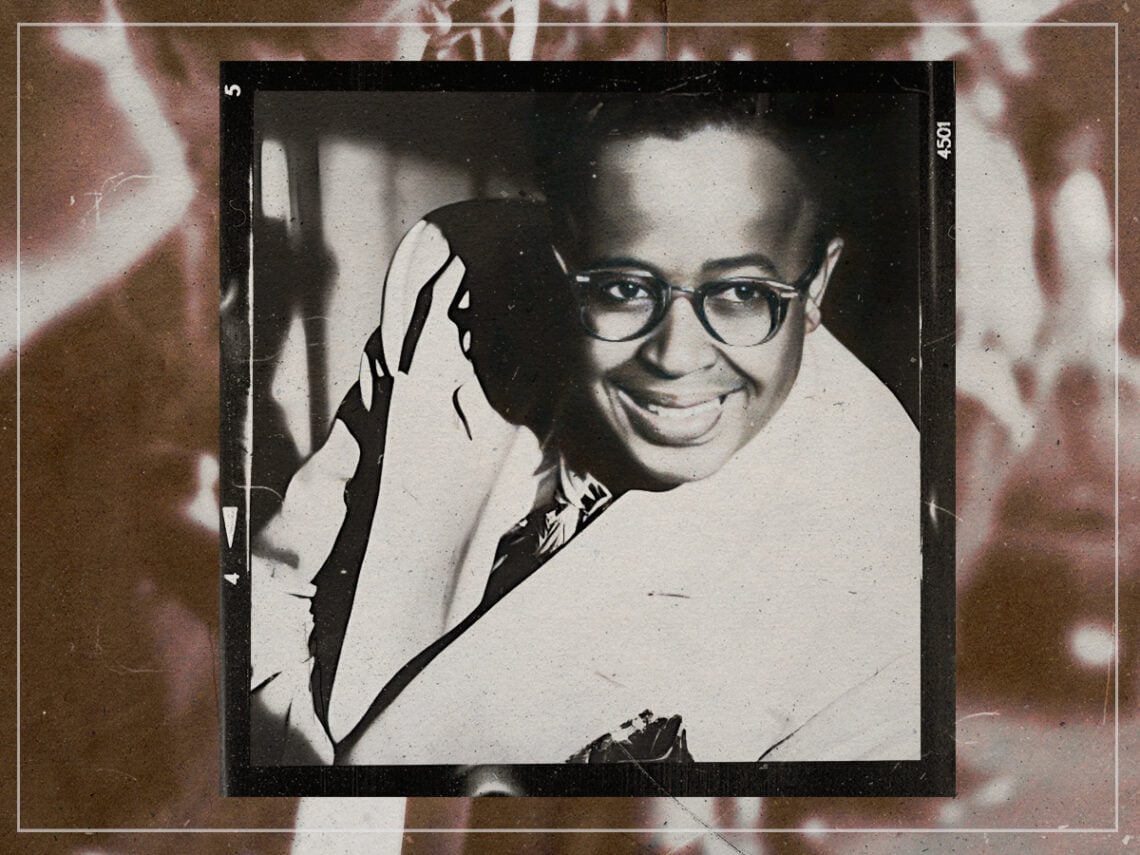
The legacy of Willmer ‘Little Axe’ Broadnax: Gospel music’s undisputed maestro

In the annals of gospel music, the name Willmer ‘Little Axe’ Broadnax stands out as a testament to unparalleled vocal mastery and an unwavering devotion to the art of spiritual song. Born in Clarksdale, Mississippi, in 1916, Broadnax’s journey through life echoed the very essence of the music he championed – vibrant, heartfelt, and deeply rooted in faith.
Broadnax’s affinity for music surfaced early in his life. As a child, he discovered his penchant for harmonies and melodies, captivating audiences with his astonishing vocal talents. His moniker, ‘Little Axe’, is said to have been given to him due to his small stature and yet powerful, axe-like impact on listeners. His vocal prowess grew as he matured, earning him admiration and acclaim in gospel circles across the United States.
Broadnax’s voice possessed a rare quality, effortlessly spanning octaves with an unmatched richness and resonance that seemed to transcend earthly realms. His journey to gospel excellence unfolded as he joined several renowned gospel groups, including The Golden Echoes, The Spirit of Memphis Quartet, and The Five Blind Boys of Mississippi. His tenure with these groups elevated their performances to celestial heights, garnering widespread recognition for their unparalleled harmonies and Broadnax’s soul-stirring solos.
The Golden Echoes became one of the first gospel quartet groups in the 1940s. However, Broadnax’s brother William departed for Atlanta to join the Five Trumpets, while Broadnax remained the lead singer. By 1949, with the addition of Paul Foster, who would later join the group that birthed future soul stars Sam Cooke and Johnnie Taylor, the Soul Stirrers recorded a rendition of ‘When the Saints Go Marching In’. Unfortunately, however, their record label decided to part ways with them before they could release a second single, leading to the group’s disbandment.
At this time, pianist Willie Love, best known for his association with Sonny Boy Williamson II, described Broadnax’s vocal prowess: “Little Axe couldn’t sing low because he had a relatively high voice,” he said. “It wasn’t falsetto. It was naturally high. So somebody had to sing the bottom”. This was an intensely endearing aspect of Broadnax’s musicality — his voice carried a sweetness juxtaposed with a near-ferocity, brimming with emotion, while others, like Foster, provided deeper, more gritty tones in contrast.
It was his collaborations with The Five Blind Boys of Mississippi and The Spirit of Memphis Quartet that cemented his status as a true gospel luminary. His vocal acrobatics and ability to evoke raw emotion through song captivated audiences and influenced a generation of gospel singers and musicians. The Spirit of Memphis stood among the highest-earning gospel acts of their era, commanding substantial fees of up to $200 per week — an impressive sum during that period. Broadnax lent his voice to recordings and live performances with the Quartet until 1952, at which point he transitioned to collaborating with the Nashville-based Fairfield Four.
Even though Broadnax’s identity as a trans man only surfaced posthumously, this highlights how the absence of prejudice can eliminate barriers that might have hindered a gospel star’s success. Most importantly, Broadnax presents yet another captivating narrative within black trans history, serving as a tangible testament to the essential role of black trans individuals within the gospel community’s fabric, much like a vital thread in its cultural tapestry.
Broadnax’s story is undeniably extraordinary, but his impact extended far beyond his immediate contemporaries. Thrown into the mix of a genre adorned by many greats, Broadnax’s influence reverberated through the decades, inspiring future generations of gospel artists. His performances’ distinctive blend of passion, soulfulness, and technical virtuosity set an enduring standard for gospel music.
Even as modern gospel continues to evolve, Broadnax’s legacy remains integral to its story. His recordings continue to move audiences, his songs becoming anthems of hope, faith, and resilience in times of turmoil. Reflecting on his journey, Broadnax was a man whose music continues to echo through the corridors of time, offering solace, inspiration, and a timeless reminder of the unifying power of gospel music.
