


The 1940 blues song that changed Bob Dylan’s life for good: “Like an explosion”

If you haven’t caught on yet, we at Far Out love to explore cultural connections, especially the domino effect that steered the extraordinary explosion of pop music throughout the 20th century.
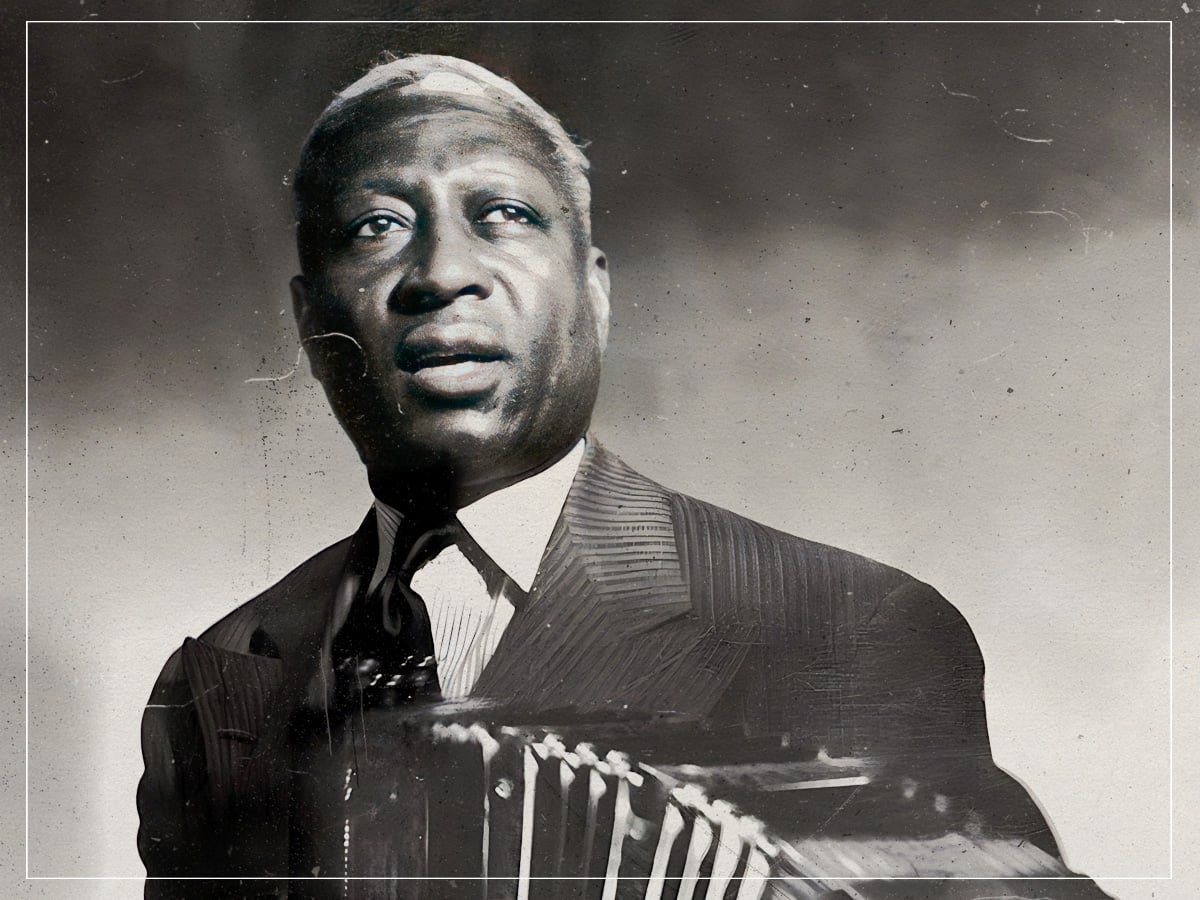
If I asked you to name the most important musical artist of the past century, you might say John Lennon, Bob Dylan or Brian Wilson. There are no categorically incorrect answers here, but Huddie “Lead Belly” Ledbetter would be a pretty solid answer.
Lead Belly may not haunt our playlists quite so virulently as The Beatles or The Rolling Stones’ popular material. Still, as a prime progenitor of the folk and blues genres, his influence is incalculably vast. While it’s impossible to map out the entirety of Lead Belly’s web of influence, George Harrison did a good job of emphasising his indirect impact. “If there was no Lead Belly, there would have been no Lonnie Donegan,” John Reynolds quoted the guitarist as saying in Legend of Lead Belly. “No Lonnie Donegan, no Beatles. Therefore, no Lead Belly, no Beatles.”
Where does Lonnie Donegan come into this? In 1954, the British musician brought the spirit of Lead Belly to the UK after releasing his version of ‘Rock Island Line’. The traditional blues folk song can be traced as far back as 1934, when John Lomax recorded some musically inclined convicts in Arkansas, among whom was the legendary outlaw Lead Belly.
Lonnie Donegan’s rendition of ‘Rock Island Line’ is regarded as one of the key drivers behind the skiffle scene that swept Britain throughout the 1950s and cultivated John Lennon’s first band, The Quarrymen. Meanwhile, Lead Belly’s influence spread like wildfire across the US during its concurrent rock ‘n’ roll enlightenment.
That is what makes tracing musical history so fascinating. Influence rarely travels in a straight line. Instead, songs are constantly being borrowed, reinterpreted and passed from one generation to the next, often ending up in places their original creators could never have imagined.
Lead Belly never set out to inspire British teenagers to form guitar bands, yet his music became part of the chain reaction that helped shape popular music on both sides of the Atlantic. Few artists can claim to have left fingerprints on so many different movements without ever becoming a conventional pop star themselves.



Among Lead Belly’s many direct admirers is Bob Dylan. Although he modelled his early success on the pure folk work of Woody Guthrie, his teenage years were all about rock ‘n’ roll, especially that of Little Richard, Buddy Holly and Elvis Presley. It was only a matter of time before his innate folk inclinations tapped on Lead Belly’s door.
After accepting the Nobel Prize in Literature in 2016, Bob Dylan delivered a Nobel lecture as per tradition. During his speech, the legendary songwriter praised Buddy Holly as a “powerful” and “electrifying” performer he was lucky enough to witness live. “He looked older than 22. Something about him seemed permanent, and he filled me with conviction.”
That evening, Dylan felt the rock ‘n’ roll icon transfer some divine energy. “Then, out of the blue, the most uncanny thing happened,” Dylan continued. “He looked me right straight dead in the eye, and he transmitted something. Something I didn’t know what. And it gave me chills.”
According to Dylan, this eerie sensation occurred just a “day or two” before Holly passed away in the 1959 aeroplane crash now known as ‘The Day the Music Died’. This wasn’t the end of Dylan’s religious experience; at around that same time, Lead Belly entered the picture. “Somebody – somebody I’d never seen before – handed me a Lead Belly record with the song ‘Cotton Fields’ on it, and that record changed my life right then and there.”
It was as though Dylan had been touched by the hands of two Gods immortalised by their influential music. “It was like an explosion went off,” Dylan added in relation to Lead Belly’s ‘Cotton Fields’. “Like I’d been walking in darkness, and all of a sudden, the darkness was illuminated. It was like somebody laid hands on me. I must have played that record a hundred times.”
‘Cotton Fields’ was Dylan’s invitation to the world of folk music. In September 1960, he borrowed a copy of Woody Guthrie’s autobiography from a college peer, consolidating one of the most fruitful obsessions of the century.
Listen to Lead Belly’s 1940 recording of ‘Cotton Fields’ below.

Never Miss A Tale
The Far Out Bob Dylan Newsletter
All the latest stories about Bob Dylan from the independent voice of culture.
Straight to your inbox.