


Exploring the landscapes of Michelangelo Antonioni’s ‘L’Avventura’

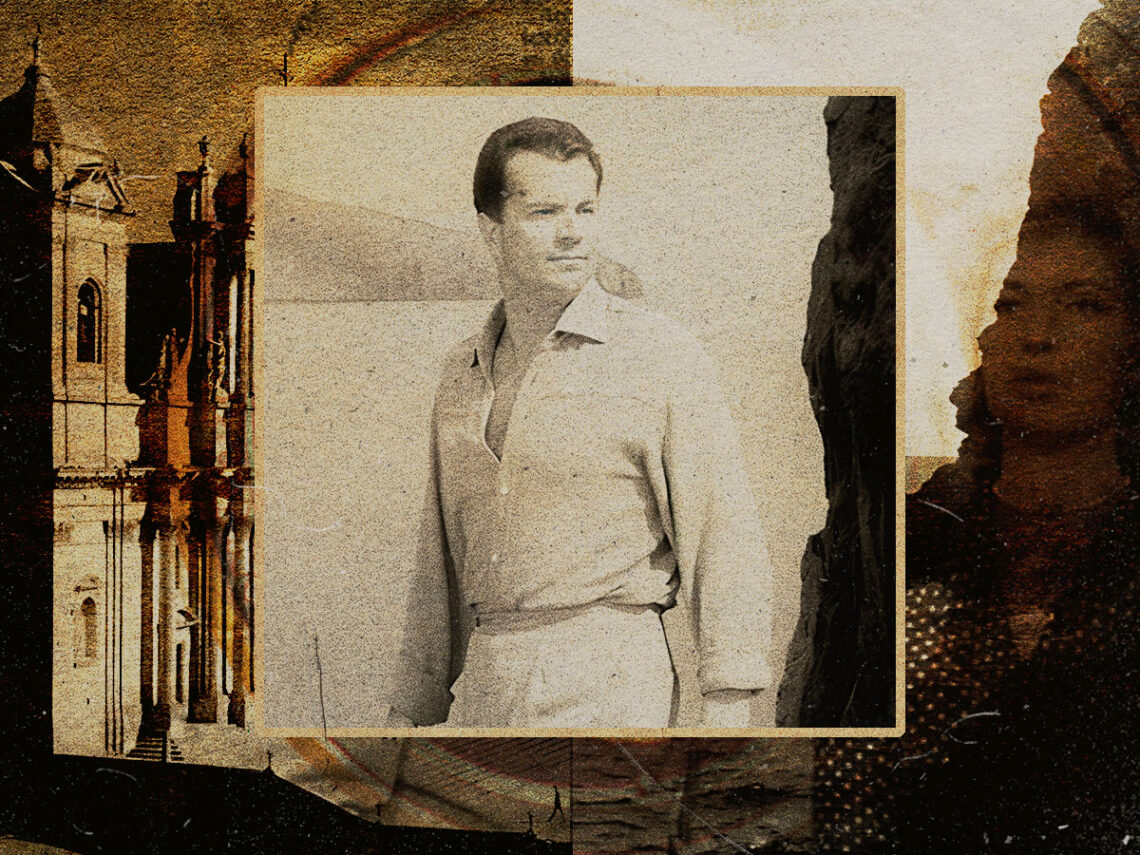
Released in 1960, L’Avventura by Michelangelo Antonioni is less a film than an amalgamation of atmospheres. Modern viewers used to being bombarded with narrative and visual stimuli are frequently struck by its languorous pace: the way Antonioni painstakingly undresses his characters, layer by layer, until there’s nothing between them and their flaws.
For those of you who haven’t yet had the pleasure, L’Avventura follows a group of friends taking a boating trip across the Mediterranean. When Anna, the fiancee of Sandro, goes missing on a remote island, her best friend Claudia – played by a magnetic Monica Vitti – is distraught, begging the question: why does she find it so easy to fall in love with Sandro?
Antonioni embraced the unexpected, which is perhaps why the landscapes in L’Avventura feel so tactile: they have been treated not as living set pieces but as characters in their own right. “I may film scenes I had no intention of filming,” the director told Roger Ebert. “Things suggest themselves on location, and we improvise. I try not to think about it too much.”
If there’s one film that’s bound to make you fall in love with Italy, then it is L’Avventura. Join us as we explore some of its most important locations.
Exploring the landscapes of ‘L’Avventura’
Via Nicolo Piccolomini, Rome
Many of us dream of relocating to Rome. Me, I always imagined myself living in an apartment not unlike the one owned by Anna and her father. Perched on the Via Nicolo Piccolomini, it is in his modest, meticulously designed apartment we see Anna make love with her husband, Sandro, before they embark on their voyage.
Before any of this, Anna takes some air on the apartment’s neat little balcony. Sadly, Antonioni doesn’t permit us to join her there, where she is likely looking out onto the sun-dappled dome of St Peter’s Basilica. Via Nicolo Piccolomini, which sits to the west of the Vatican, is rather unusual in that, because of its unique location, as one walks further away from the dome, it appears to grow in size. Along with the Aventine Keyhole, it’s one of the great optical illusions of Rome.
Besiluzzo, The Aeolian Islands
The swimming scene in L’Avventuara radiates warmth, which is pretty impressive, considering the whole thing was shot in black and white. While gliding south on their yacht, Anna, Claudia, Sandro, and the others pause to take a dip in the Tyrrhenian Sea. In the distance, we see the Aeolian islands, a small volcanic island chain between Stromboli and Lipari.
The youngest of these is Besiluzzo, known in antiquity as Hycesia. Formed some 50,000 years ago, it has attracted seafarers since the Neolithic era and still carries the remains of a lavish Roman villa, presumably built by someone lured to the island on the promise of blissful solitude. It might look barren, but Besiluzzo is actually one of the more fertile Aeolian islands. Between its jagged rocks, lemon trees and thick shrubs of rosemary bake beneath a constant sun.
Lisca Bianca Island, The Aeolian Islands
About three and a half kilometres from Besiluzzo lies Lisca Bianca, the sight of Anna’s disappearance. Home to the coveted Chamomile of the Aeolian Isles – a plant which exists nowhere else on earth – this rocky islet takes on a mournful quality in L’Avventura, its razor-sharp crags slowly crumbling into the hungry sea.
Unlike its much larger neighbour Panarea, Lisca Bianca is uninhabited – its landscape rocky and bare. The island’s forbidding atmosphere made it the perfect place for Antinoni to subtly reveal the inner workings of his characters: their guilt, fear and disdain. This is not the tamarisk-adorned landscape of the more fertile Aeolian islets. No, on Lisca Bianca, there is nowhere to hide, which is precisely what makes Anna’s disappearance so concerning.
Chiesa del Collegio, Noto
Not far from Syracuse lies Noto, a stunning Baroque town shaded the colour of aged ivory. Antonioni shot many of L’Avventura’s most beautiful scenes here, with the director giving more screen time to its cathedrals than Monica Vitti. Perhaps the most memorable scene shot in Noto takes place in the belfry of the Chiesa del Collegio, where Claudia and Sandro, having almost completely forgotten about Anna, ring the bells and admire the view unfolding before them.
Founded in 1703 after an earthquake destroyed the original city, Noto is pretty new compared to much of Sicily. Of course, what it lacks in ancient monuments is more than makes up for in tranquillity. Antonioni was inexorably drawn to the Convent of Santissimo Salvatore, the Piazza Immacolata and the Piazza Municipo, where Sandro fights a talented architecture student. Some people just don’t know how to relax.
Villa Palagiona, Palermo
Our final location has captured the imagination of everyone from Alexandre Dumas to Andre Breton. Built during the early 18th century, the Villa dei Mostri, or Villa of Monsters, serves as the location for the scene where local police interrogate a team of impoverished smugglers. Palermo was also used to film the iconic and much-replicated scene in which Claudia is hungrily observed by local men.
One of Sicily’s earliest and finest examples of Sicilian Baroque architecture, Villa Palagoina is as extravagant as it is surreal. Guarded by a selection of fantastical grotesques, the house itself is a sort of puzzle box where nothing is as it should be. When Johann Wolfgang Goethe arrived in 1786, he was struck by the madness of it all, going to great lengths to list all the eccentric statues perched atop this temple of “sacrilege” and trickery. He identified: “a horse with human hands, the head of a horse on a human body, deformed monkeys, many dragons and snakes, every kind of paw attached to every kind of body, double heads and exchanged heads.” And that’s only the entrance.
