


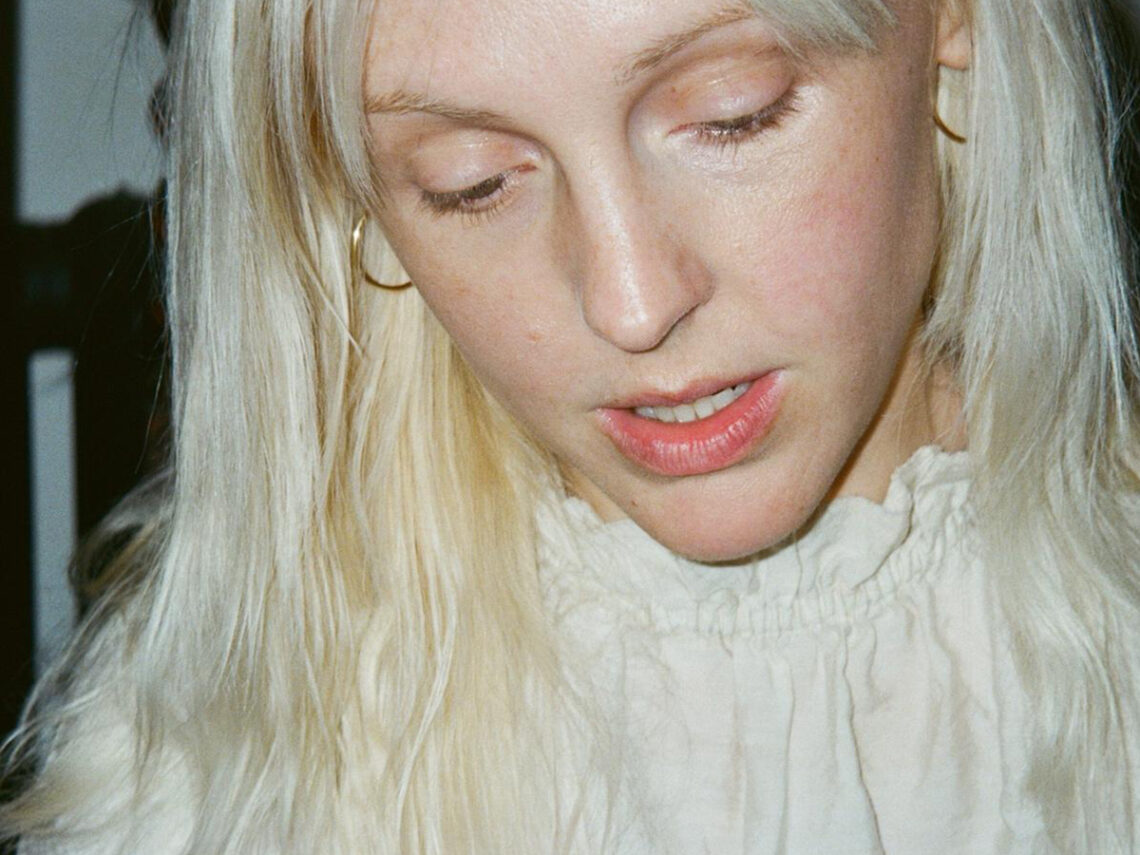
Laura Marling on her best album so far: “Harder to carry on from then”

The nature of creativity could be studied over and over and still never be understood. Inspiration strikes from seemingly nowhere, presenting an idea in a person’s mind. It’s like a magical seed that, when nurtured right, grows into something golden. But once the idea has been fulfilled and the inspiration is exhausted, there’s nothing left to do but wait and worry that it may never strike again. For Laura Marling, after making what she considered to be her best work to date, the anxiety that she may never beat it was heavy.
Marling was barely an adult when her debut album, Alas, I Cannot Swim, emerged. Immediately, it was treated like exactly what it is: a truly special album by a bright young talent. It earned her a Mercury Prize nomination and set her on a course to the top as indie-folk’s new wonder kid. From then on, each record saw her levelling up in terms of sound and production value as she settled into a life of touring and recording, writing new songs for her full band to play as her crowds grew bigger and bigger.
But the record she considers her best work comes from when she snapped and finally declared that she was sick of it all. “I’d started to feel like I very much wanted to be on my own and not with a band,” she told Uncut, “Though they’re still my band, and I love them very much, it felt like I couldn’t get any time on my own like I was always on tour or in the studio, and it started to feel like people recognised me a little bit, and it all overwhelmed me.”
In response, she made a very different kind of album and a different recording experience. Marling cast off any expectations and threw out the pressure to record hits, or big tracks that her band could join in with and crowds would singalong to or that could be toured neatly and easily. In short, she wanted to step outside of the machine of her career, which was cycling round and round. She wanted to stop running in the hamster wheel of it and flow through something different.
The result was Once I Was An Eagle, her fourth album, released in 2013. Anyone who’s heard the record will immediately understand why it’s so different and why it stands out to Marling as a truly special edition to her discography. It’s an album to simply hit play on and escape into as the songs flow seamlessly from one to another, like an extended piece to journey through.
The path it ventures down is a singular one, which is precisely what Marling wanted and needed to do. “With this album, I went back to Ethan [Johns, her producer] on my own. It was a really amazing experience,” she said. “I went and recorded everything for him, in order, at his house – just me and a guitar,” she added, explaining how that start-to-finish, fully flowing sound happened.
But while the creation of the record was a mission to simplify things, it also stands as her most lyrically dense and inspired. The words of the songs weave together vivid emotions and grand metaphors and build this unique world with natural folk-horror energy to it. It feels like Marling’s lyrical abilities soared to a whole new level here, which she feels too.
“I still think of it as a magical happening,” she said of the lightning strike of inspiration that birthed the record.
However, once the album was done, the fear settled in. “There was a sense that something was about to peak. It did feel like that,” she explained, “I felt like it was the best record I’d ever made, and I could sense that it would be harder to carry on from then.”
The fear didn’t last too long. Two years later, Marling delivered Short Film, another stunning record with several more following suit after, proving to herself that new inspiration will always strike eventually.
