


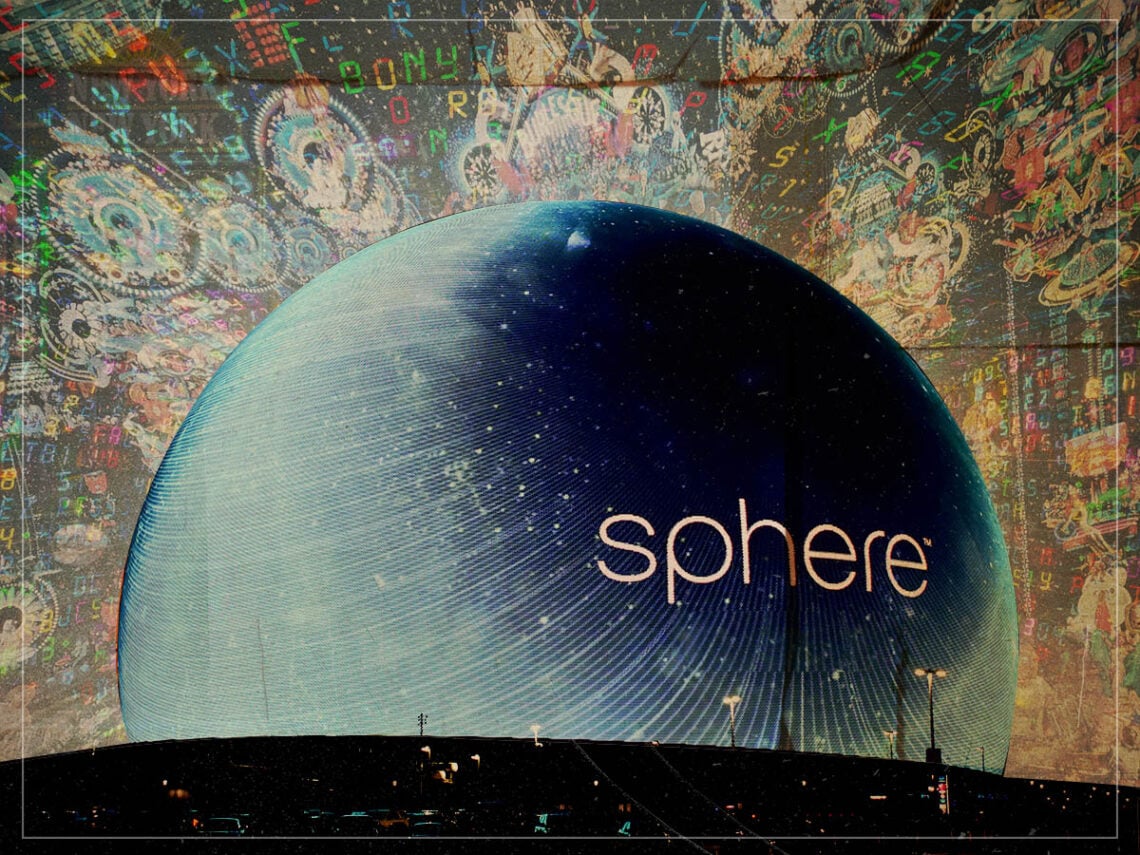
One Giant Leap: How environmentally friendly is a residency at the Las Vegas Sphere?

In the music industry, residencies tend to divide opinion. For musicians, they’re often ideal—providing a stable base and a break from the chaos of touring. For fans, though, the appeal can be mixed, demanding more time, effort, and money to be part of the experience. While the pros and cons have been widely debated, especially with venues like Las Vegas’ Sphere making headlines, one question remains: what about the environmental impact?
Since Sphere was launched in 2023, the venue has been subjected to countless questions about what it means for an increasingly immersive industry and whether these changes are actually any good for musicians and fans alike. However, much of this comes with its own flavour of mystery, especially concerning the type of experience it offers compared to traditional performances and touring.
For some, Sphere seems like nothing more than a symptom of today’s digitised, AI-ridden Black Mirror world, with many misunderstanding what it actually takes to make the technology—and its residencies—work. Without lingering too long on the logistics or promotional lines, Sphere was initially created to intensify the potential of immersive technologies in entertainment, not just music, but a holistic, unparalleled experience.
While all of that seems too good to be true, that’s exactly what it exists to serve. However, technical and spiritual positives aside, one of the main selling points following it since its inception was how environmentally friendly it is. After all, it removes the need for artists and their teams to travel and operates with the kind of cutting-edge technology that reduces more energy compared to traditional touring setups.
How sustainable is the Sphere?
While it’s easy to understand this sustainability factor, how true is all of that? And what about all the other factors, like the hundreds of fans who increase their carbon footprint to travel to Vegas? Let’s take a look at the facts. Environmental excess was a major component in launching Sphere, with the creators saying it was “designed to achieve high standards of sustainability and to minimise energy consumption.”
The extensive 53,883 square meters of LEDs were also described by the same people as “the most energy-efficient lighting available today.” Moreover, it was built with heating and cooling infrastructure that reduces waste to ensure it operates in the most environmentally friendly way possible. In other words, Sphere involved a lot of forward-thinking for sustainability, and there are all the numbers and facts to prove it.

But while the COO deems it “setting an industry standard when it comes to renewable energy,” according to Impakter, it’s hard to ignore the other forces at play here. For instance, general environmental pollution and its impact on wildlife. It’s been implied that the light disruption caused by Sphere can have a significant negative impact on bird migration, with visibility drastically reduced during times when the venue is active.
Another factor to consider is travel. One artist and their team can avoid transport omissions, but with 17,600 seated people and 20,000 standing, the environmental impact shifts to the fans. An easy argument would be to keep attraction local, but with residencies, it’s difficult not to expect people from all over the world to travel in an effort to catch a glimpse of the latest technological development in action. Sphere might operate sustainably, but do these omissions actually end up less green than we might have anticipated?
Are people turning against residencies?
While Sphere offers an experience like no other, it also centralises a broader debate about the impact of residencies in the current climate. Sphere and other venues hosting residencies might offer a host of positives, mostly centring around the experience and memories of being in the belly of a beast so large yet so immensely in its infancy.
Residencies are a longstanding aspect of the industry—just look at players like Elvis Presley—but their convergence with technological developments as monumental and groundbreaking as Sphere points to more complexities and ambiguities than comprehensible. Residencies might have their own drawbacks, but what about when that’s combined with a venue that redefines the parameters of live music?
All about the spectacle, and that’s never a bad thing, especially when it puts audiences first. Above all, Sphere is an incredible achievement for us as humans wanting to feel something, but as the conversation shifts and more people become aware of weighing up the pros and the cons, how much does such innovation pull us back into the depths of environmental, economic, and even classist dilemmas? Is it progress or another symptom of industry elitism?
