


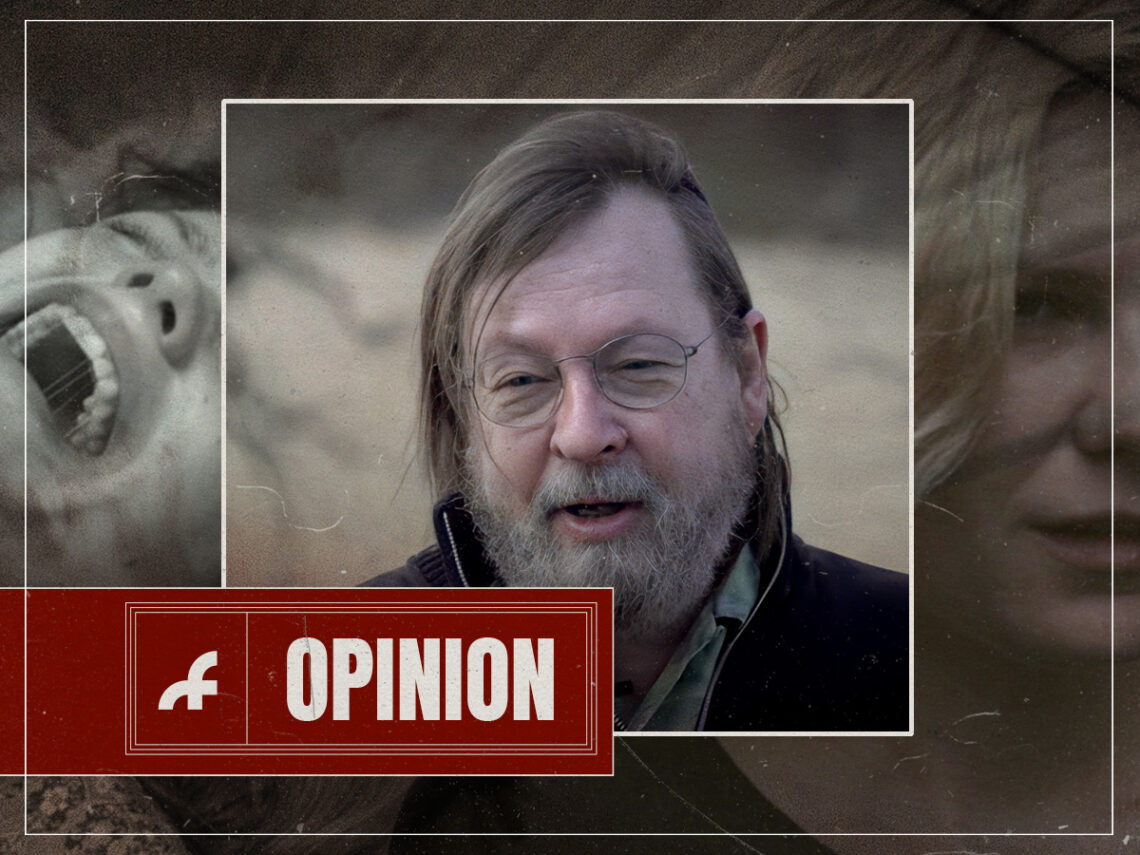
Hear Me Out: Lars von Trier’s ‘Depression Trilogy’ is his worst work

There’s always been an element of controversy and provocation to the works of Lars von Trier, if not actually to the mythos surrounding the Danish film director himself. However, it can sometimes appear that this provocative reputation that von Trier has carved out for himself seems to be something he undoubtedly plays into and has increased over time.
Known for his strained relationships with his female actors, including Björk and Nicole Kidman, and his unflinching portrayals of violence, sexuality and religion, the very perception of von Trier from within the industry is something that precedes him. As his career has progressed, his films have become increasingly controversial and even desperate for attention – mirrored, in fact, by his own publicly stated views and opinions.
His early films, The Element of Crime, Epidemic and Europa, drew early acclaim, as did his miniseries The Kingdom, which was considered some of the best television ever made. It was Breaking the Waves, though, that showcased von Trier’s commitment to resolutely depict taboo subjects like faith and sexuality through the cinematic medium and established von Trier as one of the most significant names in European cinema.
From that point, though, controversy began to reign over the Danish director, beginning with his controversial 1998 Dogme 95 film The Idiots, which details a selection of bourgeois individuals pretending to be disabled, releasing their “inner idiot” and thus finding meaning and happiness. Soon after, von Trier had infamous run-ins with Bjork and Kidman on Dancer in the Dark and Dogville, respectively. Kidman refused to come back for the Manderlay sequel, though still admitting to having a deep artistic respect for von Trier despite his peculiar, offensive, and sometimes abusive methods.
Eventually, we arrive at what is considered von Trier’s most popular work, the Depression Trilogy, certainly some of his most provocative and controversial, but also perhaps his most overrated. Comprised of 2009’s Antichrist, 2011’s Melancholia and rounded off by 2013’s Nymphomaniac, all of which star Charlotte Gainsbourg and focus on a series of characters who all suffer from depression and are believed to represent von Trier’s experience with mental affliction himself.
Written in the hospital when von Trier had been suffering from clinical depression and anxiety, Antichrist details a couple, played by Gainsbourg and Willem Dafoe, who take a retreat to a woodland cabin in the throes of trauma after losing their son to an accidental death. However, things get worse when the husband begins to experience strange visions, and the wife starts displaying increasingly violent and sadomasochistic behaviour.
Gainsbourg played a depressed sister to Kirsten Dunst’s character in the apocalyptic, psychological drama Melancholia, which tells of the inevitable event of a rogue planet colliding with Earth and destroying it completely. In the film, widely considered von Trier’s masterpiece, the director impressively likened the experience of depression to the feeling of the world ending and yet not caring one bit, as Dunst’s character displays.
The Depression Trilogy is completed by the erotic art film Nymphomaniac. Gainsbourg plays a self-diagnosed “nymphomaniac” woman who relates her sexual awakening and explicit experiences to an older man, played by Stellan Skarsgård, who assists her in recovering from a recent assault.

Such films are often talked of as being amongst von Trier’s best, or at the very least, amongst his most memorable. However, such a contention largely ignores the actual lack of quality on offer in those three works, certainly when compared to some of the director’s other movies. The truth is that the Depression movies just never really seem to land where they intend, bar perhaps Melancholia at points, although maybe this in itself is indicative of the kind of apathy that depression itself affords.
Antichrist is rife with provocation but fails to climb over such a wall of controversy into a meadow of deeper meaning. Yes, there’s a cock coming blood, female genital mutilation, and scenes of sickening graphic torture. Still, von Trier largely fails to interrogate the psychology of his characters beyond them being admittedly peculiar. Let’s not forget that Antichrist’s protagonists are in the throes of severe trauma, having recently lost their infant son. However, von Trier allows for the film’s supernatural and provocative moments to overshadow any earnest attempt at psychological understanding.
Melancholia does an admittedly better job at detailing the experience of depression, and Kirsten Dunst’s apathy is mirrored by the sheer panic of her on-screen sister Gainsbourg. There are moments of genuine brilliance within Melancholia. It’s undoubtedly the best of the three films in the Depression Trilogy, but compared to von Trier’s earlier work like Breaking the Waves and even The Idiots, and by extension, his later project The House that Jack Built (though this is provocation to the highest degree), the movie borders on an air of pretension that it can never quite escape. Yes, depression is harrowing, but von Trier makes a song and dance out of the mental affliction that perhaps undoes the impressive visual symbolism of the film.
Finally, Nymphomaniac is a rather poor work of cinema, particularly from someone who possesses as much talent as von Trier. Relegated by some as a mere porno, Nymphomaniac isn’t half as exciting, and the initially arousing or at least intriguing acts of sex become about as boring as, in Stellan Skarsgard’s words, “seeing someone eat a bowl of cereal.”
Now, Nymphomanic, of course, details a woman’s insatiable quest for meaning through sex, a journey that can never be completed, leading to a frustrating bout of anxiety and depression. However, by leaning too heavily into graphic depictions of sexual acts, with prosthetic vaginas, erect penis, all manner of whips and paddles, and countless moments of unsimulated sex, von Tryhard again fails to explore the deeper impact of his protagonist’s psychological state beyond her fucking in increasingly outlandish and desperate ways.
So, in many ways, von Trier’s Depression Trilogy largely falls victim to a sense of style of substance, an insistence on moments of shocking cinema and symbolic provocation at the cost of narrative interrogation. Von Trier forgets to focus on the actual story, the bread and butter of any narrative art, by trying to cram as many cocks and fannies onto the screen across three projects – though, fair enough, Melancholia is lacking in this regard. But cocks and fannies, blood, torture, screaming and all the other offerings that Depression provides maketh not a great work of cinema, and von Trier’s best films lie elsewhere.
Depression itself is often defined by its desperate attempts to cover up an inner sense of anguish, so perhaps, in that light, these three films do an admirable job of such a thematic exploration. However, even in flashes of Breaking the Waves and The Idiots, von Trier had more succinctly detailed such a psychological state without the egregious insistence on provocation for mere provocation’s sake. There are indeed moments within Antichrist, Melancholia and Nymphomaniac that are worth viewing, even if only for their ridiculousness. Still, they are not to be considered the pinnacle of the Danish director’s career.
