


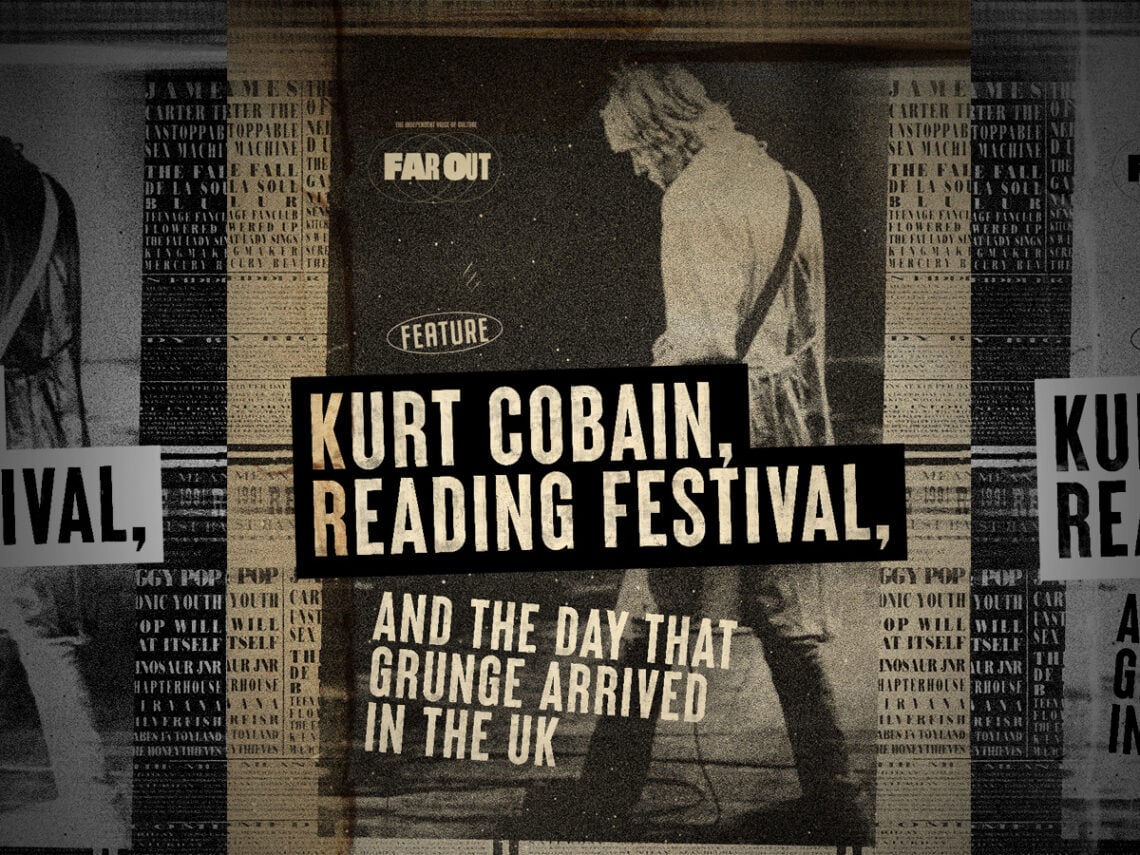
Kurt Cobain, Reading Festival, and the day that grunge arrived in the UK

First Seattle, then the world: the abrasive excellence of grunge might have started out in the punk and DIY venues of Washington.
However, by the mid-1990s, it was the dominant sound of the global rock mainstream. If you want to see the exact moment where that scene infiltrated the UK, look no further than Reading Festival 1992.
Ever since the rock and roll rebellion of the swinging sixties, Britain has always been a little ahead of the curve when it comes to new musical trends, even when it comes to American artists. After all, this is the land where the likes of Sparks, The Strokes, and The White Stripes first found their audience, long before their homeland of the US took note of their revolutionary tones. Grunge was no different in that regard, with the UK providing the likes of Nirvana with their first taste of widespread acclaim.
It was back in 1989 that Nirvana first set foot on British soil, touring the commercial flop that was Bleach. Although the group were only playing small venues at that time, the difference between those audiences and the folks Cobain and the gang were playing to back home was palpable – the UK ‘got’ grunge. With every subsequent visit to old Blighty over the years, the mystique and legend surrounding the outfit only seemed to increase.
Then, in the summer of 1991, Nevermind hit the airwaves, and all hell broke loose. That album rocketed Seattle’s grunge scene firmly into the mainstream consciousness all across the world, with the raw power of the movement providing a much-needed antidote to the insipid bubblegum rock dominating the charts during that period. Suddenly, grunge was a domineering force, and its presence was never made more clear than on the August bank holiday, 1992.
No event better encapsulated the rise of grunge quite like the Sunday of Reading Festival in 1992. Headlined by Nirvana, whose set at the previous year’s festival had been the biggest show they’d ever played up to that point, the day also saw stellar sets from their grunge comrades, Mudhoney and the Melvins. Virtually the entire day was dominated by grunge, with flashes of baggy flannels darting across moshpits becoming the prevailing image of the weekend.
Not only did Reading’s Sunday reflect the definitive moment when grunge broke the UK mainstream, it also created a gold standard for festival booking. It should go without saying that a line-up like that wouldn’t exist today, particularly not at Reading. As the years have gone by, the festival has focused more and more on diversifying the sounds of the weekend in order to appeal to a much broader demographic than those early events back in the 1980s and 1990s.
While there is definitely an argument that Reading’s increasingly broad appeal is a good thing, both for the festival industry and for music consumption on the whole, how many Reading/Leeds line-ups in the past decade or longer have successfully captured the zeitgeist of a pivotal time in music history? None would be the answer to that.
Whereas, if you look at the 1992 event, it paints an incredible picture of that period in music, when grunge reigned supreme, and the earliest hallmarks of Britpop were beginning to sneak into line-ups. There was no reliance on legacy acts or marketability, the focus was entirely on cultivating the greatest music acts of the day, and it is difficult to think of a modern festival which attempts to do the same.
Grunge only lasted a few years in the musical mainstream before being deposed by the Britpop age, but on that glorious August Sunday back in 1992, the cult Seattle scene certainly made its impact on the world. A festival like that might never happen again, but those who were conscious enough to experience it back then will never forget the moment that grunge asserted its supremacy in this green and pleasant land.
