


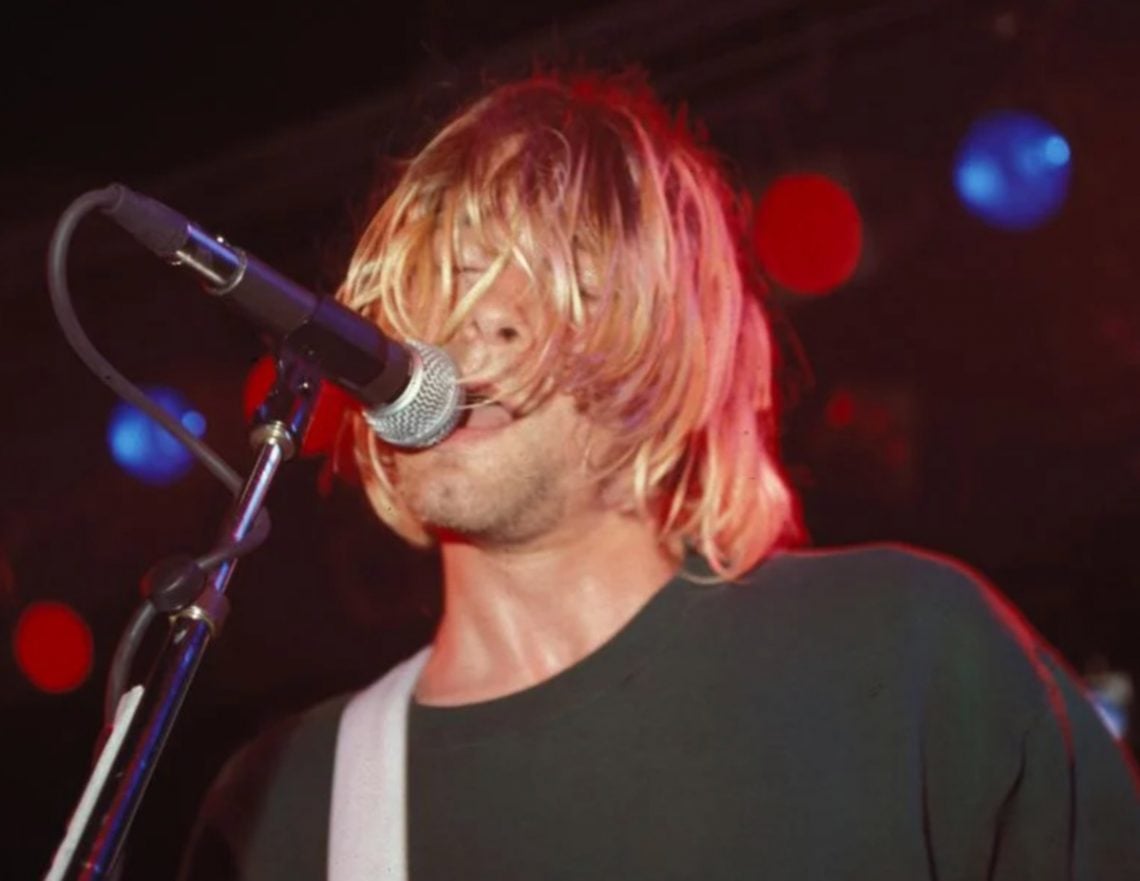
Kurt Cobain names the “grossest” period in music history

Aside from their undoubted musical ability, the key to Kurt Cobain and Nirvana’s success was that they were never afraid to push boundaries. Whilst philosophically and sonically, they were inextricable from the punk underground, they also did something completely different with the formula. They imbued it with a pop essence, drawing on a range of influences that many in the scene, whether it be The Beatles or new wave, looked down on. The trio also added pop-oriented melodies into their songs as a revolt against a style of music Cobain called one of the “grossest” in history.
On January 21st, 1993, in an interview in Brazil’s Rio De Janeiro, Cobain recalled how the band infused their sound with pop to test themselves and their underground audience to see if the formula would stick in an environment supposedly antithetical to bubblegum sounds. It was one part, a joke and, on the other, a pioneering experiment.
The interviewer then mentioned the new wave genre, which Nirvana liked, saying, “The whole new wave concept, when it began, was very pop, I don’t know if you can name any bands (that influenced you),” to which Cobain responded, “The B-52’s, Devo, you know, anything… Ramones”.
Then, Cobain used the opportunity to explain the other reason why they imbued their music with flecks of the new wave and pop. Their decision to do so was partly a reaction to what he deemed one of the “grossest periods” in music history. Although he didn’t name specific artists, he says it was an aggressive crossover of metal and punk in the 1980s, which can only mean hair metal bands like Mötley Crüe and Twisted Sister.
Cobain said: “I think one of the most grossest periods of music in history is right around the mid-1980s when this crossover metal and punk rock thing started happening where it wasn’t cool to write songs that had melody anymore, it had to be total noise and aggression all the time, and I just got really sick of that.” He humorously lost track, asking the producers, “Is there an ashtray anywhere around here?”
The discussion took a more philosophical turn, with Cobain asked whether he thought the gross style of music had been killed by grunge and alternative. The interviewer wasn’t sure; he thought this music would always exist. Cobain replied: “I think so. I think it revolves in a circle all the time. Everything will always revert back to melody, I mean, because that’s the most palatable thing to the ear.”
The interviewer posited that there might be a musical reply to Nirvana and their contemporaries, who were then at the top of rock music. This could be a more conservative take on the form or a return to the brash style of the mid-1980s that Coban hated.
In Cobain’s response, he threw a little shade on their grunge peers, Pearl Jam: “It’s happening already. I mean, obviously, the most popular alternative bands on a national, commercial scale are more commercial; they’re more clean, like Pearl Jam and stuff like that. That’s the same thing that happened with punk rock. Punk rock was really aggressive and raunchy, and those bands got signed to major labels, and it didn’t do too well in the mass media, and so then all these punk rock bands turned into new wave bands. So that’s exactly what we are; we’re a f*****g new wave band.”
