


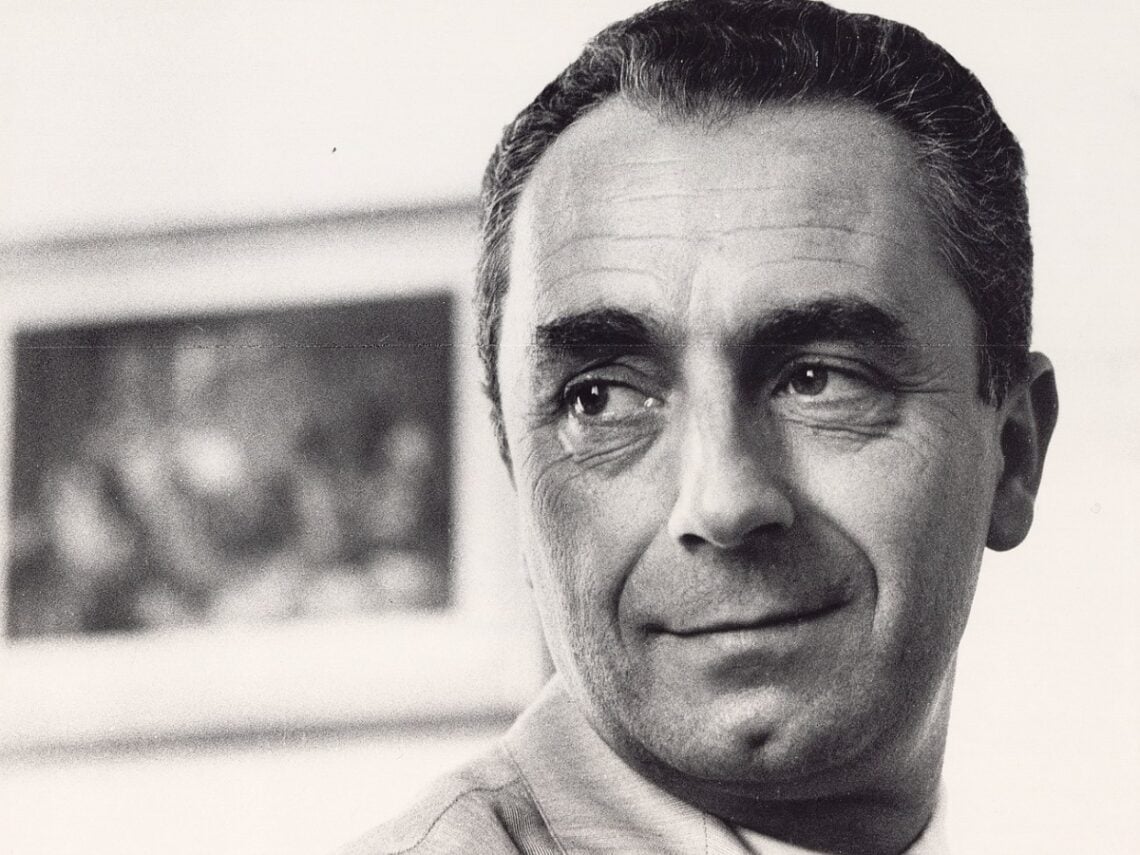
‘Kumbha Mela’: Michelangelo Antonioni’s vision of India

Within the context of 20th-century filmmaking, the name of Michelangelo Antonioni stands out as one of the most important figures. Known for his unique visual style, Antonioni was labelled an “aesthete” by many critics and filmmakers. Through films such as La Notte and Blow-Up, the Italian pioneer constantly pushed the boundaries of the cinematic medium and conducted multiple examinations of the lenses of realism available to us.
While Antonioni’s features are the ones that continue to grab the attention of younger generations of audiences, his documentaries have also inspired scholarly investigations. In fact, the beginning of his career as a director was marked by his preoccupation with the Italian neorealism movement and featured a semi-documentary style. However, Antonioni’s greatest successes would come when he later deviated from the neorealist frameworks and found a radically new way of storytelling.
The images Antonioni constructed throughout his career are always interesting, but in his 1989 documentary Kumbha Mela, the superficiality of those images is exposed. Filmed like an ethnographic study of the eponymous event – one of the biggest gatherings in Hindu tradition, Kumbha Mela points the camera at amorphous masses of pilgrims.
As is the case with many Western perspectives of India that are recorded on the cinematic medium, you can immediately tell that the camera is an outsider – just like Antonioni. The necessary context that is needed to process the significance of the rich religious and cultural history of the Kumbh Mela is practically absent. During a conversation with Charles Thomas Samuels, the director explained that he always prioritised the images.
Antonioni said (via Scraps from the Loft): “The meaning of reality, living as we do enclosed in ourselves, isn’t always clear to us. We could discuss for hours an episode or even an object found on the street. And the same thing is true of a filmed episode or object. Except that I never ask explanations from what I see in real life, but with a film I ask the director. But the director is only a man. Very often I cannot give an explanation because I see only images, and images are what I transfer to the screen. Very often these images have no explanation, no raison d’etre beyond themselves.”
He added: “Everything depends on what you put in front of the camera, what perspectives you create, contrasts, colours. The cameraman can do great things, provided he is well grounded technically. If a person hasn’t the raw material, I obviously couldn’t do anything with him. But all I ask of a cameraman is technical experience. Everything else is up to me. I was amazed to find that in America cameramen are surprised that this is the way I work.”
Ultimately, Kumbha Mela is an inadequate document about the event it covers, but it’s interesting because it serves as an example of Antonioni’s obsession with images. Those who labelled him an “aesthete” probably loved this particular short since it perfectly demonstrates that images alone cannot sustain the cinematic experience, they need a soul to bind them together.
Watch the film below.
