


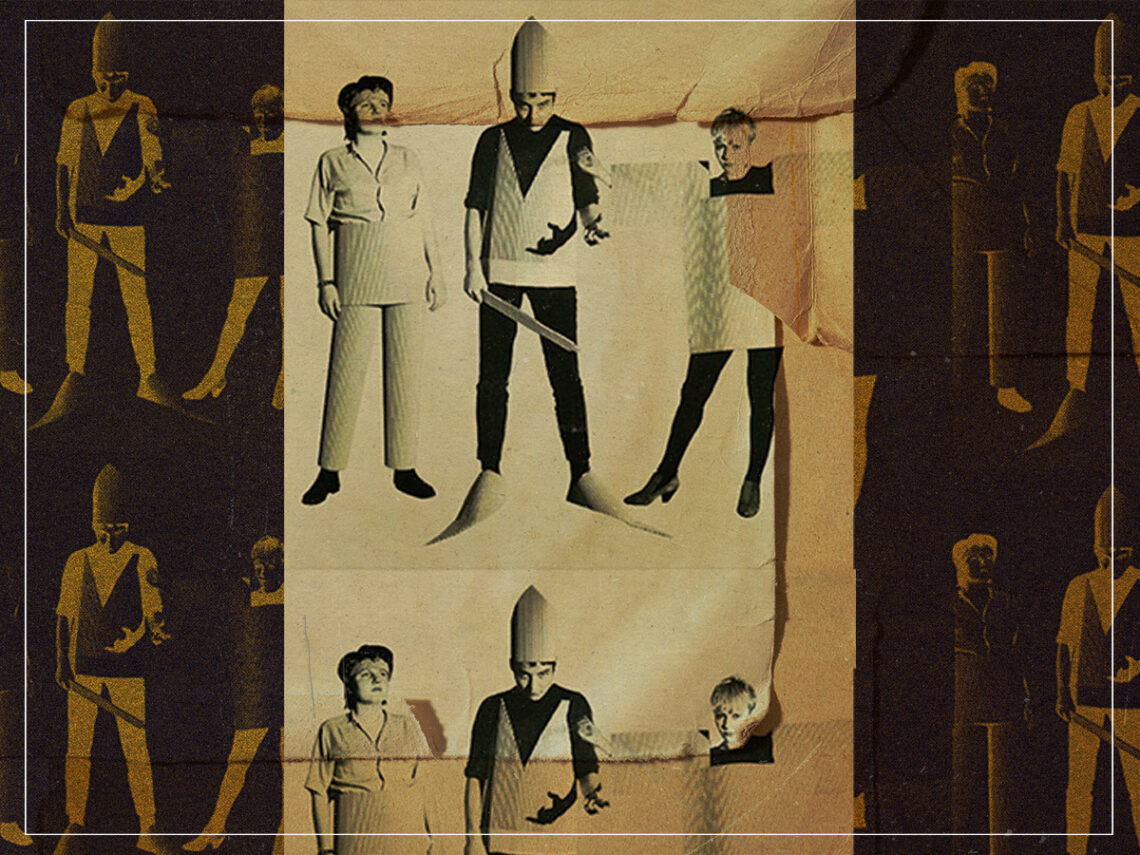
Kleenex: the Swiss punks who were sued by a tissue company

Legal action is a pretty common occurrence within the music industry; where there is muck, there’s brass, and where there’s brass, there’s arguments.
Major record labels have their own, famously ruthless, teams of lawyers ready to pursue legal action for plagiarism, royalty cheques, copyright infringement, sampling credits, and a deluge of other things that have bankrupted artists at various points throughout musical history. Given its DIY, grassroots ethos, though, hiring solicitors was something that never crossed the mind of the punk generation, leading one cult band to find themselves on the receiving end of threats from a tissue company.
Punk, in its original form, was a means of rejecting the accepted practices of the mainstream music industry. That meant independent artists, independent labels, and an unwavering DIY approach to making music. Inevitably, that meant that many groups were simply making it up as they went along, producing some of the greatest, most spontaneous and adrenaline-fuelled rock and roll in the process. It also meant, however, that those groups had none of the protections or legal advice that a major label’s legal team might have been able to provide.
Kleenex, for instance, self-financed their first release and released it via a tiny independent label run by the band’s mates in Switzerland. During those early days, the band – formed by Klaudia Schiff – had no mass audience, and little hope for their sound to expand beyond their own surroundings in their native Zürich. As punk’s popularity ballooned, though, bands are innovative and otherworldly as Kleenex became a sought-after commodity.
Their unique blend of influences, striking upon a sound that typified the horn-heavy post-punk realm, with more than a little New York no wave sprinkled in, Kleenex were never going to find themselves on a major label, but they achieved the next best thing when they were signed to Rough Trade records in 1978.
By that point, Rough Trade was already on its way to being one of the most prominent independent record labels on the scene, even if it would be a few more years before The Smiths entered the picture and made the label rather rich. All of a sudden, Kleenex had gone from being local heroes in the Swiss punk scene to being an effortlessly cool cult outfit overseas, particularly in the UK, where their sensibilities fit quite neatly alongside groups like Essential Logic and X-Ray Spex.
With that increased attention and publicity, though, came the green-eyed monster of legal threats. Kleenex, after all, is a registered trademark owned by Kimberly-Clark, the producers of Kleenex tissues. So, even though it is difficult to imagine any punters mistaking Kleenex as a promotional band for the tissue company or, indeed, mistakenly blowing their nose on a copy of the band’s incredible ‘Die Matrosen’ single, a name change was ordered.



Changing your name as a band who has only just begun to achieve some degree of notoriety is a difficult hurdle to overcome. Whichever name you choose is a setback, and in Kleenex’s case, they opted for LiLiPUT, presumably in the hopes that the capitalisation prevented any confusion with Jonathan Swift’s island.
Only two further singles were ever issued by the band under their new name, but to be fair to them, they both did rather well in the UK independent charts, suggesting that not all momentum had been lost by the name change. After all, being the punk band that were threatened by a tissue company is quite an original selling point.
In the end, Kleenex/LiLiPUT went their separate ways in 1983, putting an end to one of the most stunningly original, often bizarre careers in the history of punk and independent music. Nevertheless, the strength of their output means they still maintain a cult audience today, one which would never confuse the band with a tissue.

Never Miss A Beat
The Far Out Punk Newsletter
All the latest Punk content from the independent voice of culture.
Straight to your inbox.