


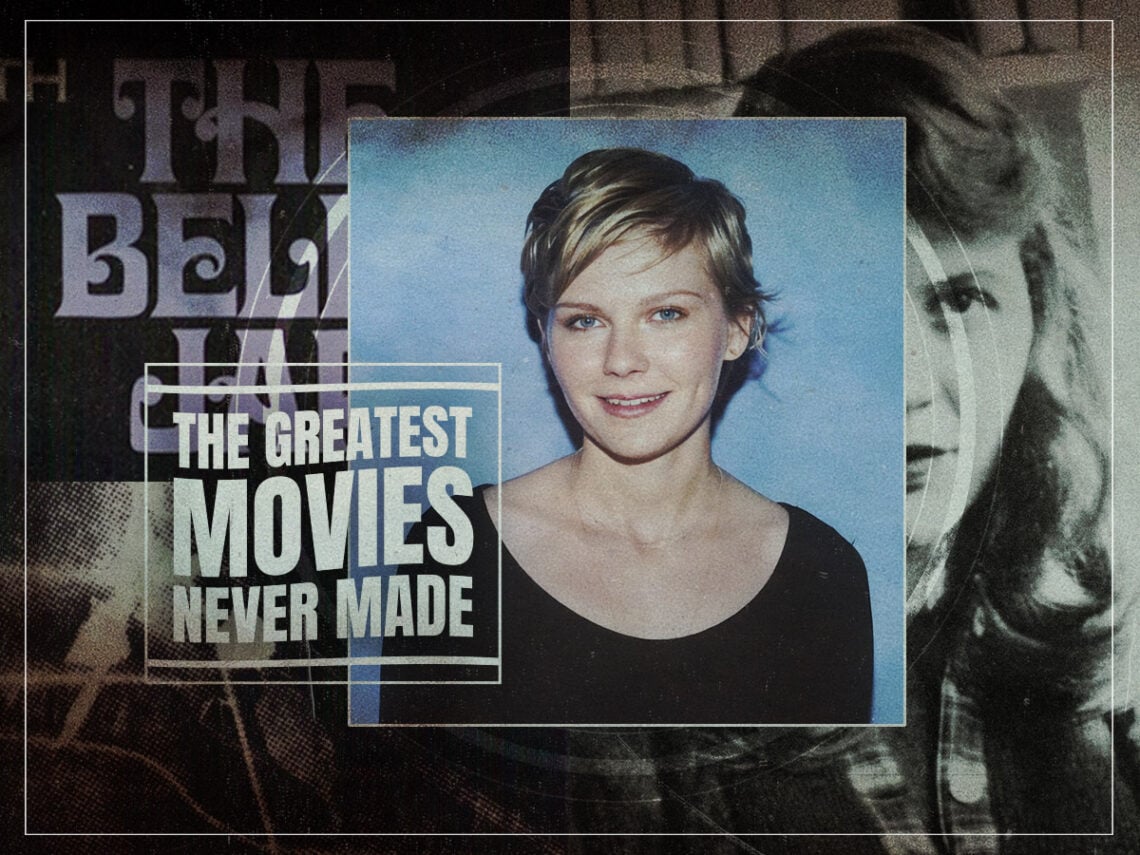
The greatest movies never made: Kirsten Dunst’s ‘The Bell Jar’

If there is one book associated with depressed young women – especially teenagers – it’s usually The Bell Jar by Sylvia Plath. The novel is often used as cinematic shorthand to depict adolescent girls full of angst with a complex inner world, in turn creating a cultural image of Plath and her work as nothing more than symbols of depression and hopelessness.
It’s clear that The Bell Jar’s place within culture is firmly wrapped up in that of the miserable, struggling, mentally unwell young woman, and while many readers relate to Esther Greenwood’s descent into instability, the novel’s legacy is complicated by one-dimensional interpretations that ignore the nuance with which Plath explores depression.
The Bell Jar is a terrific novel about female mental illness, a topic that has long been misunderstood by both media and society as a whole. Plath based much of Esther’s character on herself, making the story feel incredibly real. So, while it’s indeed a sad and often difficult read, it’s also full of depth that reflects Plath’s sense of humour and perception of the world as an ambitious young woman.
It’s frustrating to see the novel watered down this way because Plath was a truly hopeful individual whose life and work shouldn’t be solely defined by her experience of mental illness. So, if anything is going to get people talking and potentially reassessing their opinion on something, it’s a film, and in 2016, a movie version of The Bell Jar with Kirsten Dunst in the director’s chair seemed to be underway.
While there was a film adaptation of the movie in 1979, directed by Larry Pearce, it was received so badly that it can hardly qualify as a suitable cinematic imagining of Esther’s breakdown. The novel is undoubtedly a hard one to adapt since so much of the novel revolves around Esther’s deteriorating inner world, and Pearce’s attempt just didn’t do the story justice.
Yet, the idea of Dunst, a woman who has suffered from depression herself, directing The Bell Jar sounds like a project with lots of potential. While it would have been her directorial debut, judging by many of the movies she has starred in, it’s hard to see how she wouldn’t suit the job. In 1999, Dunst appeared in Sofia Coppola’s debut feature, The Virgin Suicides, in which she played the depressed Lux Lisbon, a teenager who eventually kills herself as part of a pact with her sisters. The role is one of her most well-known, namely because she plays her character – full of grief, sadness, anger, rebellion, and hopelessness – with plenty of depth and understanding.
Dunst has also starred in movies like Marie Antoinette, Eternal Sunshine of the Spotless Mind, and Melancholia, all of which explore themes like depression, loneliness, and alienation. Thus, it’s a shame that Dunst’s version of the movie, with Dakota Fanning set to play the leading role, never came to fruition. It’s understandable that Dunst stepped down, though, having recently given birth to her first child at the time.
“Directing a film and having a baby… that’s two years of your life, directing, editing, and promoting all of it. Maybe when I’m older, I’ll want to again. Right now, I have zero interest in committing myself to that,” she told Entertainment Weekly. Alongside this, Dunst didn’t have the official rights to the novel, so she ultimately walked away from the project, leaving us wondering if a good adaptation of The Bell Jar will ever see the light of day.
