


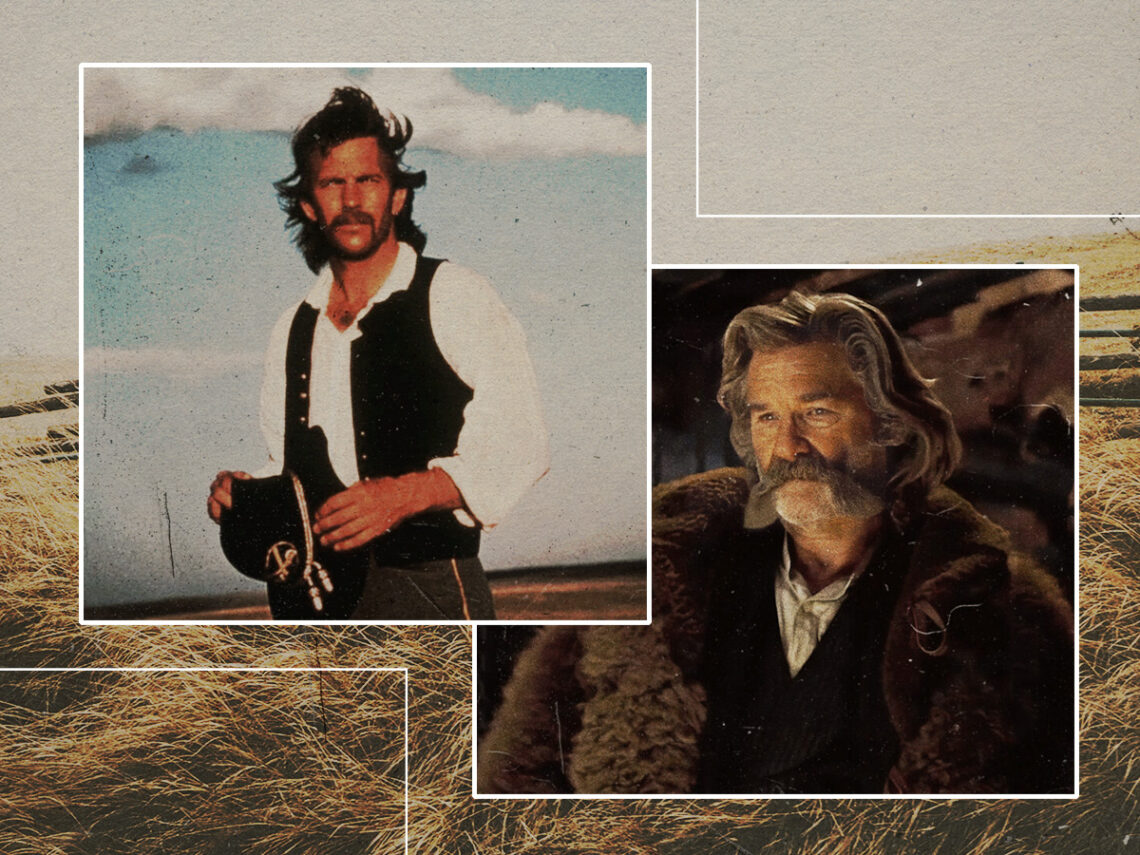
The Kevin Costner western movie that Kurt Russell doomed

In the western genre of cinema, Wyatt Earp is an iconic figure, synonymous with law and order in the Wild West. Two notable actors, Kurt Russell and Kevin Costner, were tasked with portraying this legendary lawman in different films. While both performances had their merits, Russell’s portrayal of Wyatt Earp in the 1993 film Tombstone critically and financially outshone Costner’s rendition in the 1994 film Wyatt Earp, released only six months later.
Beyond the unfortunate closeness of the release date, what made Tombstone so much more successful? For starters, Russell brought a raw, charismatic energy to his portrayal of Earp. His rugged appearance and unflinching gaze captured the essence of a man living by his own rules in the Wild West, and he drew audiences in with a sense of authenticity and relatability. In contrast, Costner’s portrayal felt somewhat reserved and lacked the magnetic presence needed to embody the larger-than-life character fully.
Tombstone also featured a stellar ensemble cast, including Val Kilmer as the unforgettable Doc Holliday and the indomitable Sam Elliott as Virgil Earp. The chemistry among the actors added depth and authenticity to the relationships portrayed on screen – Russell’s interactions with Kilmer and the rest of the cast created a sense of genuine camaraderie that elevated the film. In Wyatt Earp, while Costner’s performance was commendable, the overall chemistry among the cast didn’t seem to reach the same level, leaving some character dynamics feeling less engaging.
Tombstone was also renowned for its memorable and well-executed action sequences. Russell’s Earp engaged in thrilling, high-octane gunfights and showdowns that left audiences on the edge of their seats. The film’s cinematography and direction added a level of excitement that Wyatt Earp struggled to match; Costner’s film, while historically accurate, opted for a slower and more reflective approach, lacking the same level of visual intensity and excitement that made Tombstone a western classic that Robert Eggers would cite as a “guilty pleasure”.
Under the direction of George P. Cosmatos, Russell’s portrayal was certainly more on-the-nose – but this allowed for a deeper exploration of Earp’s emotional journey. Audiences could feel the weight of his decisions and their toll on him as he sought justice. He conveyed the internal struggles and conflicts of the character, making Earp a more multidimensional and relatable figure. Costner’s portrayal, while comprehensive, opted for a more internal development, which ultimately meant that it didn’t delve as deeply into the emotional aspects of the character.
Ultimately, one of the most telling indicators of Tombstone‘s triumph is its box office performance. The film grossed over $56million worldwide, solidifying its status as a commercial success. In contrast, Wyatt Earp struggled to match this level of financial achievement, earning approximately $25m domestically.
The stark contrast in box office figures served as the final indicator of Russell’s portrayal’s broader appeal and resonance among audiences. His performance has left an indelible mark on the genre, while Costner’s well-executed portrayal has somewhat faded from the collective memory of western enthusiasts.
