


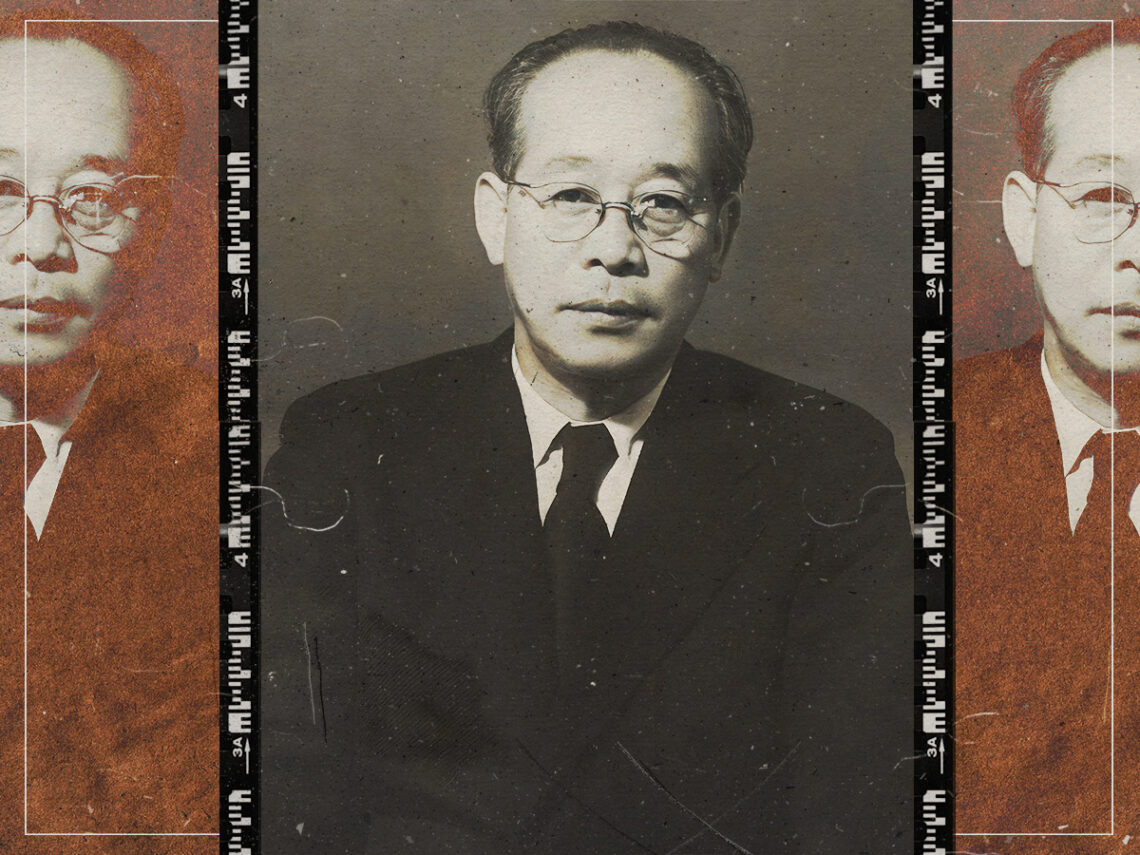
Kenji Mizoguchi: The director who inspired Ari Aster

Despite having just three features under his belt, Ari Aster is firmly established as one of the most exciting and dynamic young filmmakers in the industry, one that’s already made it patently clear they aren’t afraid to swing from the fences.
Of course, this was clear before he’d even finished film school based on his disturbing thesis piece, The Strange Thing About the Johnsons, which he made for the sole purpose of seeing just how far he could push the boundaries of cinematic sensibilities. Naturally, that extended through to the three movies he’s made so far.
Breakout psychological terror Hereditary, folk horror Midsommar, and surrealist exercise in absurdity Beau Is Afraid are all different but equally representative of Aster’s singular vision. That being said, the fingerprints left on his work by one of his biggest inspirations aren’t quite so obvious.
Alongside Akira Kurosawa and Yasujirō Ozu, Kenji Mizoguchi is credited as one of the three pillars of Japan’s ‘Golden Age’ of cinema when all three were operating at the peak of their powers. A favourite of Martin Scorsese, too, it was that connection that turned Aster on to the latter’s filmography.
As he explained to Criterion: “Mizoguchi is a filmmaker I discovered pretty early. When I was younger, I watched anything Scorsese recommended, and I saw an interview with him where he referenced Ugetsu. I just fell in love with Mizoguchi’s work.” From then on, he was enraptured by the director’s output.
Even though Aster has dabbled in gut-wrenching terror, supernatural shenanigans, and jet-black absurdity, his narratives are also deeply rooted in character. As a result, Mizoguchi’s Sansho the Bailiff being credited as “one of the most devastating melodramas” he’d ever seen – coupled with his praise of Ugetsu as “a beautiful, ethereal ghost story” – showcases the impact made by Mizoguchi on his own back catalogue.
As he explained, deepening the correlation between the pair in the process: “His films are quiet while also being extremely harsh and brutal,” Aster said. “There’s a clinical, distant quality to his films, but there’s also this aching humanity at the heart of everything he did”. Those same sentiments are there for all to see across Hereditary, Midsommar, and Beau Is Afraid, with Mizoguchi’s recurring thematic motifs apparent in Aster’s films.
In addition to naming Sansho the Bailiff as one of his ten favourite movies of all time in a BFI Sight & Sound poll, Aster expanded further on his admiration while speaking to Adventures in Moviegoing, noting that he’d actually rank it as number one: “It’s such a huge film I find it hard to talk about. Whenever I’m asked ‘What is your favourite film?’ that is the answer I most often give.”
The combination of heightened melodrama and intimate humanity has become a hallmark of Aster’s already, while his first two movies displayed both a penchant and mastery of telling otherworldly tales, all of which can be directly attributed to the influence made on him both personally and professionally by Mizoguchi.
