


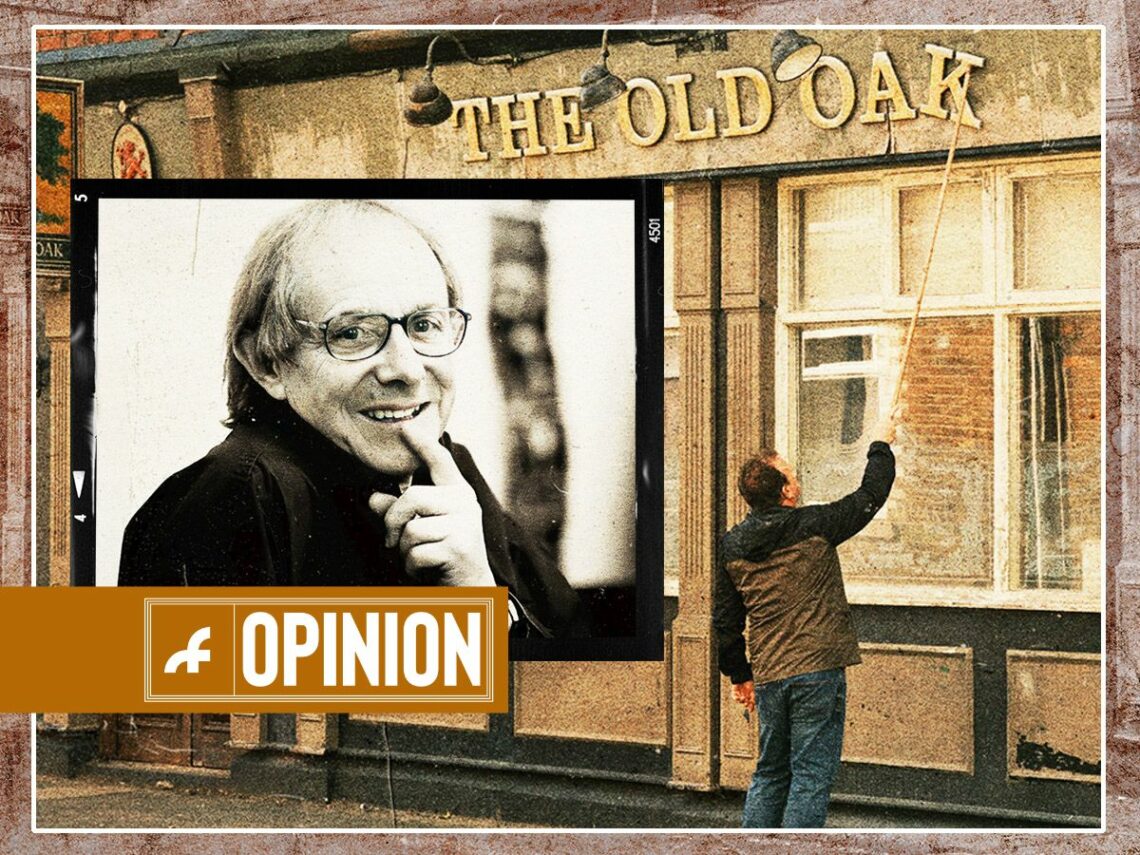
Hear Me Out: Ken Loach’s new film ‘The Old Oak’ looks like it was made by AI

Ken Loach has played an inarguably vital role in the grand theatre of British cinema. In a career spanning six decades, the 87-year-old director has carved out a unique niche, producing hard-hitting dramas that focus on the struggles of Britain’s working class. However, upon hearing the announcement of his latest film, The Old Oak, my heart didn’t stir with anticipation but rather sank with a familiar disappointment.
Disclaimer: I haven’t yet seen the film, and there is every chance Loach will knock it out of the park. But based on the trailer and his last entry to the social-realism canon with 2019’s Sorry We Missed You, I can’t help but shake the feeling that we’ve heard this one before. Following the struggles of a pub owner in a neglected mining town and the tensions arising due to the appearance of refugees, The Old Oak is presented as a moving tale of hardship and resilience, navigating the stark realities of Britain’s working class. Is it just me, or does that sound absolutely identical to his past two films?
Of course, every director has their familiar territory. It’s not a crime for an artist to revisit themes and narrative motifs again (and again). But try watching Sorry We Missed You after watching I, Daniel Blake, and you’ll swear that they’ve used scraps from the latter that were found on the editing floor – if not outright reused whole scenes in their entirety. It’s as if Loach and Laverty think that by tweaking minor, surface-level plot details, an entirely new film will spring forth – but that’s not how it works. It may not be the majority vote, but I think a filmmaker’s best work comes from challenging themselves. With our most esteemed director, however, it feels like he’s sinking further and further into comfort.
Watching the trailer for The Old Oak reminded me of re-reading the same grim chapter in an otherwise riveting novel. Loach’s films, once a punch in the gut, have now become the cinematic equivalent of a long, sombre sigh. Once a beacon of realism and grit, the Loach/Laverty pair now appear to be running on autopilot, churning out films so mechanically that you could honestly mistake them for the work of AI. In fact, maybe that would be better; at least then, there’d be an inkling of a chance of something random and, therefore, new. Now, I’m not accusing the bastion of British cinema of using generative computing to come up with his films, but… perhaps there is some process involving idea cards and a raffle/sweepstake hat?
Critics are calling this Loach’s signature style. A cinema of reality, stripped of glitz and glamour. But there’s a vast difference between maintaining a stylistic identity and slipping into a loop of repetition. The truth, bitter as it may be, is that his filmmaking has become stale and predictable, holding onto a worn-out formula rather than breathing life into fresh ideas. Haggard protagonist? Check. Topical commentary on current events? Check. Generic, tinkling piano score aimed at tugging the heartstrings? Check.
Granted, there are not many filmmakers so dedicated to giving a voice to the underrepresented, and with an industry dominated by Oxbridge types, it’s an unequivocally good thing Loach is doing. However, when confronted with these repetitive themes and narratives, I genuinely can’t help but wonder – is Loach’s filmmaking truly serving the purpose it claims to? Is it providing a voice to the voiceless or exploiting their hardships for dramatic effect? Some might argue that the consistency in his filmography is not just a style but a social mission. Yet with such predictability, the mission seriously risks becoming a farce. The undoubted sincerity and social consciousness of Loach’s early work now feel diluted, replaced by an impersonal process that simply duplicates proven tropes. At best, it’s lazy; at worst, it’s outright cynical.
If the aim is to incite change, to provoke thought and action, then surely the method must evolve too. Like a sermon heard too often, Loach’s films have lost their potency, their ability to stir and incite. In powerful political cinema, change and innovation are not just desired but necessary. If the director wants to deliver us the social goods, just like his characters in Sorry We Missed You, he’s going to have to switch up the package. I’m not talking about making it more palatable – he could make it even bleaker if he wanted to. But present it differently, make it feel fresh, and it’s guaranteed to resonate with audiences on a more powerful level.
The Old Oak looks set to be another cinematic rendition of the ‘Loach Formula’, a tribute to its creator’s predictability rather than his innovation. This repetition feels like a missed opportunity for an artist who has the power to impact the masses and spark conversations. Loach, if you’re listening, it’s time to shake off the dust and venture into unexplored territories. Your audience is ready, but are you?
