

The real-life event that inspired Marlon Brando film ‘The Wild One’
Read More


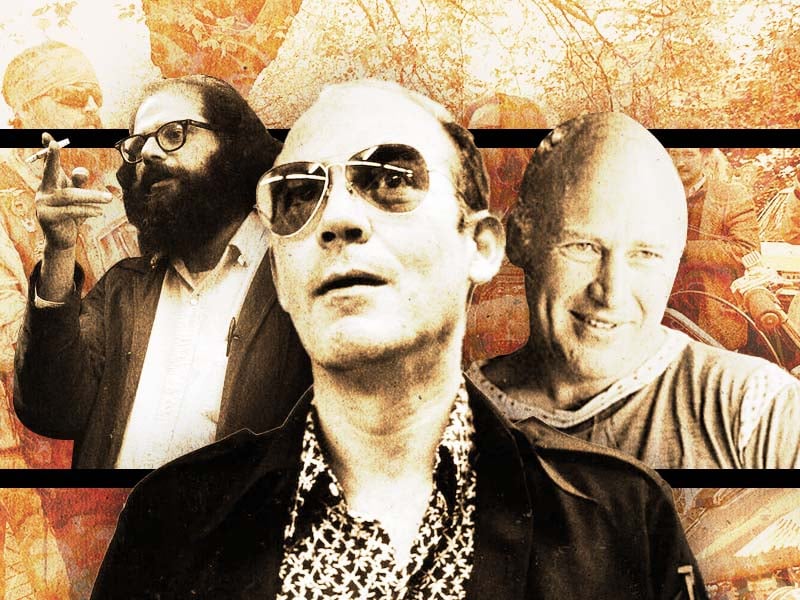
In the 1960s, the Hells Angels became a force to be reckoned with in the United States. The media instilled fear in the general population as they over-sensationalised the impending menace of the country’s most dangerous and prevalent biker gang. The gang, led by the recently deceased Sonny Barger, was followed by unorthodox journalist Hunter S. Thompson in the mid-’60s as he befriended members of the West Coast chapters and looked to debunk any media-spread myths about the gang.
As Thompson’s non-fictional account, aptly titled Hell’s Angels, depicted, the gang was built around an image of lawlessness, hedonism and violence. But the media’s depiction was often exaggerated, and the gang mostly consisted of lost causes, a doomed subclass with limited prospects looking for purpose and a sense of belonging.
Concurrently, the ’60s marked a period of broader societal change as rock music gelled with the hippie movement that looked to spur radical change. The generation called for an end to their parental generation’s colourless capitalist war machine and encouraged a more liberal society. This generation also came with a burgeoning craze of drug-taking in the educated youth, most notably the “mind-expanding” LSD.
As is well documented, LSD became associated with musicians in the ’60s, even inspiring a whole subgenre, psychedelic rock. But while the Beatles, Stones and Woodstock attendees made the headlines, the drug was prevalent across most of the western world, and the literary “Beat Generation” were also up to their knees in the stuff.
In Hell’s Angels, Thompson mentions his friend Ken Kesey, the famed writer of One Flew Over the Cuckoo’s Nest. “The only really successful connection I made for the Angels was Ken Kesey, a young novelist then living in the woods near La Honda,” he wrote.
It’s made immediately apparent that Kesey enjoyed a hedonistic lifestyle with near-nightly parties at his house. “During 1965 and 1966, Kesey was arrested twice for possession of marijuana and finally had to flee the country to avoid a lengthy prison term,” Thompson wrote. “His association with the Hell’s Angels was not calculated to calm his relationship with the forces of law and decency, but he pursued it nonetheless and with overwhelming zeal.”
In 1965, before Kesey disappeared abroad to evade a prison sentence, Thompson decided to invite Kesey to meet some Hells Angels with him. The author immediately hit it off with the intriguing bearded hoodlums and asked them to his six-acre residency for one of his famed parties the following weekend.
Thompson named Kesey’s usual crowd of academic misfits “his band of Pranksters”; it included the Beat Generation royalty of Allen Ginsberg and Neal Cassidy. Word escaped that a band of Hells Angels would be in attendance. As a pacification measure, the local police authority posted a group of officers to overlook Kesey’s party from across the road.
As the Hells Angels entered the party, they were understandably apprehensive about walking into such a strange environment. Literary luminaries, young academics and even Ram Dass, the LSD guru, were all in attendance. “Most of the Angels were posed and defensive until they got thoroughly drunk, and a few never got over the idea that they were going to be challenged and whipped at any moment… but as a group, they seemed to realise that if they wanted any tension they were going to have to work pretty hard to create it on their own,” Thompson noted.
The lack of attention which initially bewildered the Angels was attributable to the fact that almost everyone present was tripping on LSD. “There was very little marijuana, but plenty of LSD, which was then legal,” Thompson wrote. “The cops stood out on the highway and looked across the creek at a scene that must have tortured the very roots of their understanding”.
As the Angels settled into the party, they were introduced to LSD, which had never been prevalent in the gang before. “The first party, featuring only the Frisco chapter, was a roaring success,” Thompson remembered. “Sometime around midnight, Pete, the drag racer, grinned as he rummaged through a beer tub and said: ‘Man, this is nothin’ but a goddamn wonderful scene. We didn’t know what to expect when we came, but it turned out just fine. This time it’s all ha-ha, not thump-thump'”.
The party was a surprising success. Thompson noted that the only issues were the police’s unprovoked checks on those leaving the party and Neal Cassidy’s drunken yelling across the creek toward the police. Thompson was fearful that the careless taunts could have given the police license to enter the property.
Over the weeks and months that followed, word of Kesey’s legendary parties spread like wildfire and larger groups of Angels from further afield came to see what the fuss was about. Thompson wrote: “Once the threat of violence seemed to fade, there was acid in great profusion. The Angels used it cautiously at first, never bringing their own, but it didn’t take them long to cultivate sources on their own turf… so that any run to La Honda was preceded by a general mustering of the capsules, which they would take down to Kesey’s and distribute for money or otherwise.”
“Once they accepted LSD as a righteous thing, they handled it with the same mindless zeal they bring to their other pleasures. Earlier that summer the consensus was that any drug powerful enough to render a man incapable of riding a bike should be left alone… but when the general resistance collapsed, after several of Kesey parties, the Angels began to eat LSD as often as they could get their hands on it – which was often indeed, due to their numerous contacts in the underground drug market”.
Watch Ken Kesey discuss the influence of LSD on society in the video below.
