


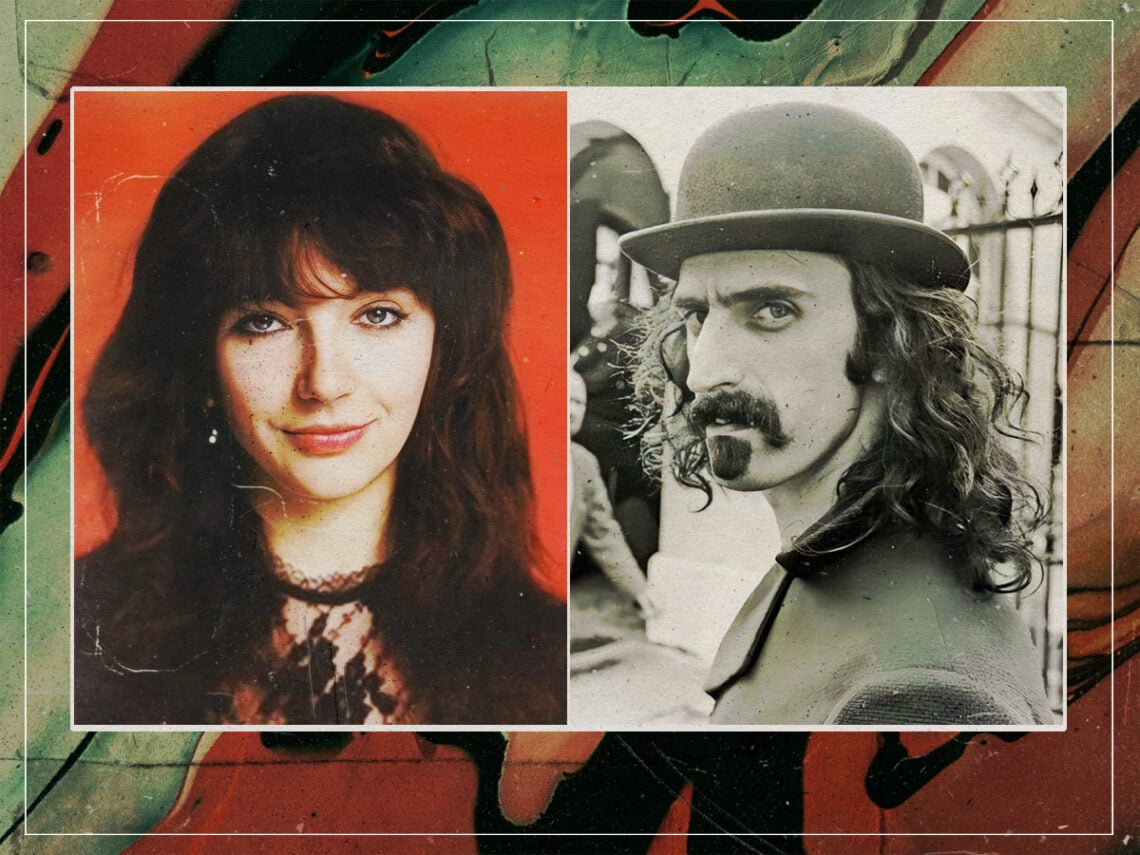
How Kate Bush looked to emulate Frank Zappa

Kate Bush has often been pinned as one of the most enigmatic figures in pop music. Her artistry has contributed to this image – her cosmic soundscapes, spell-binding vocals, and supporting world-building through costuming and interpretive dance – but myths surrounding Bush’s personal life have also grown.
After making a splash with her iconic single ‘Wuthering Heights’, which became the first UK number one penned and performed by a female artist, Bush seemed set to change the course of pop, and she certainly did. Following the success of her debut, Bush spawned more all-time greats in the likes of ‘Running Up That Hill’ and ‘Babooshka’, but in the early 1990s, she disappeared from the spotlight.
Bush put out her seventh studio record, The Red Shoes, in 1993, a gorgeous album that saw the artist delve further into the personal realm than ever before. Though it was unbeknownst to fans at the time, the record would mark Bush’s last offering for over a decade until she returned with Aerial in 2005.
Myths began to emerge around Bush’s removal from the public eye, with reports that she was a recluse dominating the conversation. Really, it was a conscious decision from Bush, who had always prioritised her private life, a lesson she learned from an artist who was similarly pegged as an eccentric in the limelight: Frank Zappa.
A moustachioed avant-garde aficionado, Zappa established himself as a counter-cultural icon, but Bush heard reports that his persona differed from those who really knew him. In one conversation via the Zappa wiki, Bush deemed Zappa a “very smart man” for his distinction between his artistry and home life.
“He said that, as an artist, you can live a free and untamed life,” she recalled, “In case you have a solid family life. I love this idea.” Bush loved it so much that she seemed to implement it into her own career, ensuring that she protected her personal life first and finding that this served her artistry.
“I’ve never met Zappa,” she acknowledged, “but people who have portrayed him as a very dear person, different from his image. I have always preferred my privacy over my public life because I work best with a stable home base. The idea that the artist who suffers is the best doesn’t apply to me. I work better when I’m fine.”
As artists are increasingly probed for details surrounding their personal lives or expected to suffer for their art, it’s a particularly refreshing take. Protecting her privacy has only served to enhance Bush’s public artistry.
