


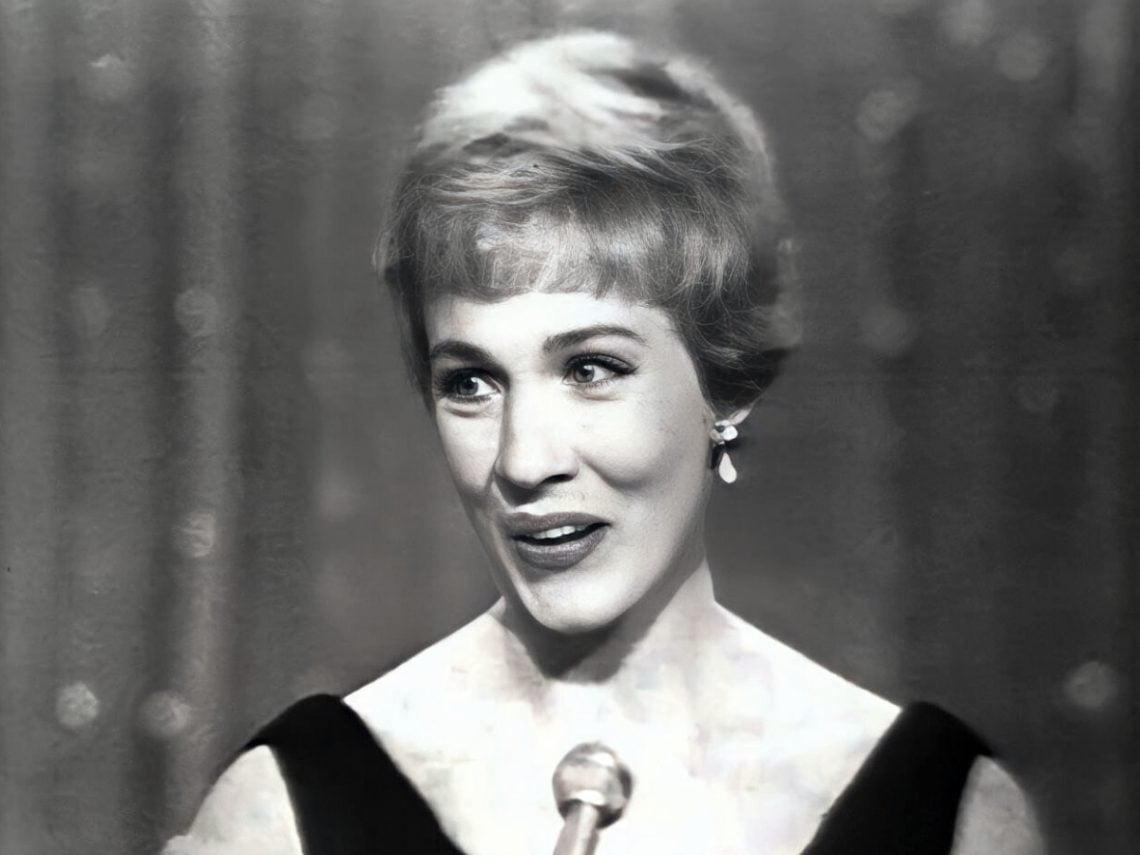
Julie Andrews names her most harshly treated movie: “It was almost like sacrilege”

How do you get more legendary than being Mary bloody Poppins? Well, by also being Maria in The Sound of Music, the mother of both Gru in Despicable Me and Princess Fiona in the ‘Shrek’ series, the Queen of Genovia in The Princess Diaries, and Leviathan in Aquaman, that’s how. All of these incredible credits belong to the icon that is Dame Julie Andrews.
Those are just some of the extraordinary roles she has played across an 80-year career, and she’s still going strong today.
As a result of her superb career, Andrews has been showered with praise and awards. The title role in Mary Poppins landed her an Oscar in 1965, a prize she would be nominated for twice more for The Sound of Music and Victor/Victoria. She is a seven-time Golden Globe winner and is just a Tony award short of the much-fabled ‘EGOT’. Unfortunately, it hasn’t always gone well for everyone’s favourite flying nanny.
Some of Her Dameship’s less acclaimed ventures include The King’s Daughter. This disastrous fantasy film was only released eight years after it was completed, The Man Who Loved Women, a ropey remake of a François Truffaut classic, and Tooth Fairy, which honestly isn’t that bad. She underwent serious surgery to remove nodules from her throat in 1997, resulting in the loss of her singing voice. She eventually took the doctors who operated on her to court for malpractice.
Then there are the films that the icon herself worries didn’t get the love they deserved. Speaking to Trib Live, a Pennsylvania-based news outlet, Andrews recalled one particular project that she felt had been overshadowed by its contemporaries. “I remember when I made a movie called Star!,” she recalled. “It was not successful because at that time there were things like Easy Rider, low-budget movies that did very well. It was almost a sacrilege to spend a lot of money on a musical.”
Star!, retitled Those Were Happy Times upon its re-release, is a biopic of the British stage actor Gertrude ‘Gertie’ Lawrence with Andrews in the lead role. The film tells the story of Lawrence’s life; her rise to the top; her struggles with fame; her various romantic entanglements; and her eventual death from liver cancer at the age of just 54. The soundtrack features a number of standards and stage tunes from the early 20th century, many of which Lawrence helped to popularise.
Though Mary Poppins and The Sound of Music had come out just four and three years earlier, respectively, a lot had changed by the time Star! hit the big screens. 1968 was the year of Bullitt, Rosemary’s Baby, and 2001: A Space Odyssey. Easy Rider would hit screens a year later, solidifying a trend that would change cinema forever. Whilst Star! Had a budget of over $14million (almost $130million in today’s money), Easy Rider was made for less than $500k (around $35m today). The motorcycle saga made over 150 times its money back at the box office, whereas the musical failed to break even.
Musicals were still popular in the late 1960s. Oliver! was one of the highest-grossing films of ‘68, but Andrews was correct in identifying the way things were going. Soon, the cheaper, grittier products of ‘New Hollywood’ would come to dominate the industry, leaving the remnants of the vaudeville days in the dust.
