


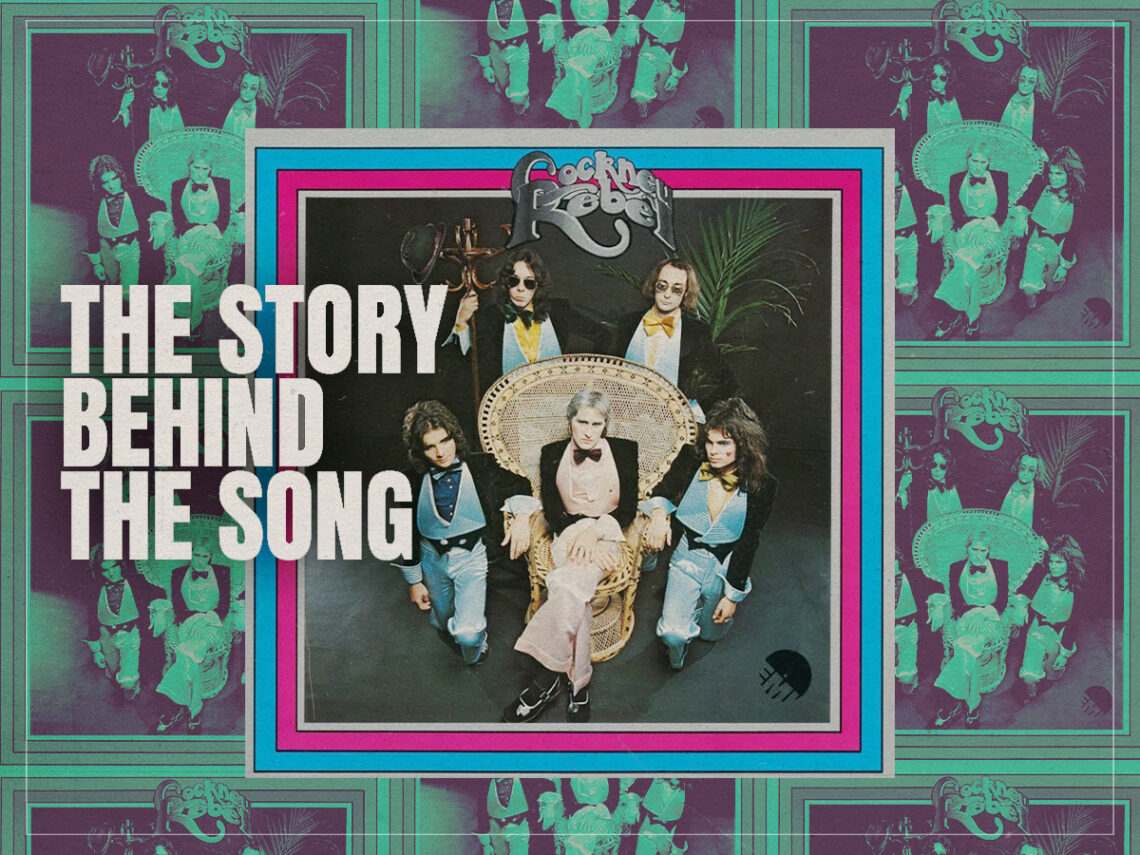
The Story Behind The Song: Steve Harley’s sexy, young-love bop ‘Judy Teen’

What was it in the air during those crucial early years of the 1970s? Somewhere, somehow, a constellation of disparate artists found sparkling platforms, silvery jackets and near instant success in glam rock‘s glittering route to the charts. Future Martian messiah David Bowie was floating on the fringes of psych-folk, Slade were hard-nosed skinheads donned in braces and bovver boots, and Marc Bolan was a flowery child of the happy idyll playing the first ever Glastonbury Festival as the longer Tyrannosaurus Rex with lengthy album titles like My People Were Fair and Had Sky in Their Hair… But Now They’re Content to Wear Stars on Their Brows.
Another budding artist bitten by the glam bug was Steve Harley. Originally pursuing a career in journalism and even gaining bylines in London and Essex papers—and counting Richard Madeley as a former peer who nabbed his vacant East London Advertiser desk after leaving in 1972—the 21-year-old Harley went on the dole as one of the great provisions of the post-war consensus that afforded working-class people the freedom and opportunity to enter the arts without monied backgrounds.
Supplementing his social security with busking and small cafe gigs, Harley began his musical life playing folk numbers and sharing billing with the likes of John Martyn and Ralph McTell, before forming the folk band Odin.
While never as glammed to the max as Sweet or Mud, Steve Harley and his Cockney Rebel band leaned more toward Mott the Hoople‘s swaggering flair over the glitter blitz that dominated the day’s Top of the Pops every Thursday night. Yet, both musically and in their aesthetic, Harley always draped his animated pop craft in a vaudeville flash of cabaret theatre, each of his albums easily mistaken for the soundtrack of some rock-centred West End production.
This approach found some success in Europe, with Cockney Rebel’s debut single ‘Sebastian’, leading 1973’s The Human Menagerie, reaching number two in the Netherlands and Belgium. It was a stirring and whimsical slice of baroque pop packed with strings and vocal choirs that Harley had sketched out way back as a busker. Yet receiving a lacklustre response on the UK pop charts, as well as The Human Menagerie being met with commercial indifference, the EMI label pressured Harley to pen a hit, pronto.
Undaunted, he quickly set to task rustling up the much-needed UK smash. Casting his mind back to an early romantic fling with an American some years prior, Harley crafted a number on the universal pop fuel of young love. “‘Judy Teen’ was a boy/girl story, a teenage romance, a bit of sex in there, interesting drum rhythm, hooks all over the place—lo and behold, big hit! It’s a good, sexy little teenage love story. When I wrote ‘Judy Teen’, I was 18 or 19 when I had the experience that that song came from”.
Cutting the track at EMI Studios’ Room Two with Alan Parsons sharing production duties, ‘Judy Teen’ began to take shape from the saucy diary confessional to a veritable pop smash. Unconcerned with lead guitar, Harley emphasised instead on Jean-Paul Crocker’s violin, rerecording and layering over 20 times to eschew the need for a string section. Charged with a uniquely zesty life, ‘Judy Teen’ would set a template for the band’s lyrical innuendo and kitsch arrangements.
Harley later shed a little further light on the titular ‘Judy’ in 2021: “She wasn’t called Judy, [but] she was my short-lived girlfriend. We only lasted a few months [and] had a lot of fun together. She was feisty, a very interesting young woman. You’d have thought she was from California, she was so close to being a real hippy”.
Youthful ardour and the novel, layered recording of Crocker’s distinct violin won Harley and his Cockney Rebel the hit they sorely needed, shooting to number five on the UK Singles chart and heralding the glam era with one of its biggest names.
