


‘Thelma’ movie review: an unlikely mix of genres

Thelma, writer/director Josh Margolin’s debut feature, is an unlikely mix of genres and styles. It is a touching comedy-drama about family issues and the challenges of old age, a tale of a personal quest, and a very funny mock-action film. It is also a tribute to the director’s grandmother, with a central character modelled on her and a storyline loosely based on actual events in her life.
The film opens on a familiar domestic scene: Thelma, a woman in her 90s, is being helped by her grandson Daniel (Fred Hechinger) to navigate basic internet services such as email. While stereotypically clueless about computer use, Thelma is clever and amusing, making pithy observations about the internet and life in general and advising Daniel about his rather turbulent personal life.
The central story begins when Thelma receives a scam phone call, a fairly sophisticated one which duplicates her grandson’s voice, saying he’s been in an accident and needs $10,000 immediately. Alarmed, Thelma forwards the money as instructed, later discovering that she has been duped. When police declare the case both too difficult and too common to address, Thelma takes matters into her own hands in an unlikely and unpredictable adventure across the greater Los Angeles area, defying both her unknown thief and her own fragility.
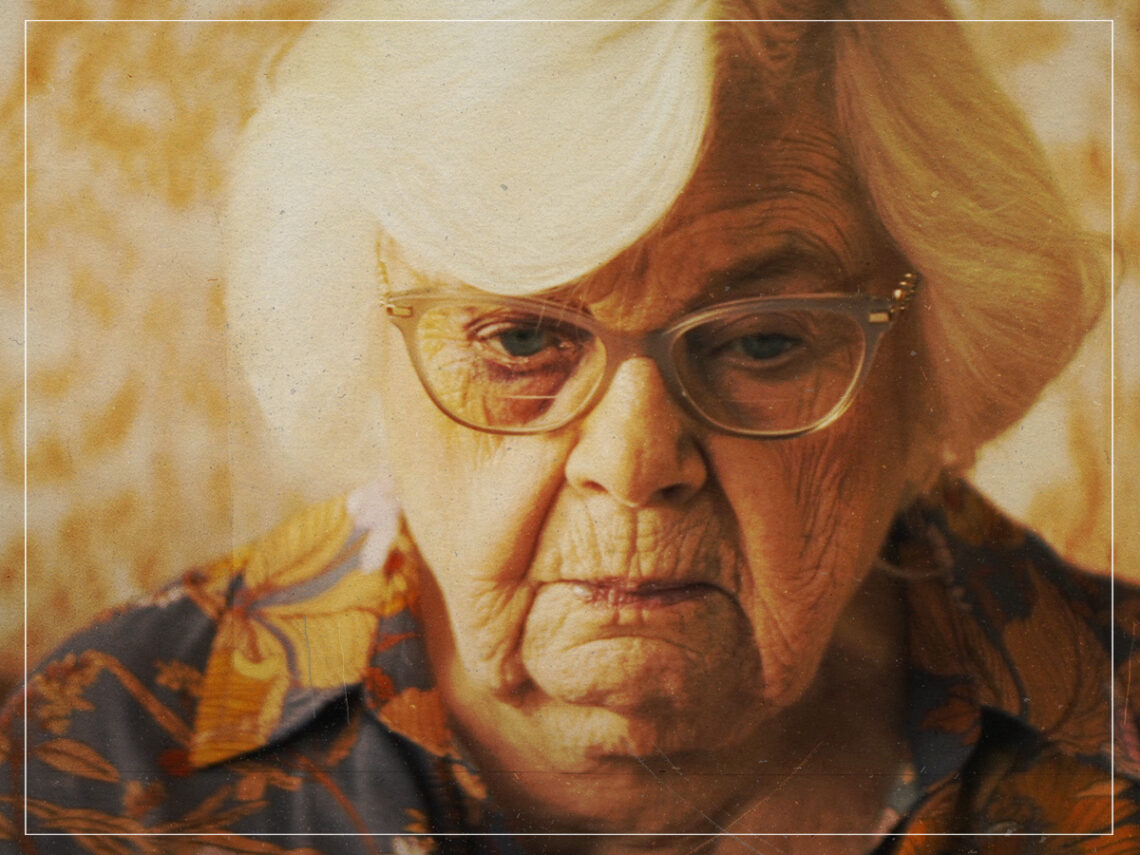
The highlight of the movie is veteran character actor June Squibb, who plays Thelma. Squibb has been a film and television actress since 1985, debuting in Woody Allen’s Alice in her 60s, earning an Oscar nomination at age 84 for her supporting role in Nebraska, but with Thelma taking on her very first lead role at the age of 94. Aided by an excellent script, her portrayal of a spirited and quirky personality beneath the façade of a conventional old lady is consistently entertaining, her running commentary on the world amusing and to the point, and Thelma’s fight to retain her independence, as her physical abilities decline, moving but unsentimental. Squibb also has excellent comic timing that adds life to even the minor scenes.
As Thelma sets out to recover her money, the story takes on the trappings of an action film – referencing espionage tales such as Mission: Impossible, as quietly established in early scenes – with Thelma’s age-based obstacles taking the place of the standard action hero’s more advanced challenges, in a consistently funny and inventive way.
Action-movie musical score and film techniques follow Thelma as she obtains an electric mobility scooter by questionable means that include something of a public joust, tracks the culprit behind the telephone scam, and makes a plan to recover her money, all the while evading her worried daughter and son-in-law (Parker Posy and Clark Gregg) who track her across Los Angeles. Thelma is aided in her quest by her friend Ben – played by the late Richard Roundtree, best known for his role as John Shaft in the 1970s private detective thrillers. Thelma and Ben’s combative but warm rapport is another high point of the film.
Thelma and Ben’s joint mission is transformed into high espionage with great creativity, again using the sound, conventions, and format of a serious action film, replacing the familiar secret agent apparatus with elder equipment – the scooter, assistive phone apps, hearing aids, an oxygen tank and such, employed in the manner of a spy behind enemy lines, or James Bond using the latest spy gadgetry. The resourceful Thelma even provides a bit of genuinely deadly equipment for good measure and, at one point, cleverly uses presumptions about the elderly as a trick, fooling both her adversaries and the audience. At the same time, real obstacles presented by their age and lack of mobility are elevated to the 007-level threats they truly are to the unassisted team of nonagenarians.
The elderly pair’s conversation during the few non-comedic moments adds perspective, as Ben is more accepting of the limitations of old age, while Thelma fears losing not only independence but respect, noting, “If you act like a baby, people treat you like a baby.” She is mildly resentful of the caring but patronising and controlling approach her family often takes with her (their overbearing management rendered a bit less objectionable by being used on their 24-year-old son as well as Thelma), and genuinely fears what seems like an inevitable loss of control over her life.
The film deals with issues of old age not only with sympathy but also with genuine respect from the perspective of the older characters themselves, leading to a soberly satisfactory conclusion. Geriatrics provides a surprisingly fruitful source of comedy in this light but highly original adventure.
