



Joni Mitchell’s 10 greatest opening lines

Joni Mitchell can command a room with the simple art of her sheer presence, never mind when she opens her mouth.
That’s because anyone lucky enough to come into her orbit is more than aware of the sorcery that they are about to see take place before their very eyes, no matter the time, place, or occasion. You don’t have to know Mitchell intimately to be beguiled by her, because much of who she is is already laid bare on the outside.
Of course, this is not to say that there is no sense of enigma about her, because everyone knows that the singer has revelled in her fair share of tricky moments over the years. But beyond all that, it’s the power of her writing that keeps her on the straight and narrow, and in an untouchable league of her own that no one can come near to.
It’s all part of the reason that Mitchell has developed a notoriety for being so inimitable and intimidating to a certain extent in her persona. Yet on the other hand, all you need is a paper, pen, and guitar to open the real latch to her heart – and in any number of her songs, she comes out swinging from the very opening line.
The 10 greatest opening lines ever penned by Joni Mitchell:
‘Both Sides Now’
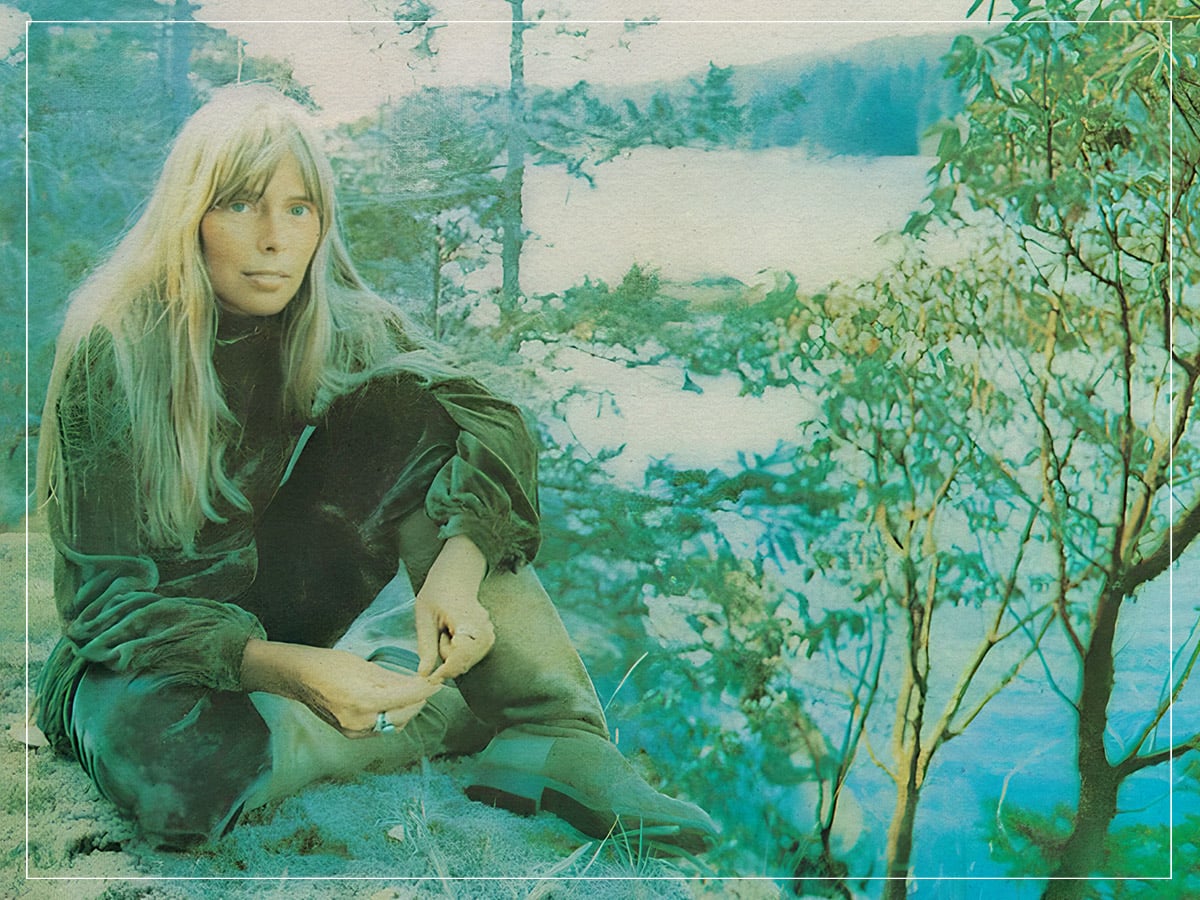
While it’s starting in an obvious place, there’s no point in trying to avoid the legendary and ethereal impact of ‘Both Sides Now’, Mitchell’s major magnum opus. It’s hard not to be utterly captivated by either version of the song, but with its first words of “Rows and floes of angel hair/ And ice cream castles in the air”, there is an instantly heartbreaking universality that always meant it was bound to transcend time and space.
The craftiness of Mitchell has devastating effects all at once, in viewing the beautiful mirage of clouds in a childlike fashion, before contrasting it with the heaviness and darkness that often come with the unwelcome beckoning of adult life. That weight, translated sonically through her iconic re-recording of the song later in her own career, takes on even more salience within the context of a journey where wonderment is lost.
‘Marcie’

Within Mitchell’s 1968 debut Song to a Seagull, it was easy to categorise the entire record within the prism of the psychedelic, California living in which it was created. In one respect, you could also see this in the titular character of ‘Marcie’, who, on the face of it, could be seen as a manifestation of the era.
Yet when “Marcie in a coat of flowers/ Steps inside a candy store,” the rest of the song feeds into a narrative of the dissolution of the swinging sixties dream, realising the reality that change was in the air and not everything was as rosy as people painted it to be. With the world turning into a landscape of unrest and riots, it was finally time to let go of that naive, beguiling mirage.
‘Ballerina Valerie’

Yet if ‘Marcie’ was lamenting the tragic death of that dream, ‘Ballerina Valerie’ casts the mind back into a time when that swirling psychedelia was, quite literally, still at the forefront of every single mind, not least Mitchell’s. It was during her earliest days on the gig circuit, in 1967, that she conceived the idea of being, “Down in the garden/ Under a leaf, she was smoking her keef.”
It goes without saying that drugs were a major part of how the decade functioned, particularly in places like California, where Mitchell made her name. However, it was the mark of the singer that, unlike The Beatles, who were forced to be far more covert in their allusions, she could sing about “smoking her keef” in full view without a care in the world.
‘Song For Sharon’

In traversing the life and times of Mitchell, however, there are obviously going to be roadblocks that any star of her kind will invariably come up against. They are the ones that put you on an unparalleled path, but also isolate you from the rest of the world. This was never better expressed than in the ten-verse epic ‘Song For Sharon’, taken from 1976’s Hejira.
As the singer laments her singular life to her hometown friend Sharon, who has chosen a much more mundane path, she opens: “I went to Staten Island, Sharon/ To buy myself a mandolin”. When she then stumbles across a wedding dress in a shop window, she realises what a seemingly frivolous existence she leads – and in one simple act of buying a mandolin, everything about the world of fame and fortune can be pulled into question.
‘Big Yellow Taxi’

It couldn’t be a list about Mitchell’s greatest opening lines without a mention of one of her greatest songs as a whole, and that’s exactly where ‘Big Yellow Taxi’ comes into play. An iconic track in every sense of the word, it is a complete staple of the Mitchell songbook largely for its opening lyrics alone.
When “They paved paradise, and put up a parking lot”, the people probably didn’t think much about what they were doing. Yet in a world bustling with consumerism and never stopping to see some of the most natural wonders, it was Mitchell who wanted to put the world to rights. She achieved it in her own way, of course, with a truly iconic tagline to go with it.
‘Brandy Eyes’

Giving someone’s gaze an alcohol-infused interpretation is nothing groundbreakingly new, but when Mitchell sang about, “Eyes that send me chasing after feelings that I lost one day/ Why befriend me when the brandy tells me what they want to say?”, on her 1966 song ‘Brandy Eyes’, that revealed a true heartfelt profundity to what she wanted to say.
While there was obviously a warming glow that came with this sentiment, there also came the reality that the brandy, in this instance, was a mask to the truth of feeling that Mitchell was experiencing, both in herself and in her relationships. After all, the ‘60s could be seen quite plainly as a heavenscape of peace and love on Earth, but there were some much uglier realities underneath it.
‘The Hissing of Summer Lawns’
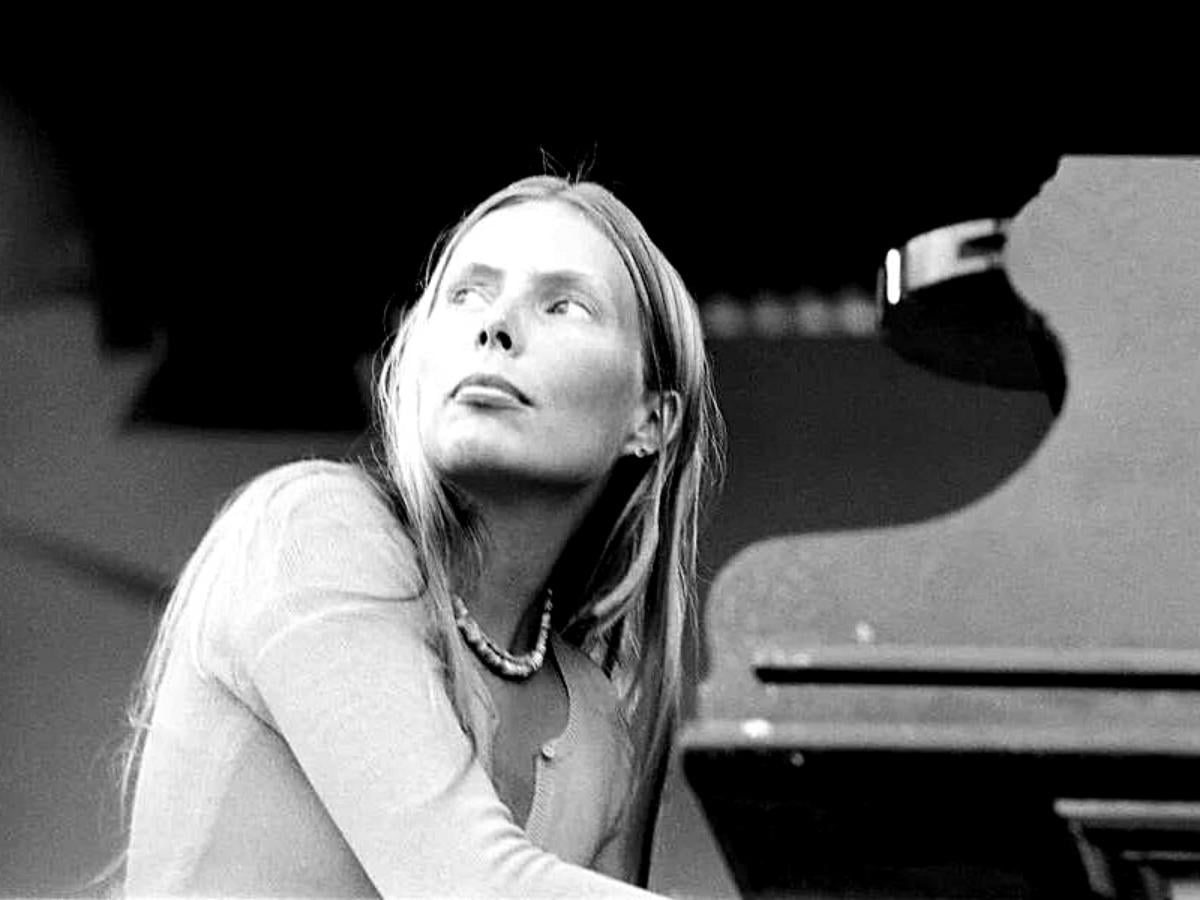
By the time she reached 1975, it was fair to say that Mitchell was more than done with the hippie and bohemian lifestyle and wanted to truly deliver a punch in her work. That was where the jazz and avant-pop sound of her album The Hissing of Summer Lawns came from, along with the searing anti-patriarchal message of its titular track.
In telling the story of a woman trapped in a marriage to her husband, who sees her as no more than an asset to his property, there is no greater evocative opening image than: “He bought her a diamond for her throat/ He put her in a ranch house on a hill”. It’s easy to lose sight of the fact that things were still not easy for women in the mid-1970s, so for Mitchell to be bold enough to stand up and say this was a small revolution in itself.
‘Nathan La Franeer’

Given that Mitchell dedicated Song to a Seagull to her former English teacher, Mr Kraztmann, “who taught me to love words,” the final song on the first side of the album, ‘Nathan La Franeer’, was a huge testament to that tribute. When she sang of the fact “I hired a coach to take me/ from confusion to the plane”, it was clear that the spaces her mind operated in were purely liminal.
Indeed, that sense of journeying, whether literal, metaphorical, or some blurred place in between, has proven integral to the fabric of Mitchell’s back catalogue. It seems that travelling became her way of processing her thoughts, and in turn, expressing them in a way that spoke to the world. Speaking through the muse of her coach driver, she didn’t know what was about to take flight.
‘The Last Time I Saw Richard’
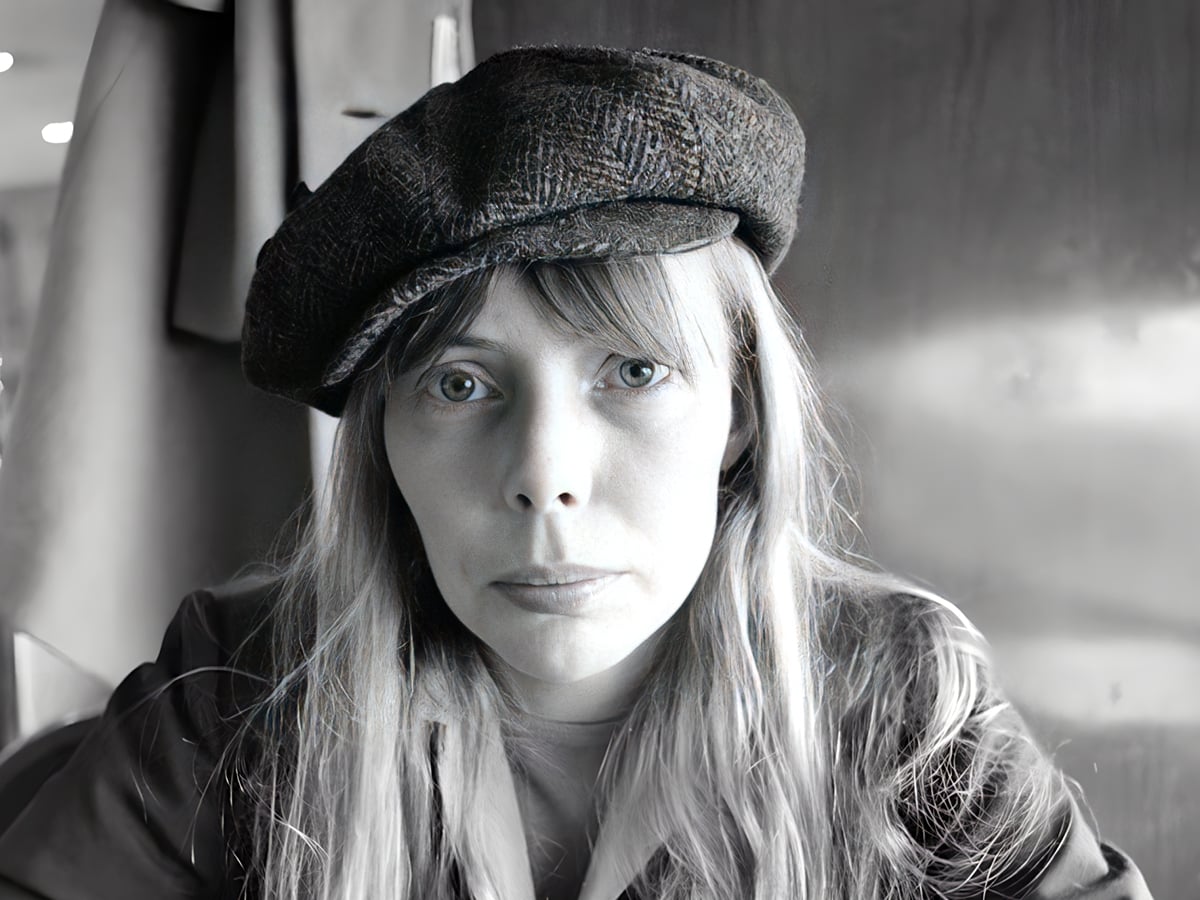
Through all the iconic scores of 1971’s Blue, it is undoubtedly ‘The Last Time I Saw Richard’ that has left the biggest emotional impact on the world. No heart has been left quite as fragile from the first time they ever heard it. But in the words, “The last time I saw Richard was Detroit in ’68/ And he told me all romantics meet the same fate someday”, it also seems that the softest touch could be Mitchell herself.
Although rumours abounded consistently that the song was inspired by her first husband, Chuck Mitchell, the singer insists that it actually was rooted in a conversation with the folk musician Patrick Sky, who told her, “Oh, Joni, you’re a hopeless romantic. There’s only one way for you to go. Hopeless cynicism.”
‘Roses Blue’

Yet speaking of a blue hue of a different kind, it was on the Clouds track ‘Roses Blue’ where Mitchell presented one of the most tender and delicate portraits to an individual who could not always be named or traced. An elusive woman called Rose is the crux, as a tarot reader who is as beguiling as she is mysterious.
In this spirit, the opening lyric “I think of tears, I think of rain on shingles” is both equal parts evocative and nonsensical. It awakens something in the soul – whether it’s pain, or longing, or sadness – and yet it’s very difficult to discern what it actually means. Above all, that’s Mitchell’s lyrical mark of greatness: making you feel things without ever having to spell it out.
