


The 1974 album that reminds Stevie Nicks of her darkest days

Considering that every other film in cinemas is currently a music biopic, it’s baffling that Stevie Nicks’ story has yet to make it to the big screen.
It’s a role that every Hollywood A-lister would be queuing up to audition for, yet somehow, she’s seemingly the one musical legend who is not set to receive the biopic treatment anytime soon. Her extraordinary story has everything, marked by immense highs and lows, that few can match, before touching upon the potential soundtrack.
As a central figure in Fleetwood Mac, Nicks has experienced the dizzying success of stadium tours and hit singles, making her a two-time Rock and Roll Hall of Fame inductee. Yet, not every chapter of her journey has been paved with gold.
Nicks has been to hell and back on multiple occasions with drug addictions, break-ups that the world is watching unravel before them and the loss of friends. Thankfully, she’s had music to turn to during those dark days, including one Joni Mitchell album that arrived as a saving grace during her lowest ebb in 1974.
This was back when Fleetwood Mac was just another band she admired from afar. At the time, Nicks believed she had blown her only chance of stardom with Buckingham Nicks, whose debut emphatically failed to make a dent in the charts.

Nicks was 25 at this point, which is young in the real world but not in the cut-throat music business of the ’70s. By this stage, she had been in countless bands before, finally landed a Polydor Records deal, before being dropped by the label and found herself back where she started.
While a single phone call from Mick Fleetwood would soon change the course of her life, bringing the professional stability she had always sought. However, in 1974, this dream seemed all but lost. At her lowest point, Nicks was forced to confront the reality of her career prospects. Despite being immersed in the vibrant Los Angeles music scene, she found herself on the outside looking in, wondering if her time in the industry had already passed.

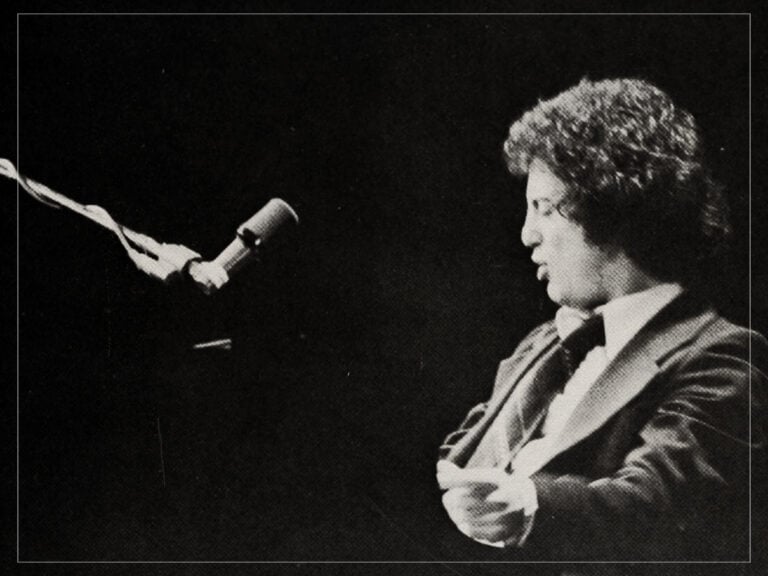

Speaking to The Guardian in 2011, Nicks revealed that Mitchell’s 1974 record Court and Spark was like an anchor to her throughout those dark times, recalling: “This was one of those albums that I lay on the floor and listened to for three days straight. Lindsey and I were coming to the end of our relationship, and I’d met someone else. So I latched on to the title track, which is about a new relationship that doesn’t last.”
Providing insight into her psyche at that time, Nicks added: “This was a year after Buckingham Nicks came out, which had gotten critical acclaim but Polydor dropped us like a rock. So we were back to square one. It was the only time I ever felt music might not work out. I talked to my parents about going back to school, because I was tired of being a cleaning lady, a waitress and a rock ‘n’ roll star at the same time”.
Despite being “really poor”, Nicks could relate to the world that Mitchell was writing about, because she’d had a glimpse into it after being signed to Polydor, sharing, “We were already living in the world that Joni Mitchell was writing about because our producer, Keith Olsen, had introduced us to a lot of people in the industry. So I related to a song like ‘The Same Situation’ whenever I’d go to a party and music business sharks were everywhere.”
Through Mitchell’s confessional songwriting, Nicks had found a source of inspiration and connection: “They would look at me as the blonde who could sing and might make lots of money for someone. I didn’t like being looked at as a commodity.”
Her fortune did shortly change forever, and the dark cloud that once lingered above her head dissipated, adding, “But by the end of that year, Mick Fleetwood had asked us to join Fleetwood Mac, sight unseen. Keith Olsen had played him Buckingham Nicks and told him Lindsey and I came as a pair.”
Artistically, this period of uncertainty, soundtracked by Mitchell, saw her unlock a new level of creativity inside herself, penning ‘Rhiannon’ and ‘Landslide‘, which later became among the most beloved Fleetwood Mac songs.
As much as the bright lights beckoned, Nicks reverts to the confused quarter-life crisis she suffered, aged 25, whenever Court and Spark is played. The record a portal back into a time when it seemed like her life was on a knife-edge, when going back to school appeared more likely than making a successful career from music.
